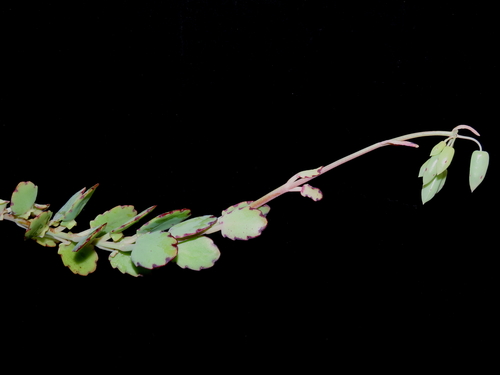
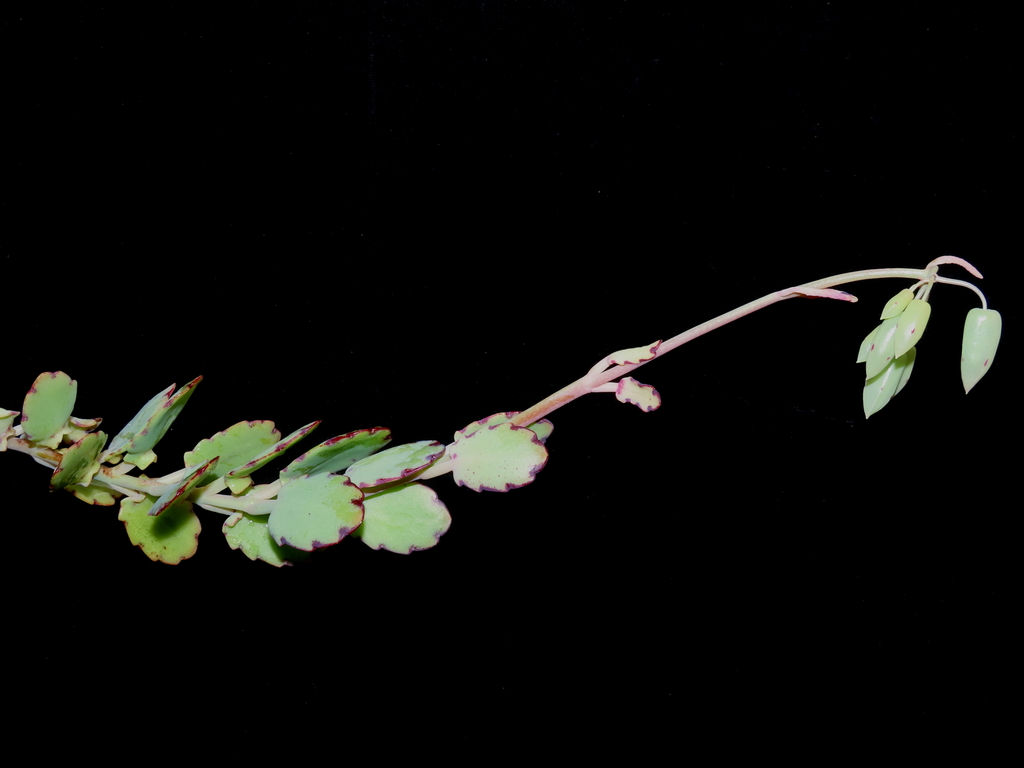
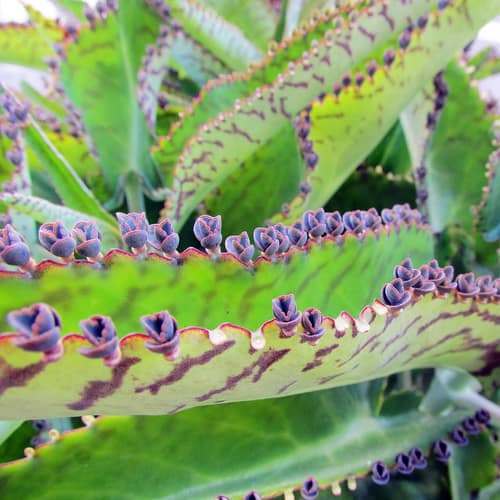
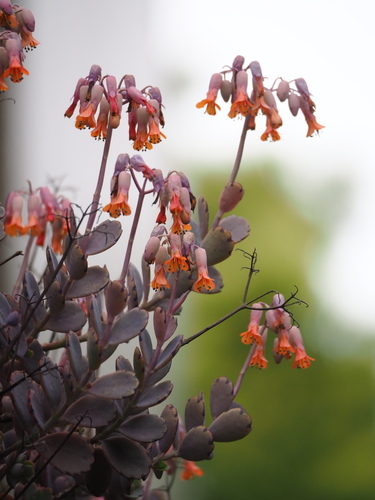
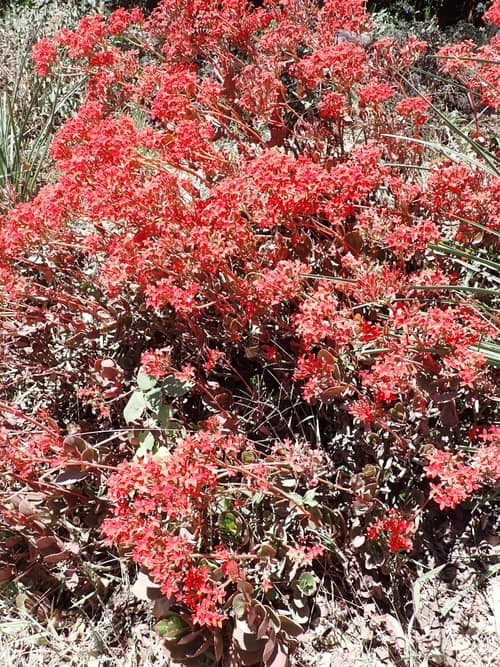
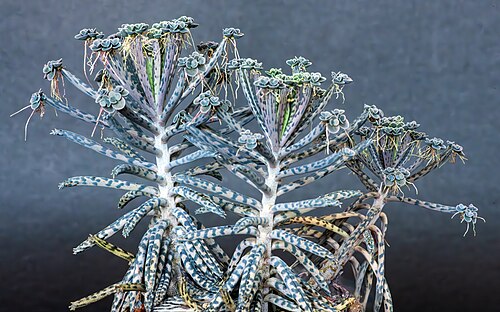
Milky widow's-thrill anchors itself in rocky crevices across dry shrublands, storing water inside thick, scalloped leaves coated in a pale, powdery bloom. Tiny clonal plantlets sprout along its leaf margins and drop to the ground to root, while loose clusters of nodding, bell-shaped flowers hang in shades of pastel orange, pink, and greenish-yellow. Like many of its relatives, the plant packs potent cardiac glycosides in its sap to deter browsing animals.
Not EvaluatedConservation statusIUCN Red List categoriesLCNTVUENCREWEXNot Evaluated — not placed on the risk ladderRed List categories, explained →
Key facts
Diet & preySunlight, Water, Soil minerals
Predators
Mealybugs
Scale insects
Snails
ThreatsHabitat degradation from bushfires, quarrying, and wild collection
HabitatsRocky outcrops, deserts, and dry shrublands in Madagascar; also widely cultivated
Life spanPerennial (several to many years)
Classification
FamilyCrassulaceae
SpeciesKalanchoe laxiflora
Range & activity
Range data is not available yet.
Safe observation
Interaction riskHigh
Low
Moderate
High
Very high
Why interaction risk is high
All parts contain cardiac glycosides; toxic to humans, dogs, and cats if ingested.
Why it is dangerous
Leaves, stems, and flowers contain bufadienolide cardiac glycosides that disrupt heart rhythm and cause severe vomiting, diarrhea, and weakness when swallowed.
How to recognize a risky encounter
Look for fleshy, blue-green scalloped leaves with a powdery pale bloom, often bearing tiny plantlets along the notches, and nodding tubular pink-orange flowers.
What to do
Keep potted plants out of reach of curious pets and children, and wash hands after pruning or handling broken stems.
Responsible observation
Pet Safety: Keep this succulent on high shelves or in pet-free rooms, as chewing the leaves can poison cats and dogs.
Propagation: Place any tiny plantlets that drop from the scalloped leaf edges onto gritty, well-draining soil to watch them root.
Observation: Look closely at the nodding, bell-shaped flowers in winter and spring to spot their delicate pastel gradients.