Also known as Chandelier Plant, Tubeglove Wild Bryophyllum
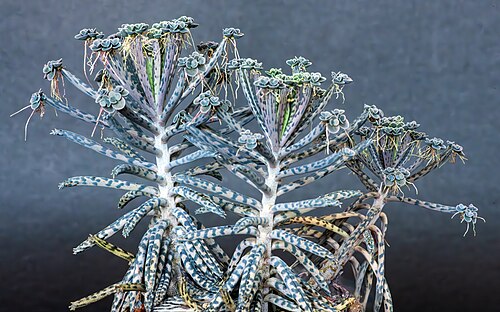
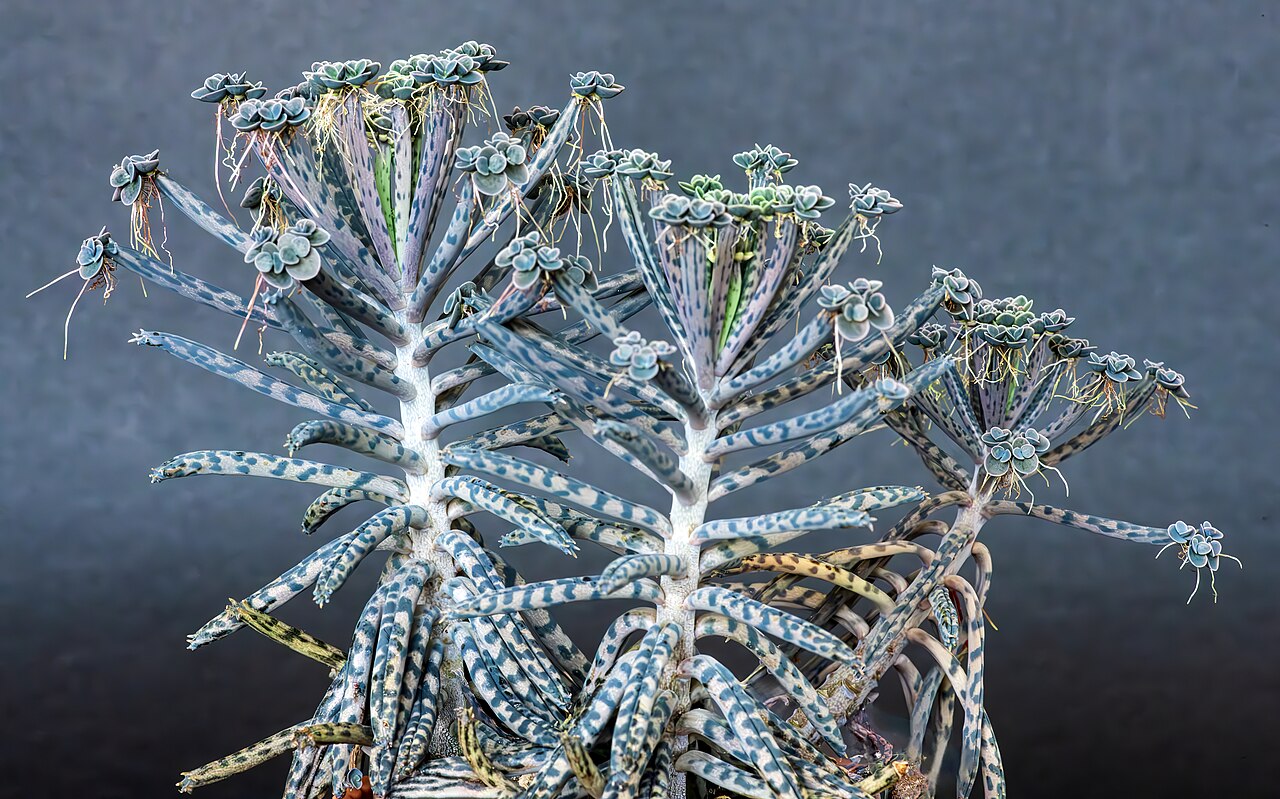
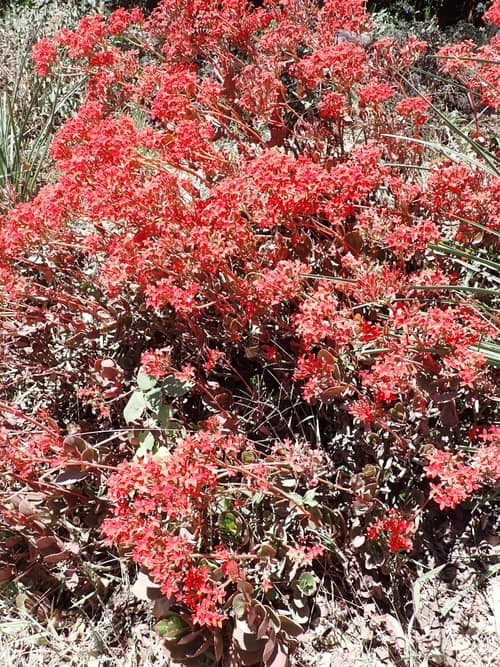
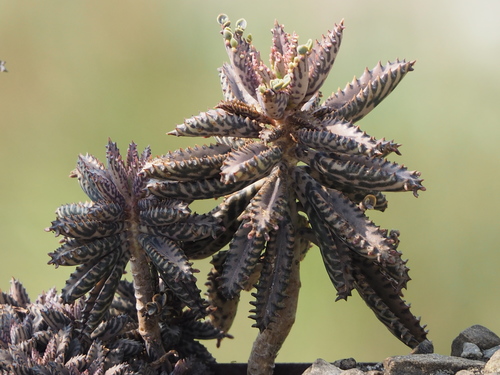
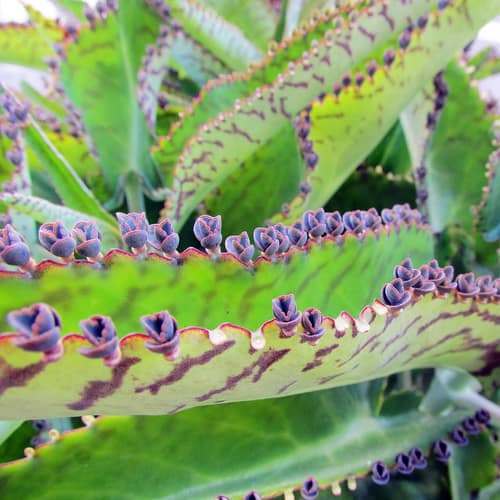
Mother of millions produces narrow, cylindrical leaves dappled with purplish-brown blotches that carry tiny miniature plantlets perched like crowns at their tips. These delicate bulbils drop to the ground at the slightest vibration, allowing dense colonies to carpet arid soils and outcompete native vegetation. During winter, mature plants send up spectacular umbrella-like clusters of drooping, tubular orange-red flowers that attract nectar-feeding birds and insects.
Not EvaluatedConservation statusIUCN Red List categoriesLCNTVUENCREWEXNot Evaluated — not placed on the risk ladderRed List categories, explained →
Key facts
Diet & preyPhotosynthetic
Predators
South African Citrus Thrips
Madagascan Leaf-Feeding Beetle
ThreatsWeed eradication efforts and biological control agents
HabitatsArid shrublands, rocky slopes, pastures, coastal dunes, and disturbed roadsides
Life spanPerennial (individual stems live 2–5 years)
Classification
OrderSaxifragales
FamilyCrassulaceae
GenusKalanchoe
SpeciesKalanchoe delagoensis
Range & activity
Range data is not available yet.
Safe observation
Interaction riskHigh
Low
Moderate
High
Very high
Why interaction risk is high
All parts contain dangerous cardiac glycosides; highly toxic to pets and grazing livestock if ingested.
Why it is dangerous
Contains powerful bufadienolide cardiac glycosides that cause acute heart failure, arrhythmias, tremors, and fatal gastrointestinal collapse in livestock and pets.
How to recognize a risky encounter
Look for erect succulent stems with mottled, pencil-like leaves bearing tiny bulbils at the apex and hanging clusters of orange-red tubular blooms.
What to do
Wear garden gloves when clearing infestations, bag every vegetative plantlet securely for disposal, and keep grazing animals out of affected pastures.
Responsible observation
Cultivation Control: Keep potted specimens isolated on saucers to prevent dropping plantlets from colonizing gardens.
Pet Safety: Position well out of reach of curious dogs and cats, as even fallen dry leaves remain toxic.