Also known as Fedtschenko's Kalanchoe, Purple Scallops
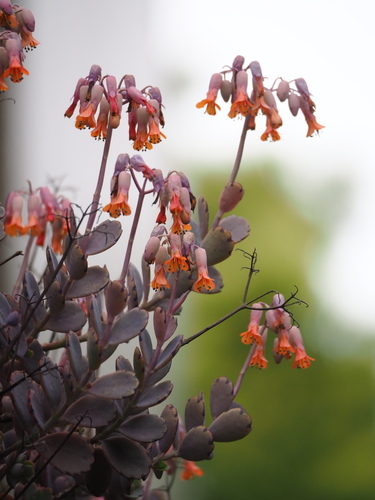
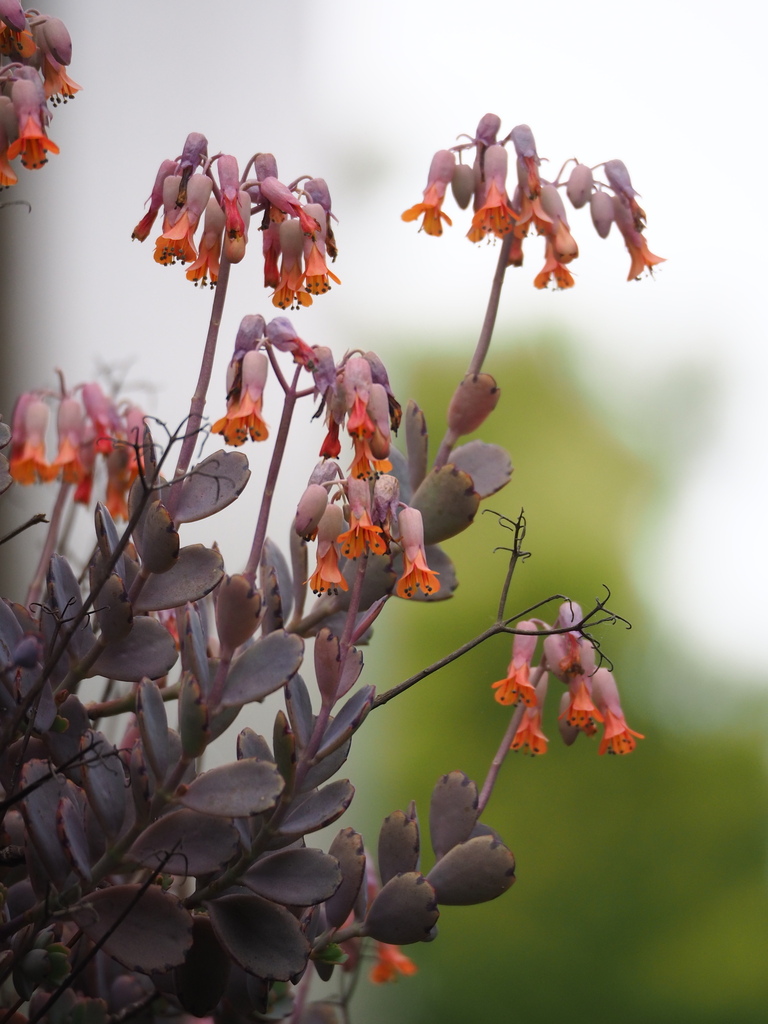
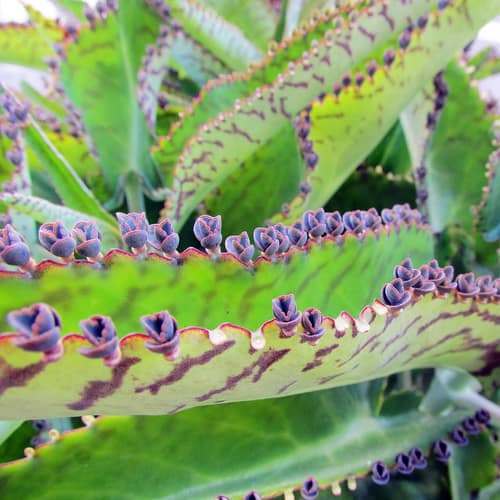
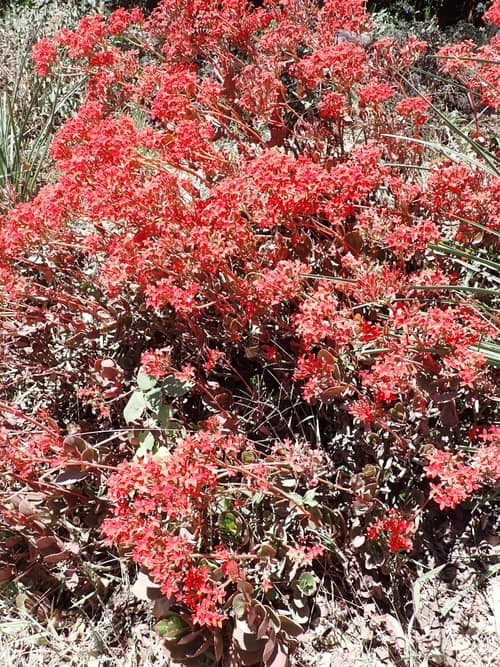
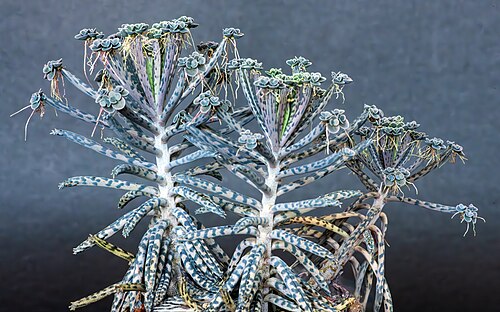
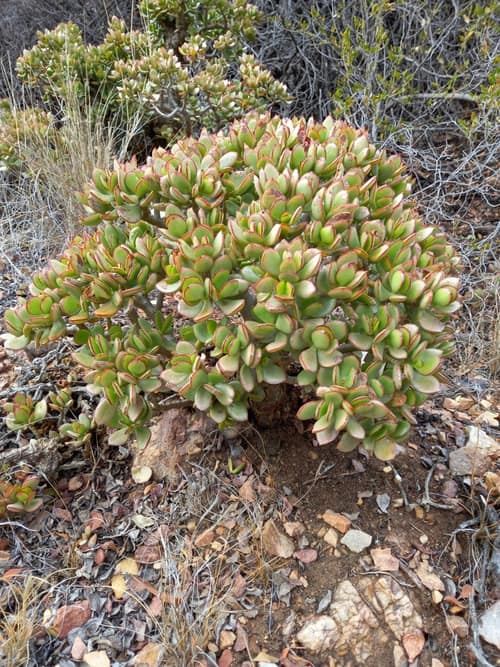
Lavender Scallops is a sprawling, woody-based succulent native to Madagascar, prized for its fleshy, oval, blue-green to lavender-tinted leaves edged with scalloped pink or purple margins. Tiny clonal plantlets sprout along the notches of detached or stressed leaves, allowing colonies to spread rapidly across sunny rocks and dry garden beds. In winter and early spring, upright stems dangle clusters of bell-shaped, coral-orange flowers, while its nocturnal stomata open via CAM photosynthesis to conserve water.
ThreatsHabitat loss in native Madagascar; few threats elsewhere where widely cultivated
HabitatsRocky outcrops and dry scrub in Madagascar; gardens, disturbed sites, and sunny coastal areas where naturalized
Life spanPerennial (5–10+ years, persisting indefinitely via clonal plantlets)
Classification
OrderSaxifragales
FamilyCrassulaceae
GenusKalanchoe
SpeciesKalanchoe fedtschenkoi
Range & activity
Range data is not available yet.
Safe observation
Interaction riskHigh
Low
Moderate
High
Very high
Why interaction risk is high
Contains cardiac glycosides toxic to pets and people if ingested; keep away from curious animals and never eat.
Why it is dangerous
All parts of the plant contain bufadienolide cardiac glycosides, which disrupt heart rhythm and cause vomiting, diarrhea, lethargy, and potentially fatal arrhythmias in dogs, cats, and livestock.
How to recognize a risky encounter
Recognizable by its fleshy, oval, blue-gray to lavender-tinted leaves with scalloped margins edged in pink or purple. Bell-shaped, drooping coral-orange flowers appear in terminal clusters during winter and early spring.
What to do
Place potted plants out of reach of pets and children, and wash hands after pruning or propagating fallen leaves. Seek veterinary or medical care immediately if any part is chewed or swallowed.
Responsible observation
Light: Thrives in bright, direct sun, which brings out the richest lavender and pink leaf margins.
Propagation: Fallen leaves naturally sprout tiny clones along their scalloped edges when resting on dry soil.
Pet Safety: Keep indoors on high shelves or in hanging baskets so dogs and cats cannot chew the leaves.