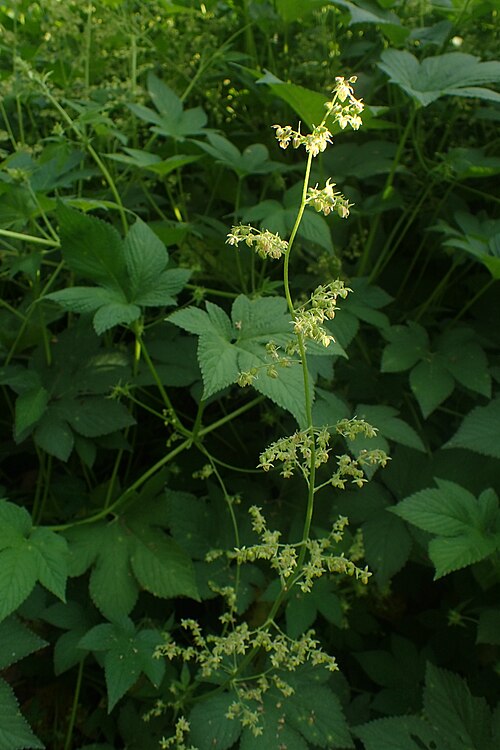
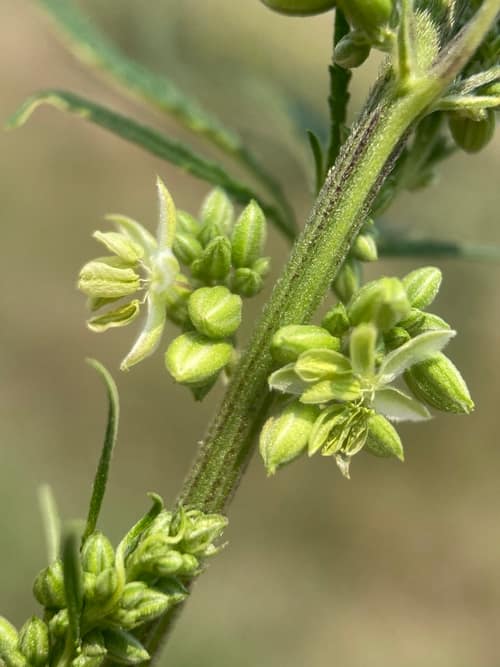
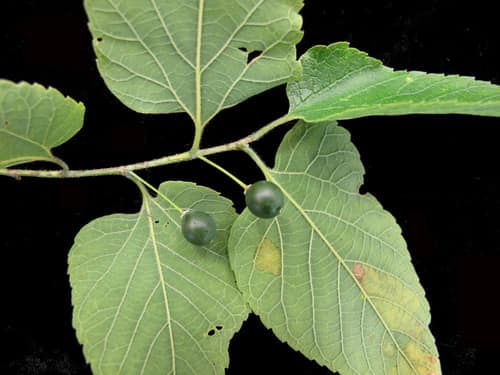
Clockwise-twining bines ascend trees and trellises using stiff, hook-like hairs rather than tendrils, growing up to several centimeters a day in peak summer. Separate male and female plants flower in midsummer, with wind-pollinated females developing papery, cone-like strobiles rich in golden lupulin glands. The extensive rootstock survives subzero winter freezes, vigorously re-sprouting every spring to form dense riverbank thickets.
ThreatsDowny mildew, powdery mildew, and agricultural drainage
HabitatsRiverbanks, woodland margins, hedgerows, and moist thickets
Life spanPerennial (rhizomes live 20–50 years)
Classification
OrderRosales
FamilyCannabaceae
GenusHumulus
SpeciesHumulus lupulus
Range & activity
Range data is not available yet.
Safe observation
Interaction riskHigh
Low
Moderate
High
Very high
Why interaction risk is high
Rough hairs can irritate skin; highly toxic to dogs, causing fatal malignant hyperthermia if ingested.
Why it is dangerous
Resins and mechanical trichomes cause severe contact dermatitis in humans, while compounds in the cones trigger fatal malignant hyperthermia in domestic dogs.
How to recognize a risky encounter
Look for rough, twining rough-stemmed bines with 3-lobed to 5-lobed leaves and fragrant, pale green papery cones.
What to do
Wear protective garden gloves to harvest or prune, and ensure spent cones or garden trimmings are fenced off from pets.
Responsible observation
Wear Protection: Don gloves and long sleeves when handling bines to prevent micro-abrasions and contact dermatitis.
Pet Safety: Keep companion dogs away from fresh and dried cones to prevent life-threatening poisoning.
Support Training: Train spring shoots clockwise around vertical twine or trellises to mimic natural climbing habits.

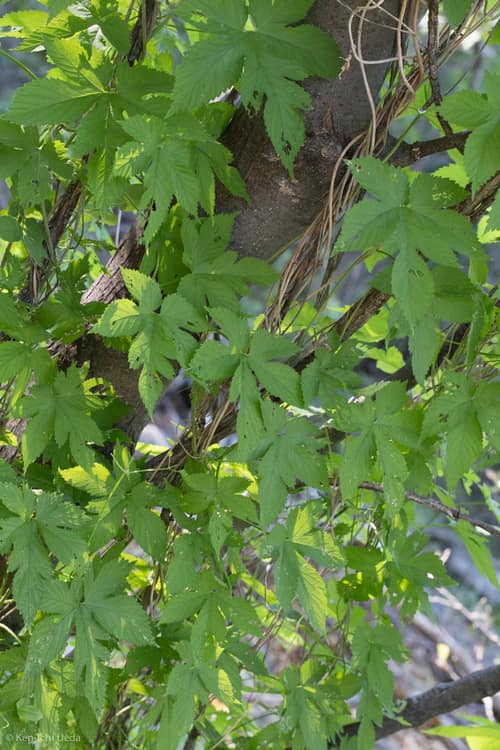
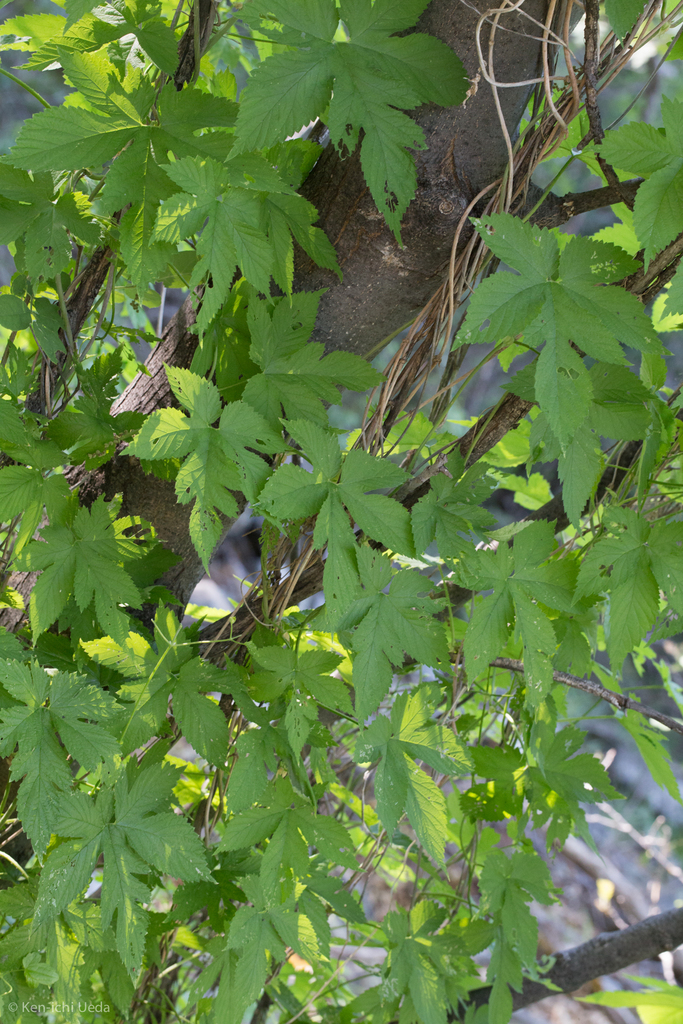
 Image unavailable