
Plant
Orchid Tree
Bauhinia purpureaAlso known as Purple Bauhinia, Camel's Foot, Butterfly Tree, Hawaiian Orchid Tree
Orchid trees brighten subtropical landscapes with sweeping displays of scented, five-petaled blooms that emerge in rich shades of purple, magenta, and rose. Their distinctive foliage features deeply cleft leaves with two rounded lobes, creating an outline that mimics a cloven hoofprint or open butterfly wings. When flowering peaks in autumn and winter, the canopy transitions to long, flat pods that eventually twist explosively to fling mature seeds across the forest floor.
FloweringTreeTropical
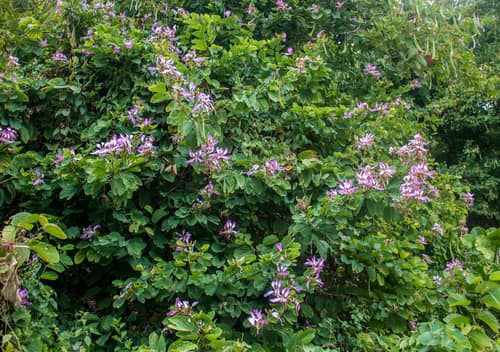
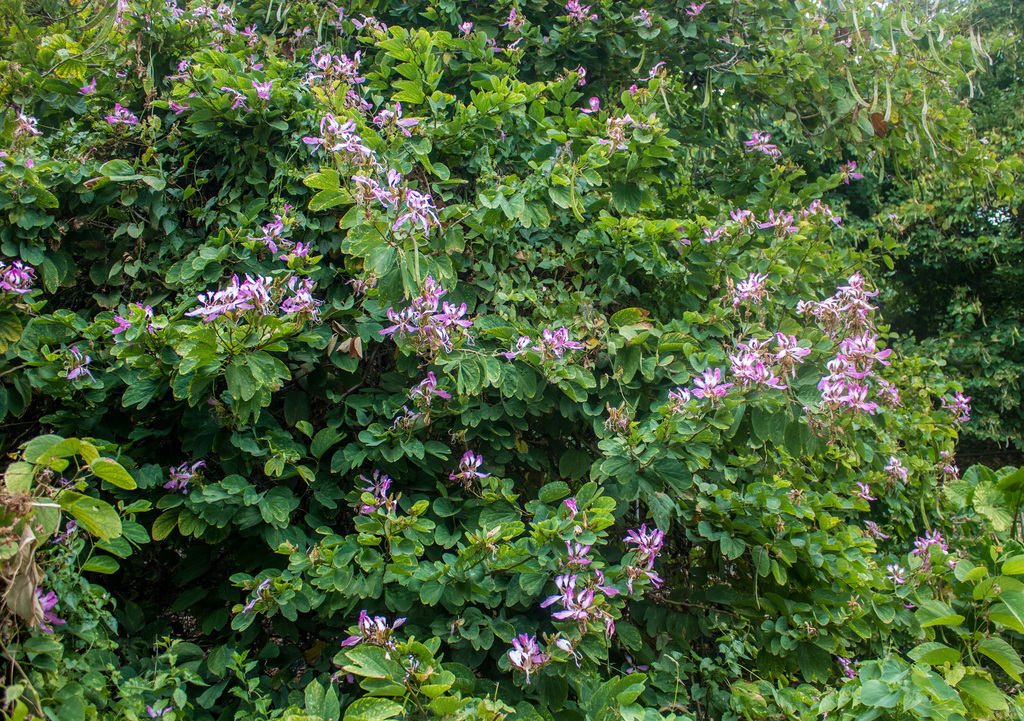
—observations
—countries
—peak records
Least ConcernConservation statusIUCN Red List categoriesLCNTVUENCREWEXLeast ConcernRed List categories, explained →
Diet & preySunlight, Water, Soil nutrients
Predators
- Bagworm moth caterpillars
- Leafcutter ants
- Scale insects
ThreatsHabitat loss from urban expansion and agricultural clearing
HabitatsTropical dry deciduous forests, mixed woodlands, river valleys, and urban landscapes
Life span25–50 years
Classification
- OrderFabales
- FamilyFabaceae
- GenusBauhinia
- SpeciesBauhinia purpurea
Range data is not available yet.
Interaction riskLow
- Low
- Moderate
- High
- Very high
- Why interaction risk is low
- Safe to observe at a normal distance.
Responsible observation
- Flowering Season: Look for heavy blossoms from September through December when few other trees bloom.
- Leaf Shape: Identify the tree by its twin-lobed leaves that fold slightly upward along the midrib.
- Seed Dispersal: Listen for sharp popping sounds on warm dry days as ripe pods split violently open.
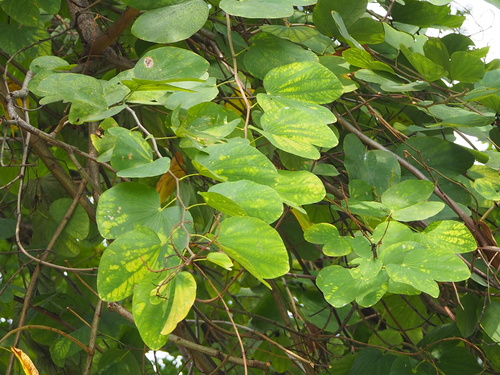
Hybrid Offspring no rights reserved, uploaded by 葉子 · cc0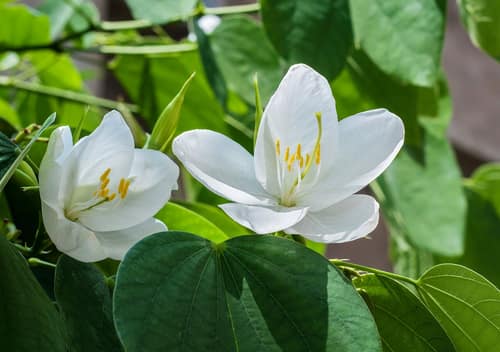
Same Genus Joydeep / CC BY-SA 3.0 · cc-by-sa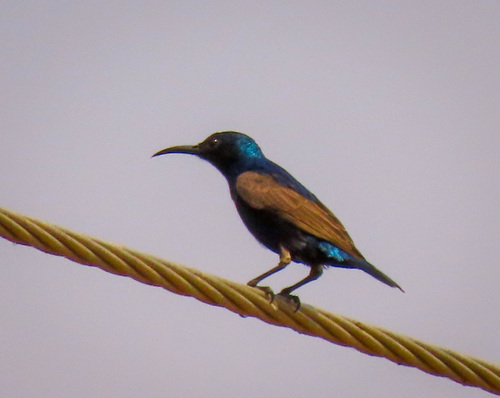
Pollinator (c) Sevin Dee, some rights reserved (CC BY), uploaded by Sevin Dee · cc-by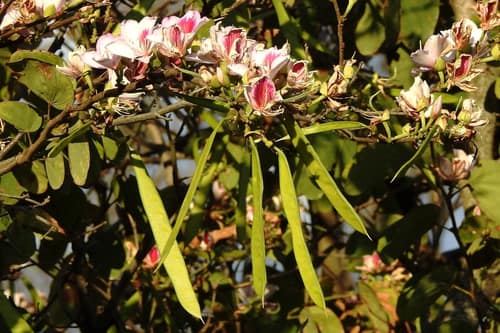
Close Relative no rights reserved, uploaded by Hugo Hulsberg · cc0
Help improve the field guideSomething wrong?
Checking your Fauna account…Report a name, category, or profile issue for review.