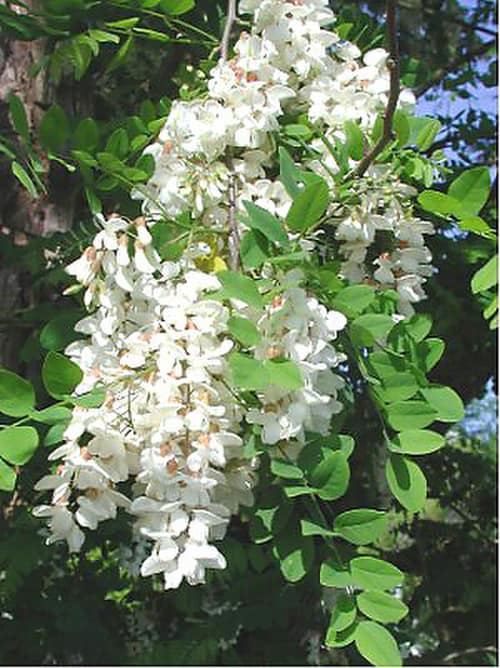
Also known as American Coffee Berry, Kentucky Mahogany, Nicker Tree, Stump Tree
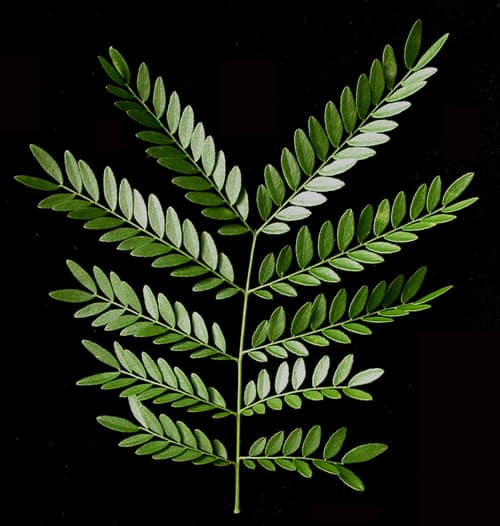
Kentucky coffeetrees stand as rare evolutionary relics of North American hardwood forests, featuring immense doubly compound leaves that can exceed nearly a meter in length. Early European settlers historically roasted the dense seeds as a coffee substitute, though raw pods and seeds contain toxic alkaloids. Late to leaf out in spring and quick to drop foliage in autumn, their stark winter silhouette gives rise to the classic nickname, stump tree.
ThreatsHabitat fragmentation, low natural germination rates, loss of ancient megafauna dispersers
HabitatsFloodplains, rich bottomland forests, rocky limestone slopes, urban parks
Life span100–150 years
Classification
OrderFabales
FamilyFabaceae
GenusGymnocladus
SpeciesGymnocladus dioicus
Range & activity
Range data is not available yet.
Safe observation
Interaction riskHigh
Low
Moderate
High
Very high
Why interaction risk is high
Raw seeds and pods are toxic if ingested; never eat wild seeds based on app identification alone.
Why it is dangerous
Contains the alkaloid cytisine in raw seeds, pods, and foliage, which causes severe gastrointestinal pain, rapid pulse, and respiratory distress if eaten raw.
How to recognize a risky encounter
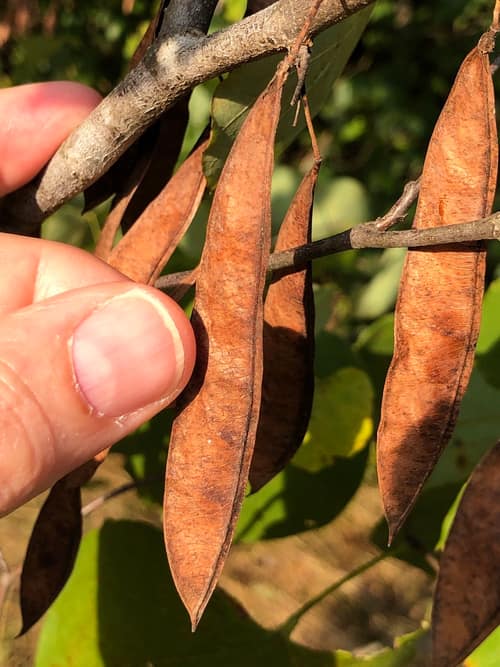
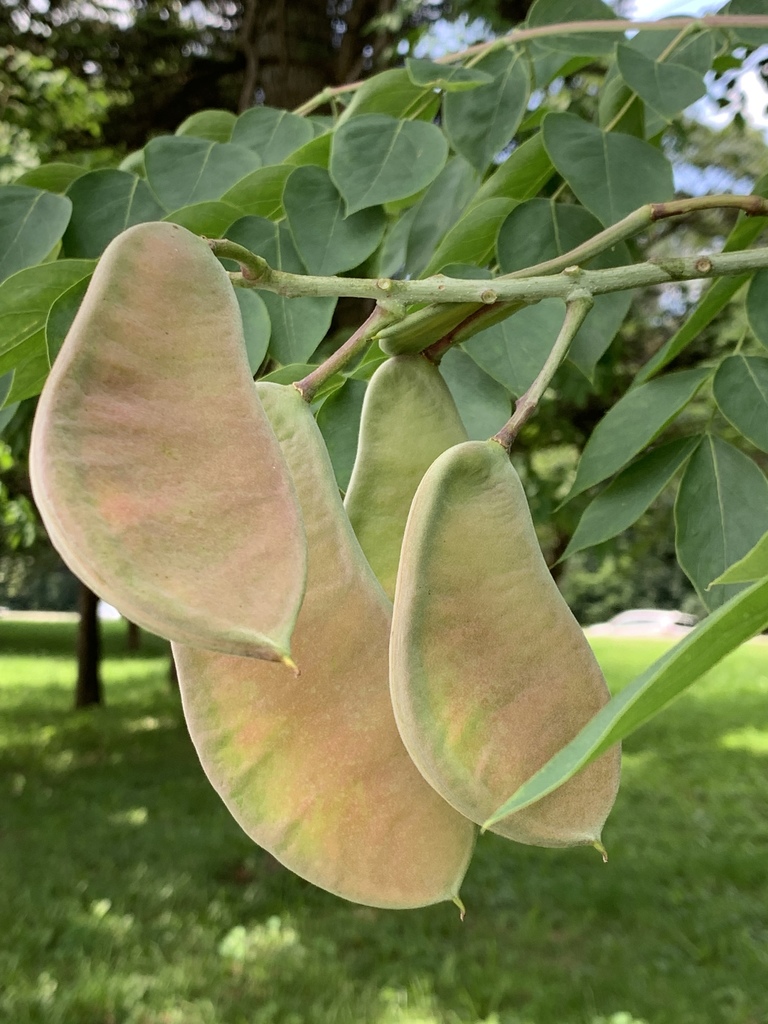
Recognized by massive bipinnately compound leaves in summer and thick, persistent dark brown seed pods in autumn and winter.
What to do
Observe foliage and fallen seed pods safely from a distance, and never chew or ingest raw seeds or plant parts.
What to notice
Identified by rugged, deeply ridged bark and large woody pods hanging from heavy, sparse branches.
Support conservation
Avoid damaging wild trees or harvesting seed pods from protected native woodland habitats.
Responsible observation
Winter Identification: Look for exceptionally coarse, stout twigs and dark bark with sharp scaly ridges during winter.
Autumn Observation: Look for large, heavy brown seed pods clinging to bare branches long after leaves drop.
Urban Landscape: Appreciate this resilient tree in city parks where it thrives despite polluted air and compacted soil.

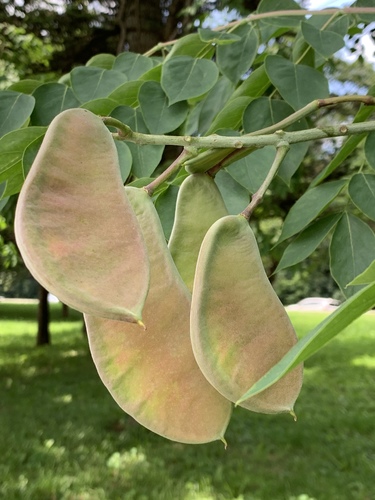
 1 / 7
1 / 7