
Plant · GBIF taxon 2928741
Sacred Datura
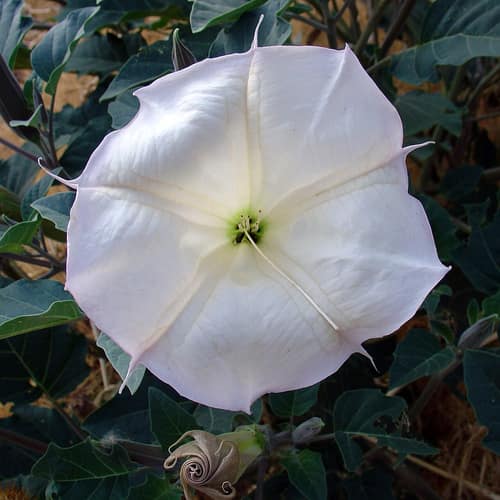
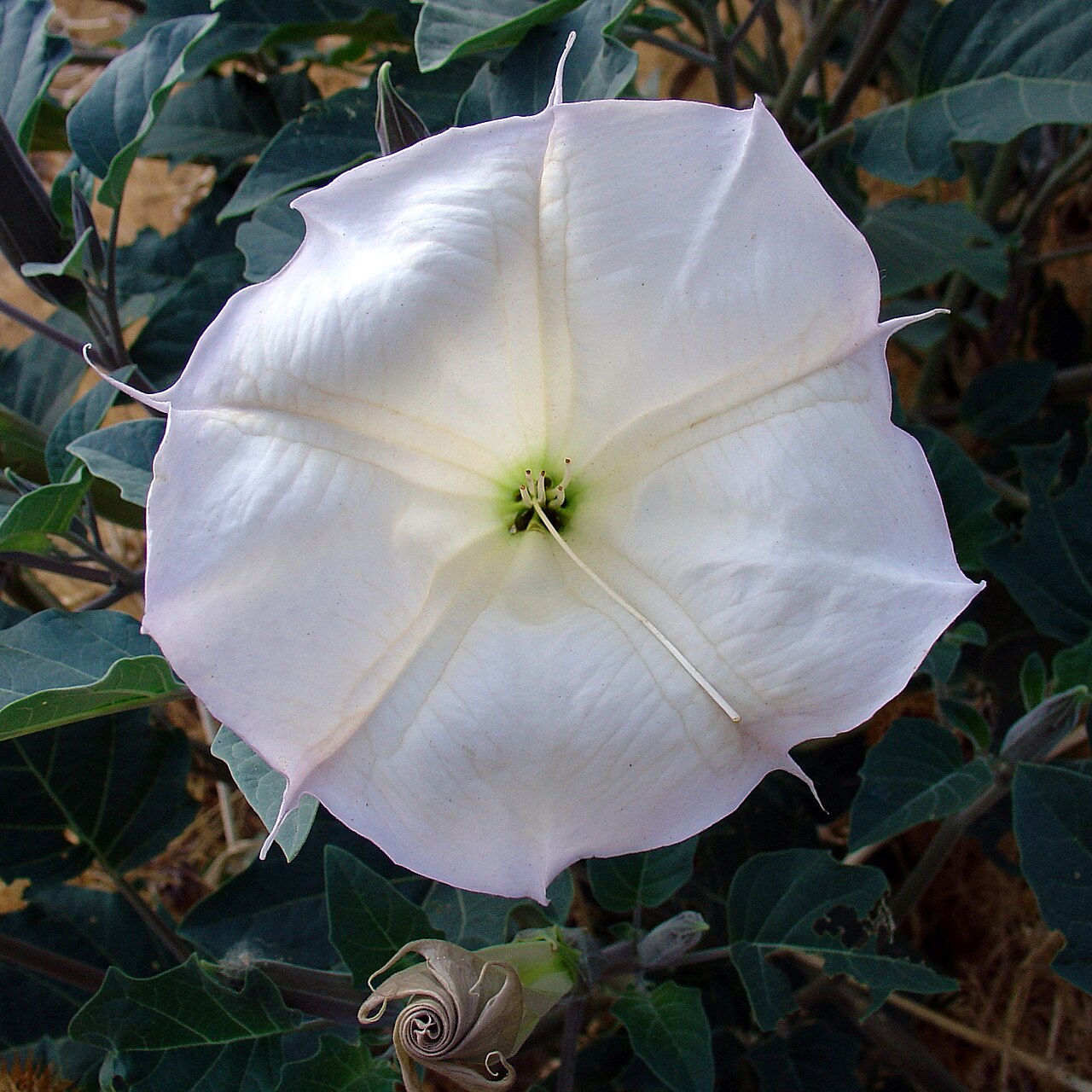
Datura wrightiiSacred Datura unfurls enormous white trumpet flowers at dusk above broad gray-green leaves. Night fragrance attracts hawk moths, while spiny seed capsules and sprawling stems remain conspicuous after the blooms close.
Night BloomingTrumpet FlowerDesert Wash
—observations
—countries
—peak records
Not EvaluatedConservation statusIUCN Red List categoriesLCNTVUENCREWEXNot Evaluated — not placed on the risk ladderRed List categories, explained →
Diet & prey
- Photosynthesis; roots absorb water and mineral nutrients
Predators
- Tobacco hornworms
- Flea beetles
- Leaf-feeding insects
ThreatsHabitat conversion, roadside herbicides, trampling, and destructive removal
HabitatsDesert washes, sandy canyon floors, roadsides, disturbed ground, and dry open scrub
Life spanA perennial that can regrow for several years from a persistent rootstock
Size / weightNot available
Classification
- OrderSolanales
- FamilySolanaceae
- GenusDatura
- SpeciesDatura wrightii
Range data is not available yet.
Interaction riskHigh
- Low
- Moderate
- High
- Very high
- Why interaction risk is high
- All tissues contain dangerous tropane alkaloids; never ingest them and keep children, pets, and livestock away.
- Why it is dangerous
- Atropine, scopolamine, and related alkaloids can cause delirium, dangerous overheating, rapid heartbeat, seizures, coma, and death.
- How to recognize a risky encounter
- Identify huge white trumpet flowers, broad slightly sticky leaves, and round capsules armed with many sharp spines.
- What to do
- Never taste, brew, burn, or deliberately handle any tissue, and prevent access by children, pets, and livestock.
Responsible observation
- Timing: Watch from a path as fresh trumpets open near dusk.
- Leaves: Recognize broad gray-green blades surrounding a large white flower.
Help improve the field guideSomething wrong?
Checking your Fauna account…Report a name, category, or profile issue for review.