
Plant · GBIF taxon 2928441
Hedge Bindweed
Calystegia sepiumAlso known as Greater Bindweed, Bearbind, Lady's Nightcap, Bellbind
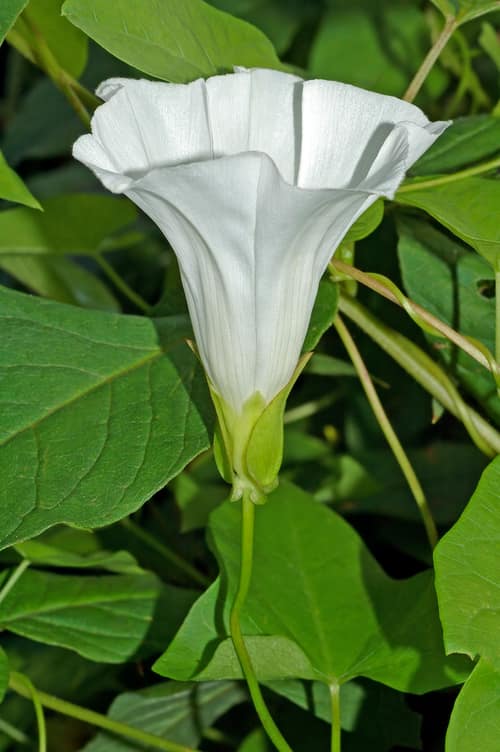
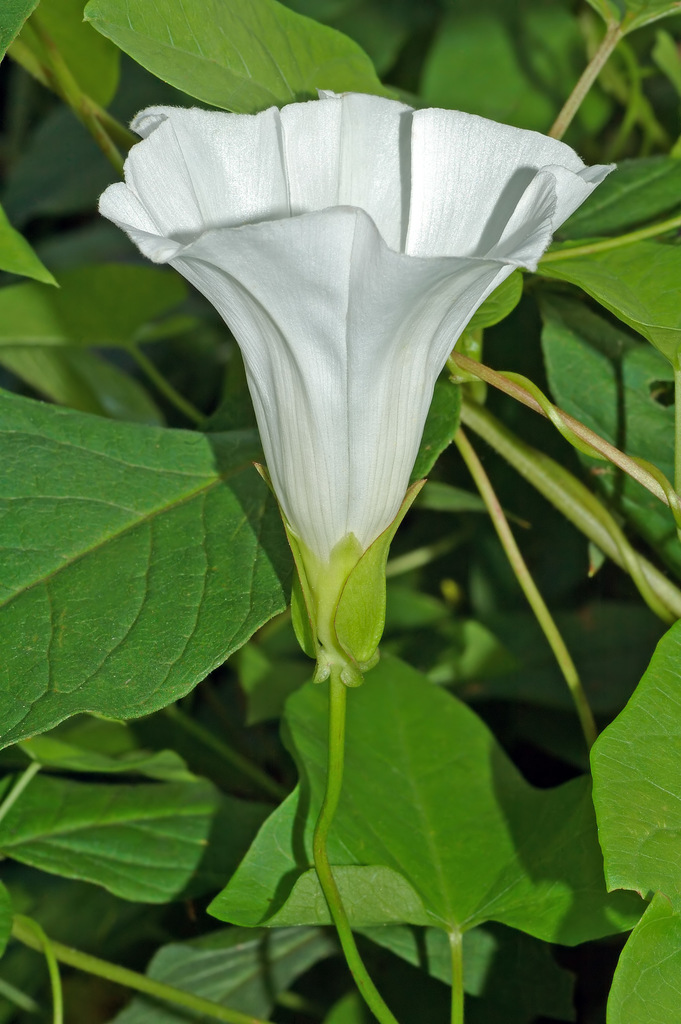
Hedge bindweed twines counterclockwise around shrubs, fences, and herbaceous stalks to reach full sunlight in damp soils and disturbed ground. Its large white to pale pink trumpet flowers open in bright morning sun and attract bumblebees and hoverflies throughout summer. Deep perennial rhizomes allow it to reemerge vigorously every spring, making it a persistent pioneer in hedgerows and floodplains.
ViningFloweringPerennial
—observations
—countries
—peak records
Least ConcernConservation statusIUCN Red List categoriesLCNTVUENCREWEXLeast ConcernRed List categories, explained →
Diet & prey
- Autotrophic (photosynthetic)
Predators
- Sweetpotato Leaf Beetle
- Tortoise Beetles
- Mice
ThreatsHerbicide use, habitat clearing
HabitatsHedgerows, riverbanks, marsh edges, roadsides, garden margins
Life spanPerennial (rhizomes live indefinitely)
Size / weightNot available
Classification
- OrderSolanales
- FamilyConvolvulaceae
- GenusCalystegia
- SpeciesCalystegia sepium
Range data is not available yet.
Interaction riskHigh
- Low
- Moderate
- High
- Very high
- Why interaction risk is high
- Contains tropane alkaloids that cause digestive distress if ingested; do not consume any part of the plant.
- Why it is dangerous
- Contains calystegine tropane alkaloids that cause gastrointestinal irritation and distress if swallowed.
- How to recognize a risky encounter
- Recognized by smooth climbing vines, arrowhead leaves with squared basal lobes, and white trumpet flowers.
- What to do
- Do not ingest any plant parts and wash hands thoroughly after pulling vines in garden settings.
Responsible observation
- Identification: Look for distinctive square-based arrowhead leaves and large bracts hiding the inner calyx.
- Control: Dig up deeply running rhizomes completely, as small root fragments easily regenerate into new plants.
- Observation: Watch blossoms on sunny mornings when open flowers actively attract long-tongued pollinators.
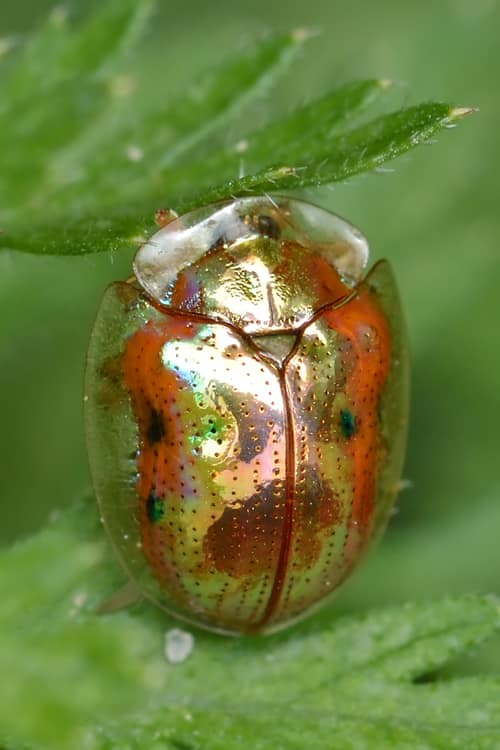
Herbivore (c) Ryan Hodnett, some rights reserved (CC BY-SA) · cc-by-sa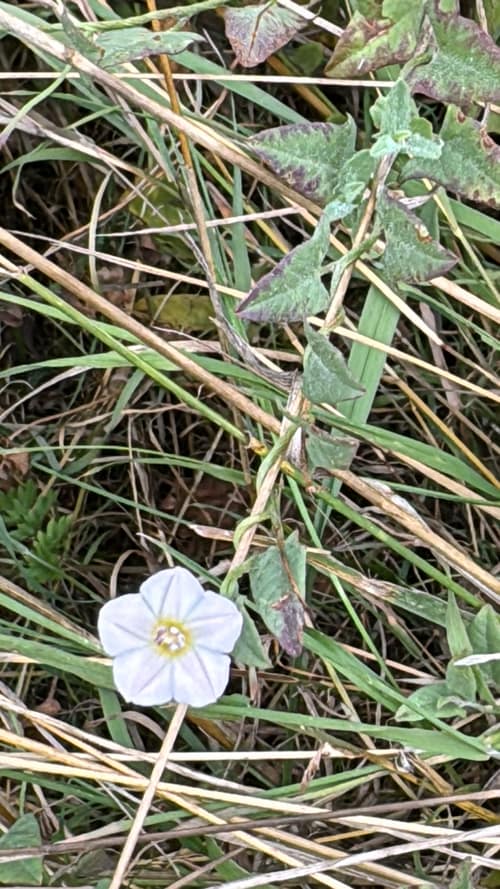
Close Relative (c) William Stephens, some rights reserved (CC BY) · cc-by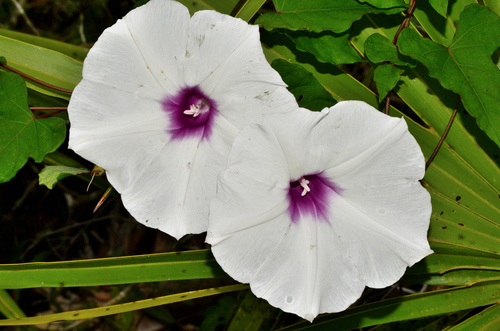
Family Member (c) Jim Duggan, some rights reserved (CC BY) · cc-by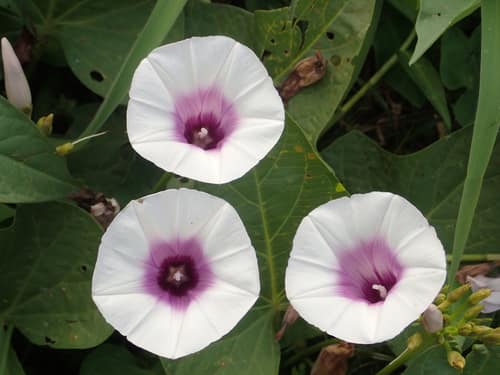
Cultivated Relative no rights reserved, uploaded by 葉子 · cc0
Help improve the field guideSomething wrong?
Checking your Fauna account…Report a name, category, or profile issue for review.