
Plant · GBIF taxon 2927730
Blue Phlox
Phlox divaricataAlso known as Woodland Phlox, Wild Sweet William
Blue phlox forms loose spring carpets of fragrant lavender-blue flowers across rich eastern woodlands. Sticky hairs on the upper stems can deter crawling insects, leaving floral rewards accessible to long-tongued flying pollinators.
Woodland WildflowerFragrant BloomSticky Stems
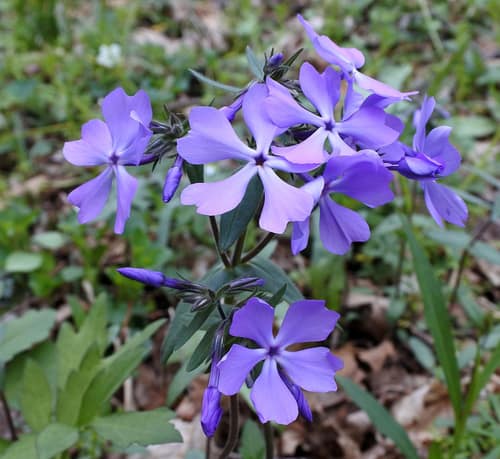
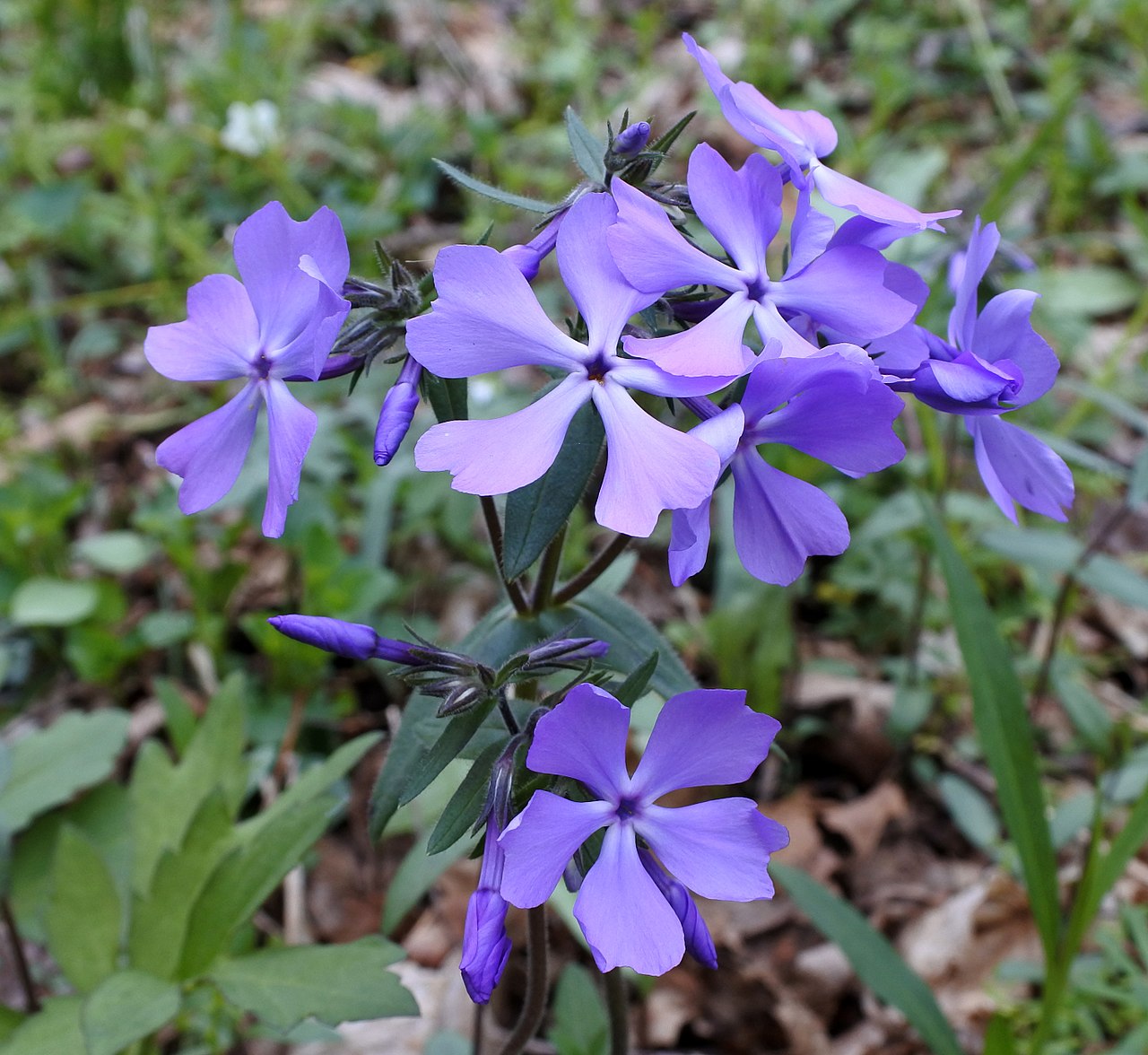
Licensed referenceWilson44691 / CC0 · cc0
—observations
—countries
—peak records
Not EvaluatedConservation statusIUCN Red List categoriesLCNTVUENCREWEXNot Evaluated — not placed on the risk ladderRed List categories, explained →
Diet & prey
- Photosynthesis; roots absorb water and mineral nutrients
Predators
- Deer
- Rabbits
- Slugs
ThreatsForest clearing, invasive plants, heavy browsing, trampling, and destructive picking
HabitatsMoist deciduous forest, floodplains, woodland edges, fields, and shaded slopes
Life spanA perennial that can persist and spread for many growing seasons
Size / weightNot available
Classification
- FamilyPolemoniaceae
- SpeciesPhlox divaricata
Range data is not available yet.
Interaction riskLow
- Low
- Moderate
- High
- Very high
- Why interaction risk is low
- Remain on paths and leave flowering stems and woodland soil undisturbed.
Responsible observation
- Scent: Notice the sweet fragrance without picking a flower cluster.
- Petals: Look for five notched lobes forming a flat blue corolla.
Help improve the field guideSomething wrong?
Checking your Fauna account…Report a name, category, or profile issue for review.