
Flower
Shrubby False Buttonweed
Spermacoce verticillataAlso known as Whitehead Broom, Southern False Buttonweed
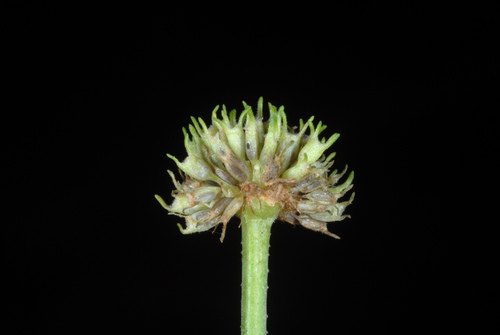
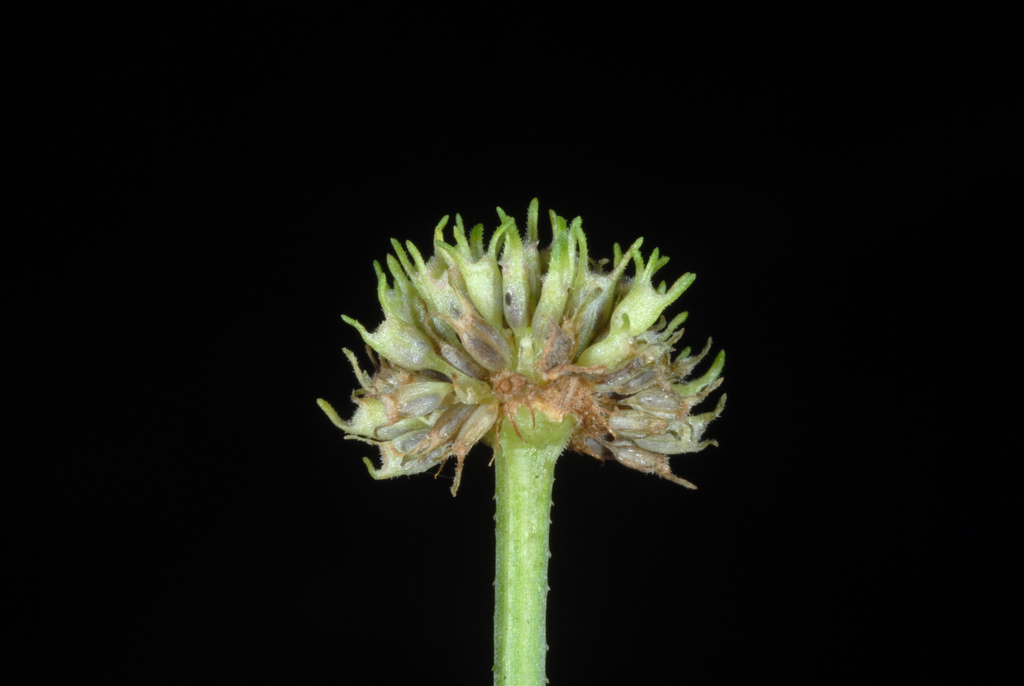
Shrubby false buttonweed is a hardy, woody-based perennial herb recognized by its spherical, button-like clusters of tiny white flowers spaced evenly along upright square stems. Native to tropical America and widely naturalized in warm regions, it rapidly colonizes sandy, disturbed soils where few other plants thrive. Its prolific nectar production makes it an exceptional resource for small beneficial insects, particularly parasitoid wasps that help regulate agricultural pests.
PerennialFloweringResilient
—observations
—countries
—peak records
Not EvaluatedConservation statusIUCN Red List categoriesLCNTVUENCREWEXNot Evaluated — not placed on the risk ladderRed List categories, explained →
Diet & preyPhotosynthesis (autotrophic)
Predators
- Herbivorous beetles
- Grasshoppers
- Caterpillars
ThreatsBroadleaf herbicide treatments, heavy frost, and competition from aggressive turfgrasses
HabitatsDisturbed soils, roadsides, pastures, lawns, and coastal dunes
Life spanPerennial (typically 2–5 years)
Classification
- OrderGentianales
- FamilyRubiaceae
- GenusSpermacoce
- SpeciesSpermacoce verticillata
Range data is not available yet.
Interaction riskLow
- Low
- Moderate
- High
- Very high
- Why interaction risk is low
- Safe to observe at a normal distance.
Responsible observation
- Observation Timing: Inspect flower heads during sunny mid-mornings when small pollinating wasps and solitary bees are most active.
- Identification Tip: Look for distinctly square, wiry stems topped with globose, whorled flower clusters resembling tiny white buttons.
- Garden Impact: Watch for rapid spread in sunny sandy patches, as its deep taproot and abundant seeds make it persistent once established.
 Image unavailable
Pollinator 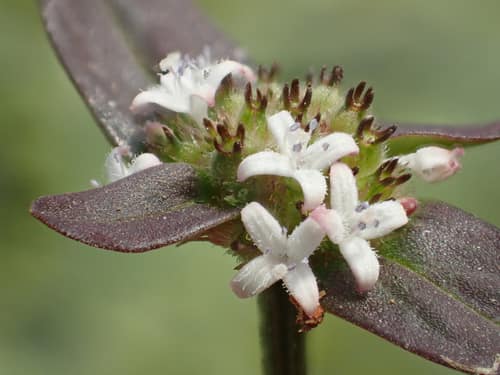
Close Relative no rights reserved, uploaded by 葉子 · cc0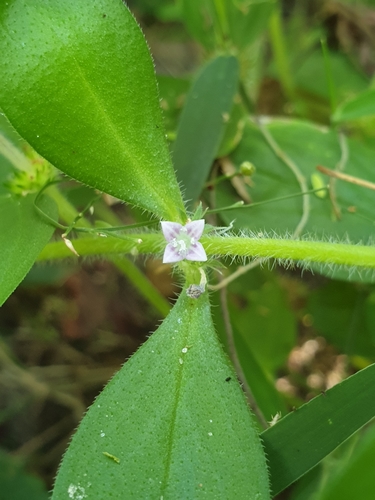
Close Relative (c) Aravinth, some rights reserved (CC BY) · cc-by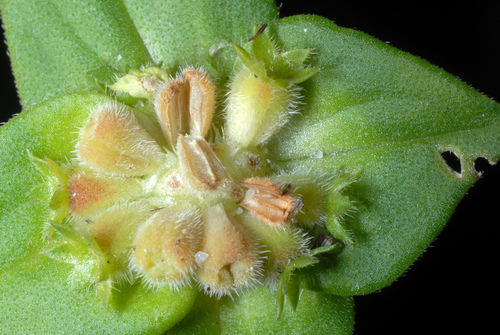
Same Family (c) Douglas Goldman, some rights reserved (CC BY-SA), uploaded by Douglas Goldman · cc-by-sa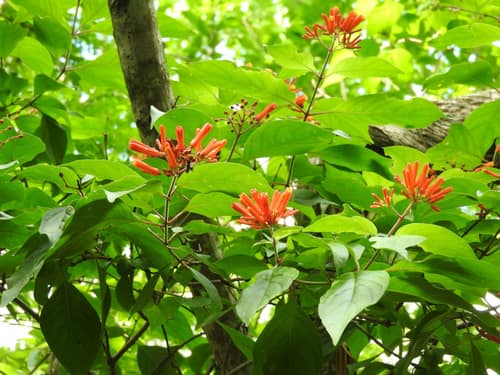
Same Family (c) Francisco Farriols Sarabia, some rights reserved (CC BY), uploaded by Francisco Farriols Sarabia · cc-by
Help improve the field guideSomething wrong?
Checking your Fauna account…Report a name, category, or profile issue for review.