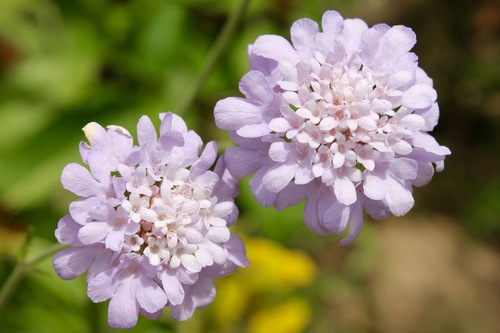
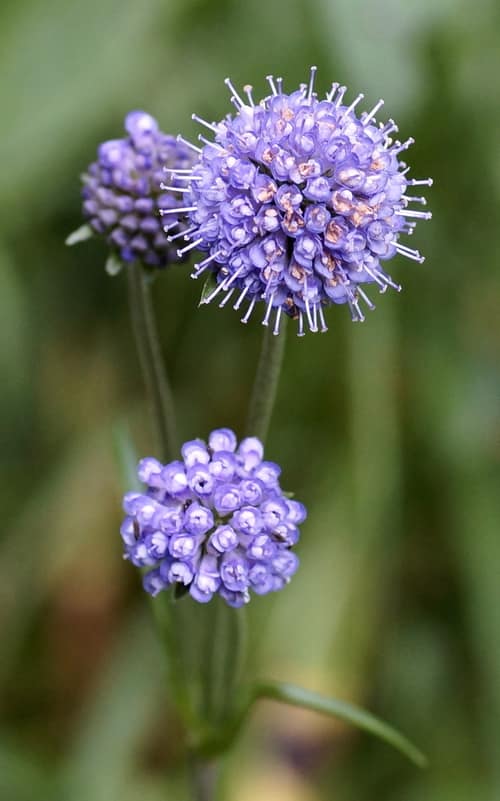
Also known as Blue Pincushion, Bachelor's Buttons, Gipsy Rose, Blue Buttons
Field scabious rises on stiff, bristly stems to display domed, lilac-blue flower heads that flutter above dry grasslands and roadside verges throughout summer. Each composite blossom is ringed by enlarged outer florets that create a landing platform, drawing an exceptional diversity of long-tongued bees, hoverflies, and butterflies. A taproot anchors the plant deeply into chalky, calcareous soils, allowing it to withstand prolonged summer dry spells while maintaining a steady nectar flow.
ThreatsAgricultural intensification, excessive herbicide use, and loss of unimproved grassland
HabitatsDry meadows, chalk downland, pasture borders, road verges, and open scrub
Life spanPerennial (typically 3–10 years)
Size / weightNot available
Classification
OrderDipsacales
FamilyCaprifoliaceae
GenusKnautia
SpeciesKnautia arvensis
Range & activity
Range data is not available yet.
Safe observation
Interaction riskLow
Low
Moderate
High
Very high
Why interaction risk is low
Safe to observe at a normal distance.
Responsible observation
Pollinator Watching: Visit sunny meadows around midday to observe dozens of solitary bee and butterfly species feeding on the nectar.
Identification Check: Count the petal lobes on individual florets; this genus carries four lobes, distinguishing it from five-lobed true scabious species.
Meadow Cultivation: Leave roadside verges unmown until late autumn so plants can drop seed and sustain native pollinators.

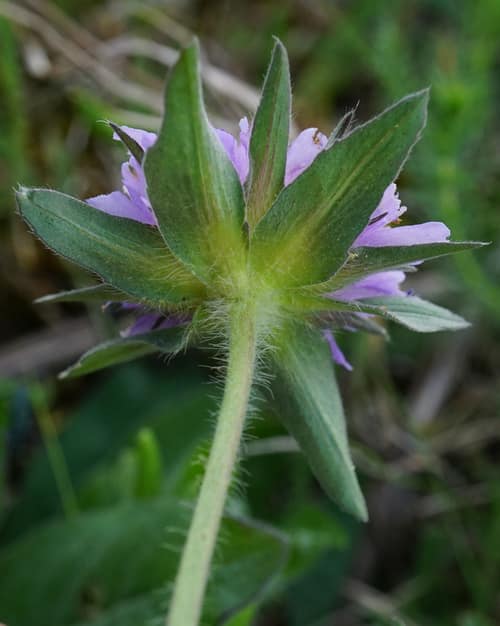
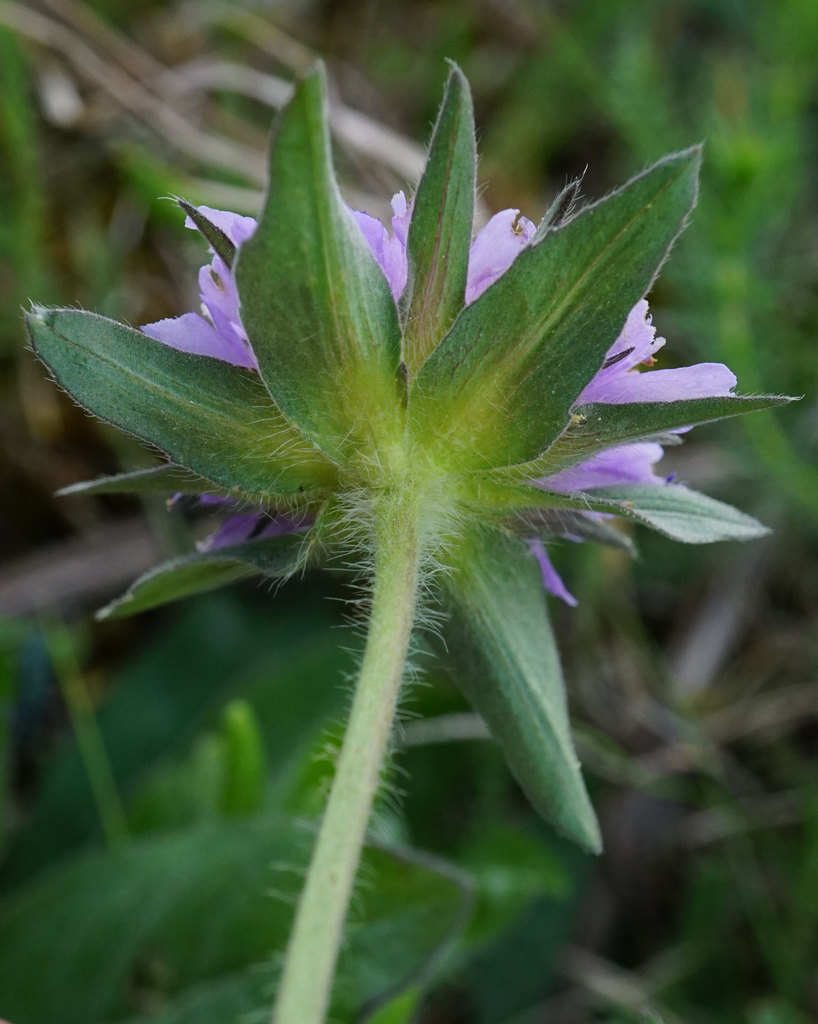 1 / 6
1 / 6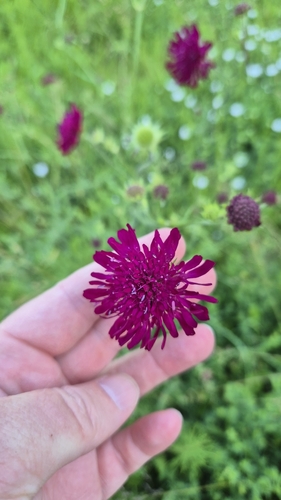
 Image unavailable