
Plant
Blue Elder
Sambucus ceruleaBlue elder is a large, coarse shrub with opposite compound leaves and broad clusters of tiny cream-colored flowers. Later clusters develop a pale blue, waxy coating that makes the drupes conspicuous to birds.
Riparian ShrubPollinator PlantBird Food
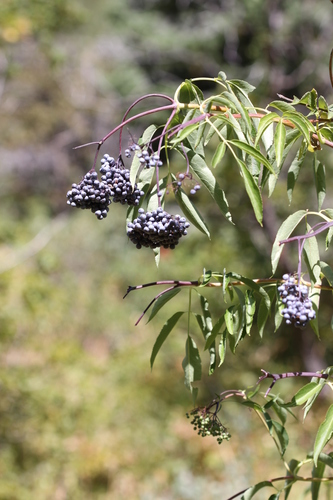
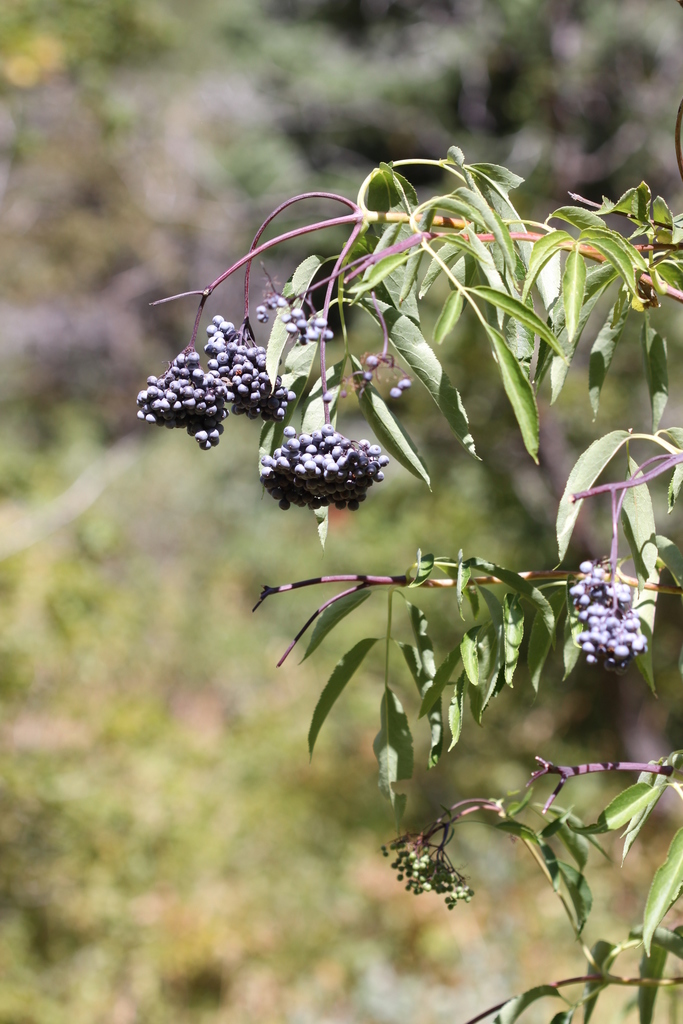
—observations
—countries
—peak records
Not EvaluatedConservation statusIUCN Red List categoriesLCNTVUENCREWEXNot Evaluated — not placed on the risk ladderRed List categories, explained →
Diet & preyPhotosynthetic; takes up water and minerals through a spreading woody root system
Predators
- Birds
- Deer
- Sap-feeding insects
ThreatsRiparian clearing, prolonged drought, severe browsing, and altered water regimes
HabitatsStreambanks, moist canyons, woodland edges, open slopes, and disturbed ground
Life spanA woody perennial that can persist for several decades
Classification
- OrderDipsacales
- FamilyViburnaceae
- GenusSambucus
- SpeciesSambucus cerulea
Range data is not available yet.
Interaction riskHigh
- Low
- Moderate
- High
- Very high
- Why interaction risk is high
- Wild elder material has dangerous look-alikes and variable cyanogenic compounds; do not eat any part based on this profile.
- Why it is dangerous
- Vegetative tissues and unripe drupes contain cyanogenic glycosides that can cause nausea and more serious poisoning.
- How to recognize a risky encounter
- Confirm opposite pinnate leaves, flat flower clusters, and the pale waxy bloom on mature drupes.
- What to do
- Avoid tasting wild material, and wash hands after handling cut stems or crushed foliage.
Responsible observation
- Identify: Check for opposite leaves made of several sharply toothed leaflets.
- Watch: Flower clusters often attract many small bees and flies.
- Leave: Do not sample plant parts or remove wildlife food.
Help improve the field guideSomething wrong?
Checking your Fauna account…Report a name, category, or profile issue for review.