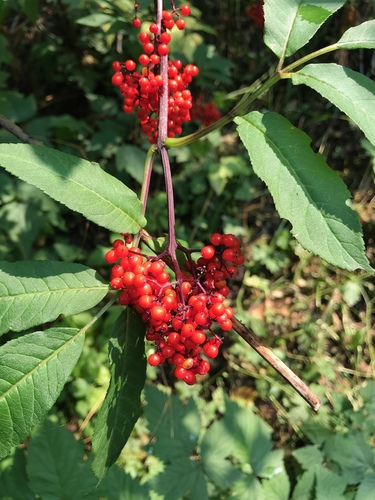
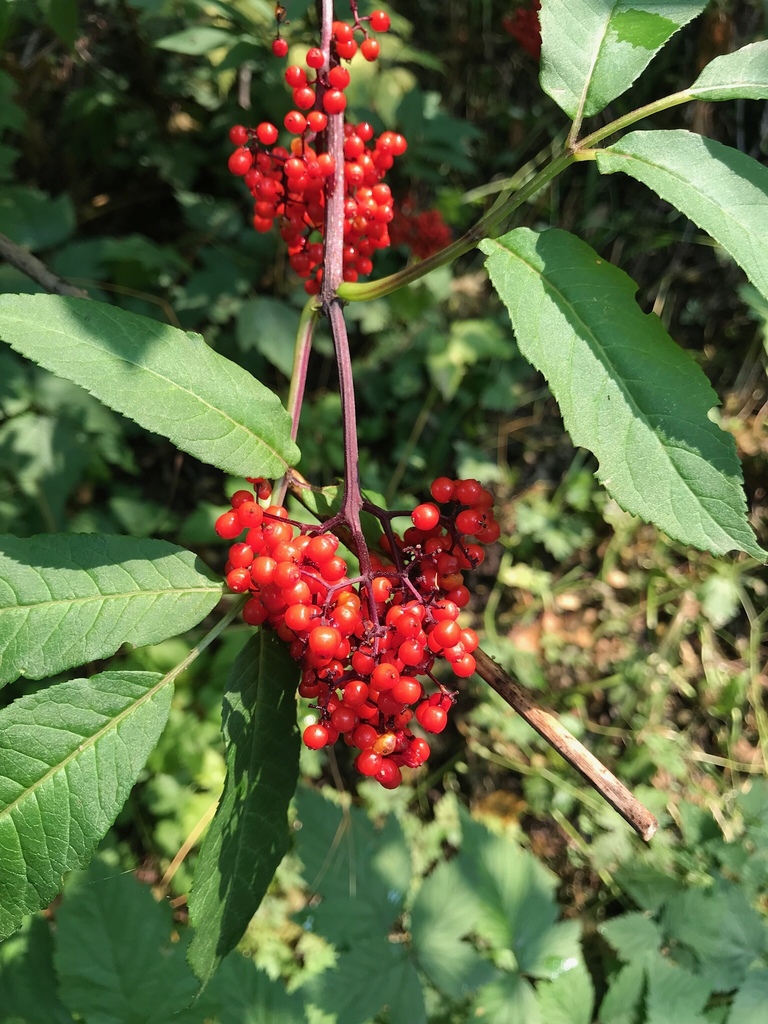
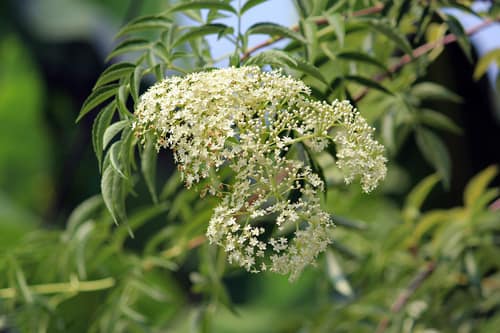
Also known as Red Elderberry, Scarlet Elderberry, Stinking Elderberry, Bunchberry Elder
Red-berried elder is a sprawling deciduous shrub native to temperate regions across the Northern Hemisphere, often colonizing disturbed clearings, stream banks, and moist forest edges. In late spring, conical clusters of creamy white flowers bloom, attracting a wide array of native pollinators before transforming into dense bunches of bright scarlet berries by midsummer. Birds and mammals readily forage on the ripe fruits, helping disperse the seeds across forest gaps.
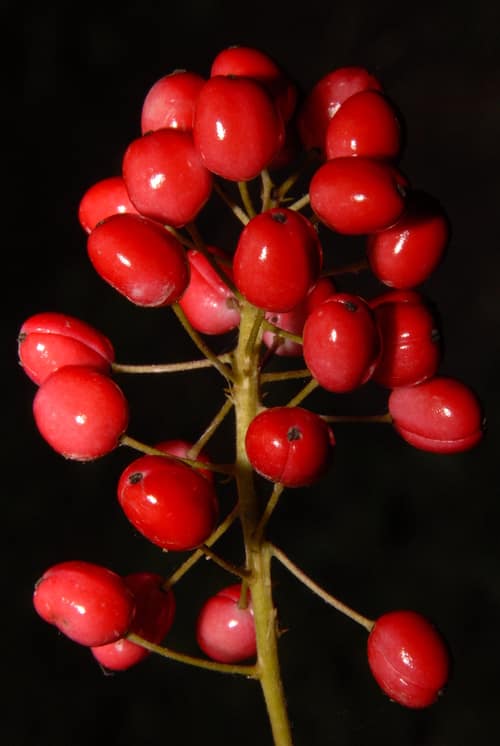
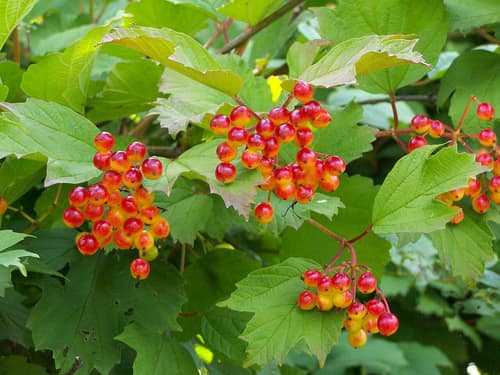
Raw berries, seeds, and foliage contain toxic glycosides, and wild berries have dangerous look-alikes; do not ingest.
Why it is dangerous
Contains cyanogenic glycosides and alkaloid resins in raw berries, leaves, and bark, which cause nausea, vomiting, and severe stomach distress if eaten raw.
How to recognize a risky encounter
Look for oppositely arranged compound leaves with serrated leaflets and conical, pyramidal clusters of bright red berries.
What to do
Observe and photograph the shrub without picking, and never ingest raw berries or leaves.
Responsible observation
Observe Flowers: Look for conical cone-shaped flower clusters in late spring, which contrast with the flat clusters of black elderberry.
Spot Wildlife: Check the bright red berry clusters in midsummer to observe visiting songbirds feeding.
Examine Foliage: Crush a leaf to notice its distinctive pungency, a helpful identification cue.