
Plant · GBIF taxon 2888632
Western Snowberry
Symphoricarpos occidentalisAlso known as Wolfberry, Western Buckbrush
Western snowberry forms dense, colony-like thickets across North American prairies and river bottoms through extensive rhizomatous root networks. Its small, bell-shaped pinkish-white flowers provide valuable nectar to native bees in midsummer, followed by clusters of fleshy white berries that persist through deep snow. These sturdy thickets provide essential winter forage and thermal cover for ground-nesting birds and grazing ungulates.
Deciduous ShrubWildlife CoverPrairie Native
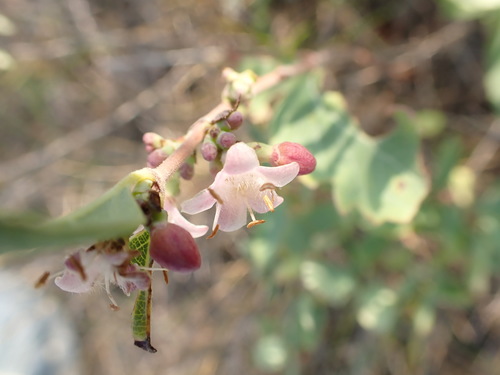
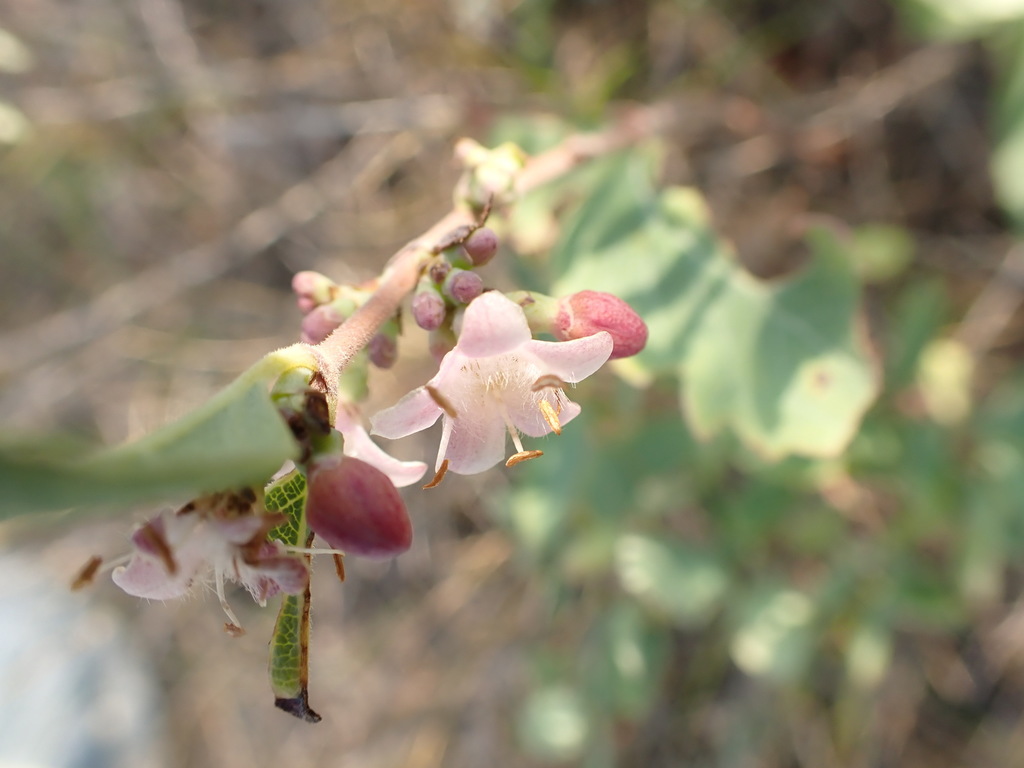
—observations
—countries
—peak records
Least ConcernConservation statusIUCN Red List categoriesLCNTVUENCREWEXLeast ConcernRed List categories, explained →
Diet & prey
- Autotrophic (Photosynthetic)
Predators
- Mule Deer
- Sharp-tailed Grouse
- White-tailed Deer
ThreatsHerbicide spraying, overgrazing, agricultural clearing
HabitatsPrairies, riparian edges, coulees, open woodlands, hillsides
Life span20–40 years (colonies live indefinitely)
Size / weightNot available
Classification
- OrderDipsacales
- FamilyCaprifoliaceae
- GenusSymphoricarpos
- SpeciesSymphoricarpos occidentalis
Range data is not available yet.
Interaction riskHigh
- Low
- Moderate
- High
- Very high
- Why interaction risk is high
- Berries contain toxic saponins; wild berries have toxic look-alikes, so never eat based on app identification.
- Why it is dangerous
- All plant parts, especially the berries, contain saponins and chelidonine alkaloids that trigger nausea, vomiting, abdominal cramps, and diarrhea.
- How to recognize a risky encounter
- Recognizable by low, wiry branching, opposite oval leaves, and tight clusters of white berries that turn yellowish-brown as they age.
- What to do
- Do not consume the fruit or foliage, and supervise domestic pets around winter berry patches.
Responsible observation
- Winter Identification: Look for dense, woody thickets holding clusters of greenish-white or brownish-spotted berries well into the winter months.
- Wildlife Viewing: Watch snowberry patches during harsh winter conditions, as they frequently shelter foraging grouse, quail, and browsing deer.
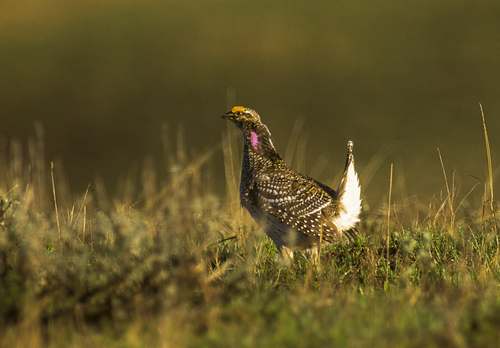
Seed Consumer (c) Francesco Veronesi, some rights reserved (CC BY-SA) · cc-by-sa
Larval Host (c) Marvin Smith, some rights reserved (CC BY-SA) · cc-by-sa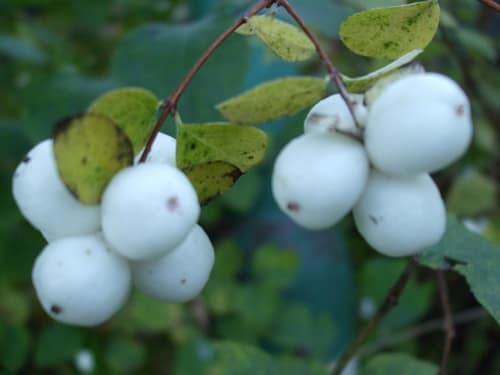
Close Relative (c) tomasz przechlewski, some rights reserved (CC BY) · cc-by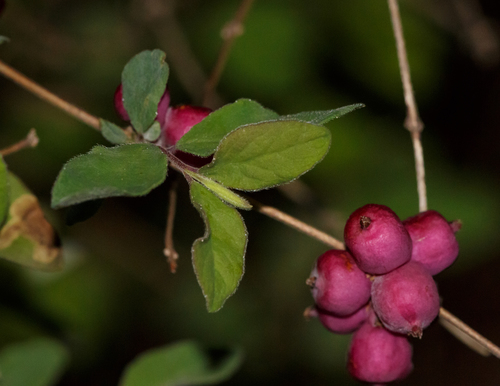
Close Relative (c) Meghan Cassidy, some rights reserved (CC BY-SA), uploaded by Meghan Cassidy · cc-by-sa
Help improve the field guideSomething wrong?
Checking your Fauna account…Report a name, category, or profile issue for review.