
Plant
Leatherleaf Viburnum
Viburnum rhytidophyllumAlso known as Wrinkle-leaf Viburnum, Wrinkled Leaf Viburnum
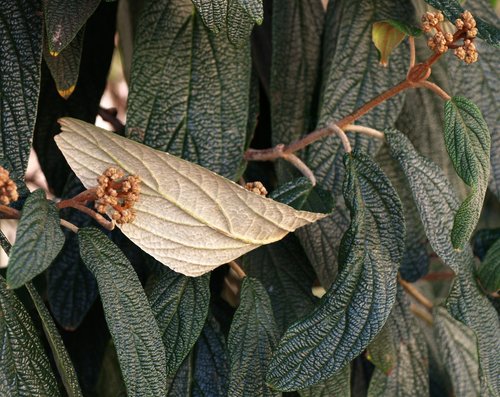
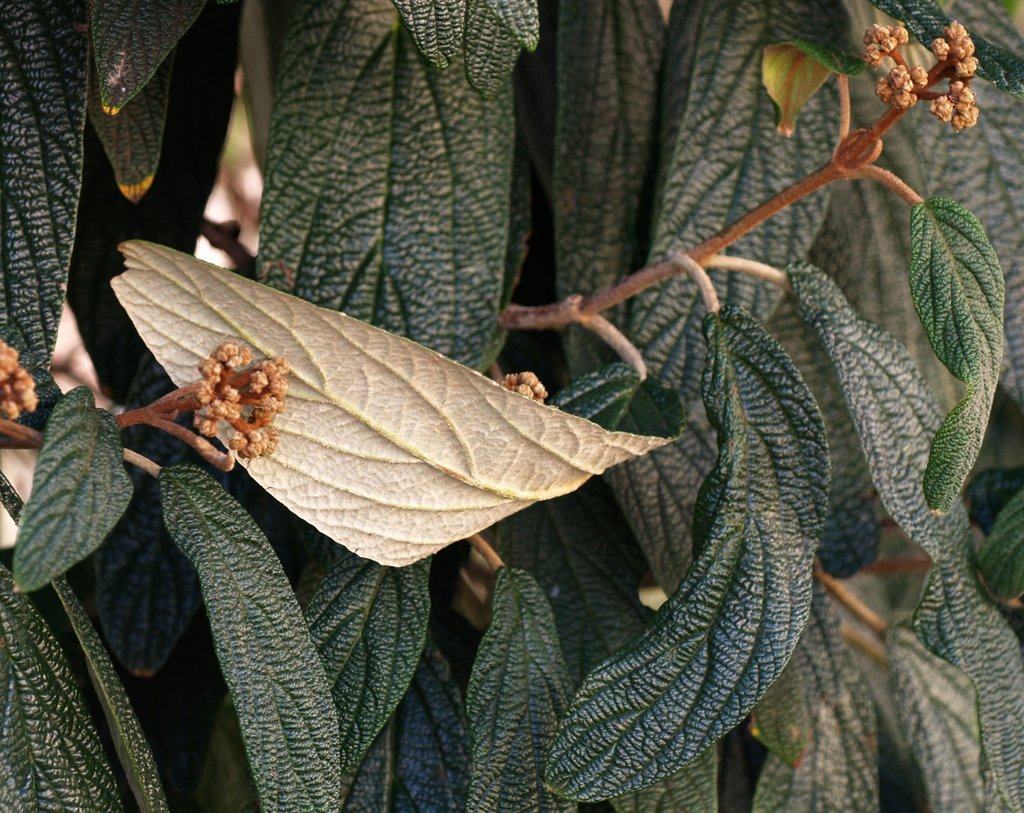
Leatherleaf viburnum is a robust evergreen shrub celebrated for its dramatically puckered, deeply veined foliage and arching growth habit. In late spring, broad flat clusters of creamy white flowers bloom atop the branches, giving way to berries that ripen from brilliant red to shiny black by autumn. Native to central and western China, it provides dense year-round shelter for songbirds and adds distinctive coarse texture to temperate gardens.
EvergreenFloweringShrub
—observations
—countries
—peak records
Not EvaluatedConservation statusIUCN Red List categoriesLCNTVUENCREWEXNot Evaluated — not placed on the risk ladderRed List categories, explained →
Diet & preySunlight, Water, Soil Minerals
Predators
- Viburnum Leaf Beetle
- White-tailed Deer
ThreatsViburnum leaf beetle, root rot in poorly drained soils
HabitatsTemperate forests, scrublands, landscaped parks, gardens
Life span30–50 years
Classification
- OrderDipsacales
- FamilyViburnaceae
- GenusViburnum
- SpeciesViburnum rhytidophyllum
Range data is not available yet.
Interaction riskHigh
- Low
- Moderate
- High
- Very high
- Why interaction risk is high
- Leaf hairs cause skin irritation and berries trigger stomach distress; wild berries have toxic look-alikes.
- Why it is dangerous
- Fine foliage hairs cause mechanical skin irritation, while raw berries contain compounds that trigger gastrointestinal distress.
- How to recognize a risky encounter
- Look for heavy puckering on the dark evergreen leaves and a dense layer of yellow-grey fuzz underneath.
- What to do
- Wear gloves and long sleeves when pruning foliage and avoid consuming any wild berries.
Responsible observation
- Pruning: Trim immediately after late-spring flowering to shape the bush without removing next year's flower buds.
- Handling: Wear gloves and long sleeves when working around foliage to avoid skin irritation from microscopic leaf hairs.
- Bird Watching: Observe branches in late summer and autumn as songbirds forage on the ripening fruit clusters.
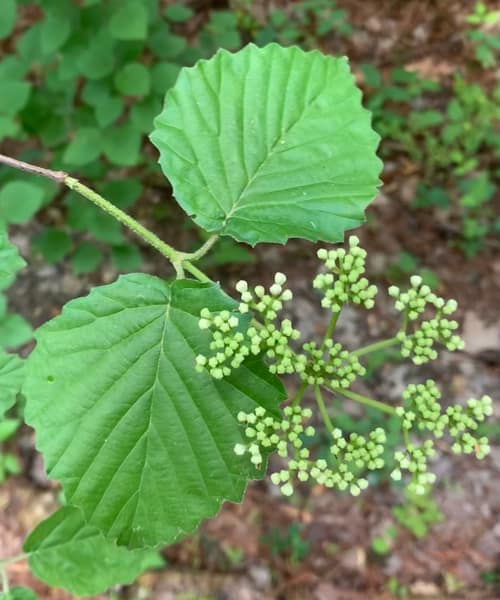
Genus Member (c) Ashwin Srinivasan, some rights reserved (CC BY), uploaded by Ashwin Srinivasan · cc-by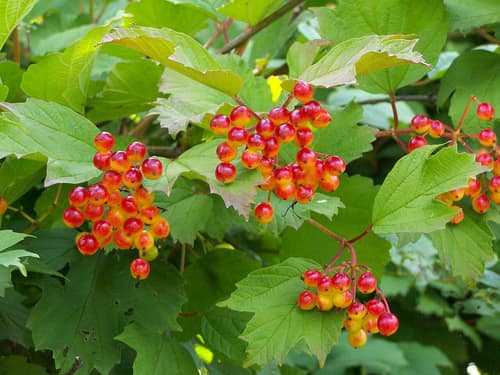
Genus Member Lestat (Jan Mehlich) / CC BY-SA 3.0 · cc-by-sa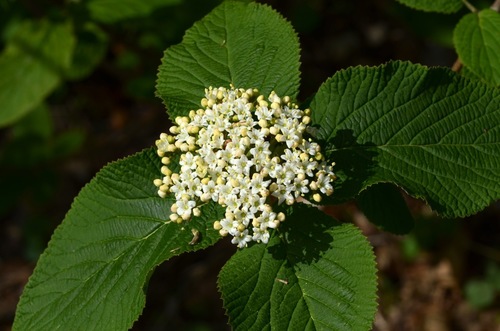
Close Relative (c) Radio Tonreg, some rights reserved (CC BY) · cc-by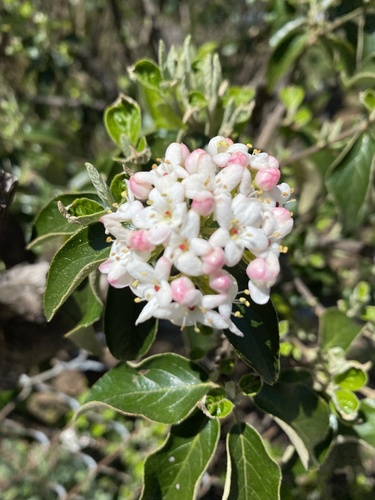
Hybrid Relative (c) Chris Range, some rights reserved (CC BY) · cc-by
Help improve the field guideSomething wrong?
Checking your Fauna account…Report a name, category, or profile issue for review.