
Plant · GBIF taxon 2888553
Pacific Bleeding Heart
Dicentra formosaAlso known as Western Bleeding Heart
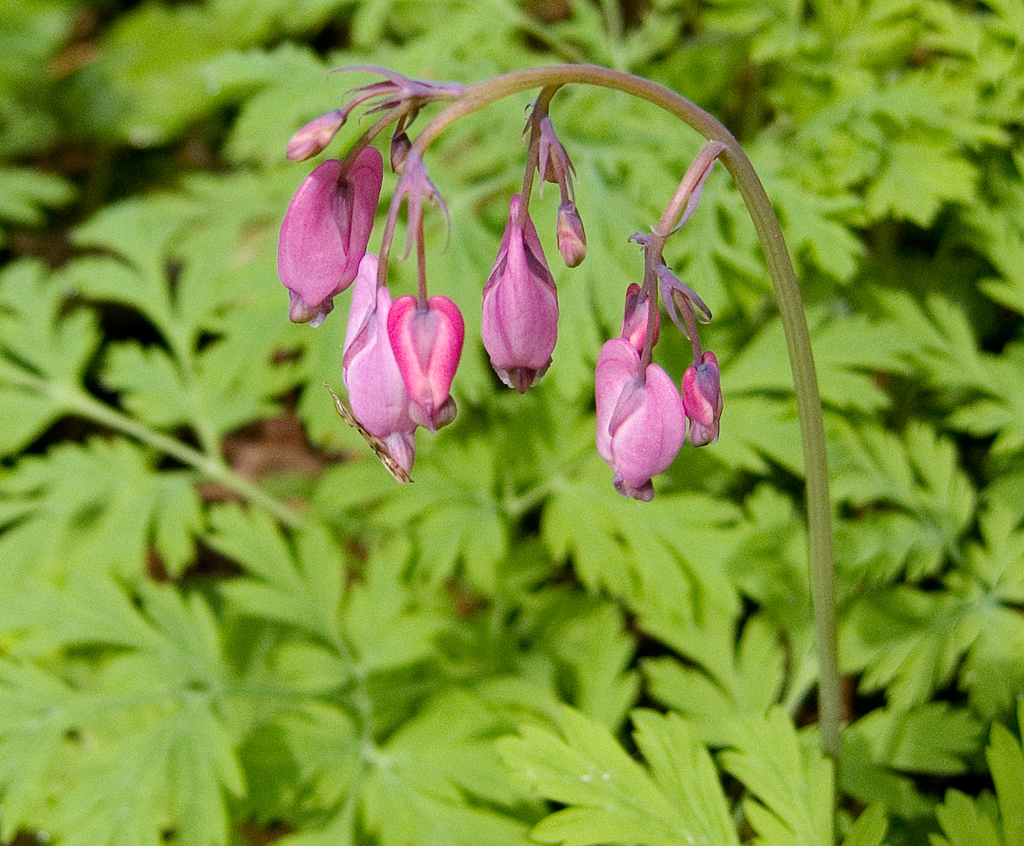
Pacific Bleeding Heart forms soft mounds of finely divided, fernlike leaves beneath arching stems of pendant heart-shaped flowers. Flower color ranges from pink and purple to pale cream on shaded forest floors of the Pacific Northwest.
woodland wildflowerheart-shaped flowersrhizomatous perennial
—observations
—countries
—peak records
Not EvaluatedConservation statusIUCN Red List categoriesLCNTVUENCREWEXNot Evaluated — not placed on the risk ladderRed List categories, explained →
Diet & prey
- Produces energy through photosynthesis and stores reserves in underground rhizomes
Predators
- slugs
- snails
- leaf-eating insects
ThreatsTrampling, digging, forest clearing, drought, and altered moisture conditions
HabitatsMoist forest floor, streambanks, shaded slopes, woodland edges, and disturbed clearings
Life spanA perennial herb that can persist and spread from rhizomes for many years
Size / weightNot available
Classification
- FamilyPapaveraceae
- SpeciesDicentra formosa
Range data is not available yet.
Interaction riskHigh
- Low
- Moderate
- High
- Very high
- Why interaction risk is high
- Bleeding heart contains alkaloids that can cause poisoning; do not ingest its leaves, flowers, or roots.
- Why it is dangerous
- The plant contains isoquinoline alkaloids that can affect the nervous and digestive systems if swallowed.
- How to recognize a risky encounter
- Use both the divided foliage and paired outer petals of each hanging flower for identification.
- What to do
- Do not taste the plant, keep it from pets and children, and wash after accidental sap contact.
Responsible observation
- Identify: Check for pendant heart-shaped flowers above finely cut foliage.
- Protect: Stay on established ground so shallow rhizomes are not crushed or exposed.
Help improve the field guideSomething wrong?
Checking your Fauna account…Report a name, category, or profile issue for review.