
Plant · GBIF taxon 2888443
Common Poppy
Papaver rhoeasAlso known as Corn Poppy, Field Poppy, Flanders Poppy
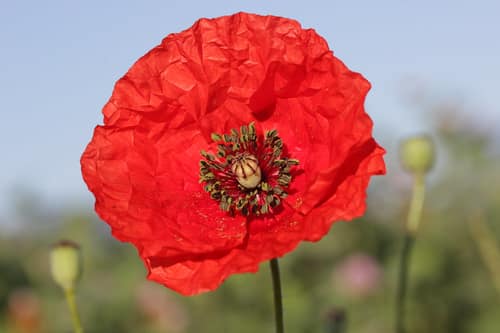
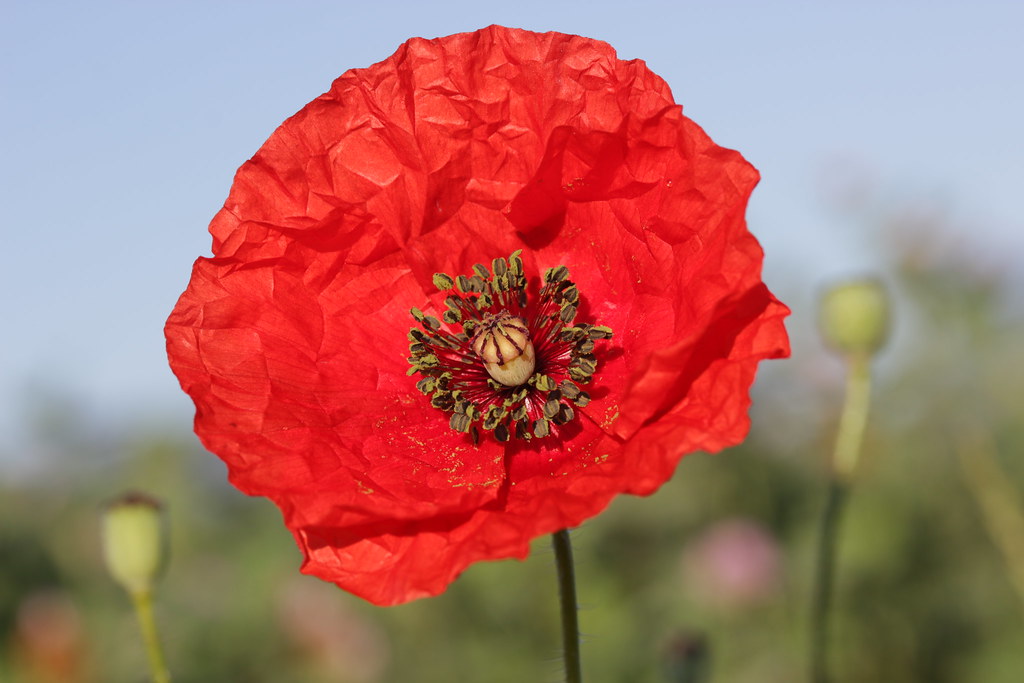
Common poppies are delicate annuals with hairy stems and four broad scarlet petals, often marked dark near the base. Nodding buds turn upright as the crumpled petals unfold around a dark center.
annual wildflowerscarlet bloomdisturbed ground
—observations
—countries
—peak records
Not EvaluatedConservation statusIUCN Red List categoriesLCNTVUENCREWEXNot Evaluated — not placed on the risk ladderRed List categories, explained →
Diet & prey
- Produces energy through photosynthesis and completes growth using seasonal soil moisture
Predators
- aphids
- caterpillars
- grazing mammals
ThreatsHerbicides, intensive cultivation, loss of field margins, and mowing before reproduction
HabitatsCultivated-field margins, roadsides, disturbed grassland, fallow ground, and open sunny soil
Life spanAn annual that germinates, flowers, and completes its life cycle within one season
Size / weightNot available
Classification
- OrderRanunculales
- FamilyPapaveraceae
- GenusPapaver
- SpeciesPapaver rhoeas
Range data is not available yet.
Interaction riskHigh
- Low
- Moderate
- High
- Very high
- Why interaction risk is high
- Poppy tissues contain alkaloids and should not be swallowed by people, pets, or livestock.
- Why it is dangerous
- Common poppy contains biologically active alkaloids that can cause toxic effects after sufficient ingestion.
- How to recognize a risky encounter
- Confirm an annual hairy poppy with nodding buds and broad scarlet petals, often dark at the base.
- What to do
- Do not taste or prepare wild poppies, and keep pulled plant material away from children and animals.
Responsible observation
- Identify: Look for hairy stems, nodding buds, and four scarlet petals around a dark center.
- Observe: Leave field-edge plants standing and avoid entering active cultivation.
Keep collecting in Fauna
Found in Collections
Ecosystem chain Pro
Mystic Meadows
Common Poppy is found in this collection. Identify it in Fauna to fill this slot and continue your progress.
Unlock to track progress
Help improve the field guideSomething wrong?
Checking your Fauna account…Report a name, category, or profile issue for review.