
Plant · GBIF taxon 2883005
Mountain Laurel
Kalmia latifoliaAlso known as Calico Bush, Spoonwood
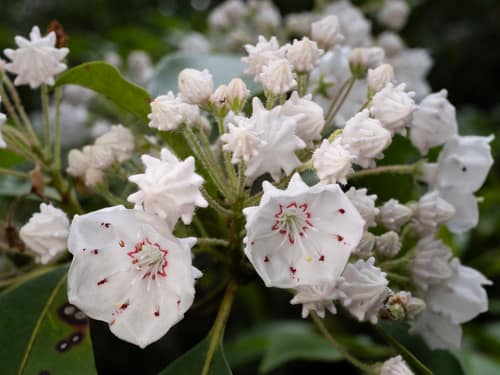
Mountain laurel forms dense evergreen thickets with leathery leaves and intricate white-to-pink flower cups. Each flower holds bent stamens under tension, releasing them toward visiting insects when triggered.
Evergreen ShrubSpring-loaded StamensRocky Woodland
 1 / 7
1 / 7—observations
—countries
—peak records
Least ConcernConservation statusIUCN Red List categoriesLCNTVUENCREWEXLeast ConcernRed List categories, explained →
Diet & prey
- Photosynthesis; roots absorb water and mineral nutrients
Predators
- Lace bugs
- Leaf-feeding caterpillars
- Browsing mammals
ThreatsHabitat clearing, prolonged drought, severe fire, fungal leaf disease, and invasive plants
HabitatsAcidic woodlands, rocky slopes, mountain ridges, stream banks, and shrub thickets
Life spanA long-lived shrub that can persist for several decades
Size / weightNot available
Classification
- OrderEricales
- FamilyEricaceae
- GenusKalmia
- SpeciesKalmia latifolia
Range data is not available yet.
Interaction riskHigh
- Low
- Moderate
- High
- Very high
- Why interaction risk is high
- All tissues contain grayanotoxins; do not ingest them, and keep livestock, children, and pets away.
- Why it is dangerous
- Grayanotoxins disrupt sodium channels and can cause vomiting, weakness, dangerously slow heart rhythms, and severe poisoning.
- How to recognize a risky encounter
- Look for leathery evergreen leaves and clustered pentagonal flower cups marked with pink or purple details.
- What to do
- Never taste any tissue or allow livestock and pets to browse it; wash after accidental plant contact.
Responsible observation
- Flowers: Notice the ten small pockets holding stamens inside each cup.
- Leaves: Check for thick evergreen blades arranged along woody stems.
Help improve the field guideSomething wrong?
Checking your Fauna account…Report a name, category, or profile issue for review.