
Plant · GBIF taxon 2882984
Bog Labrador Tea
Rhododendron groenlandicumAlso known as Muskeg Tea, Swamp Tea, Hudson Bay Tea
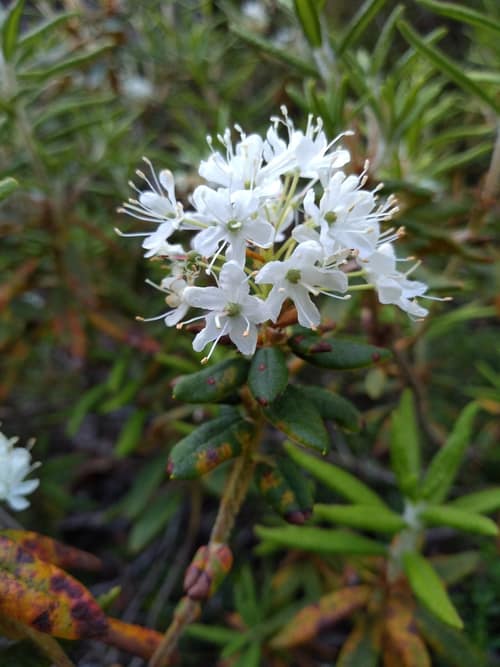
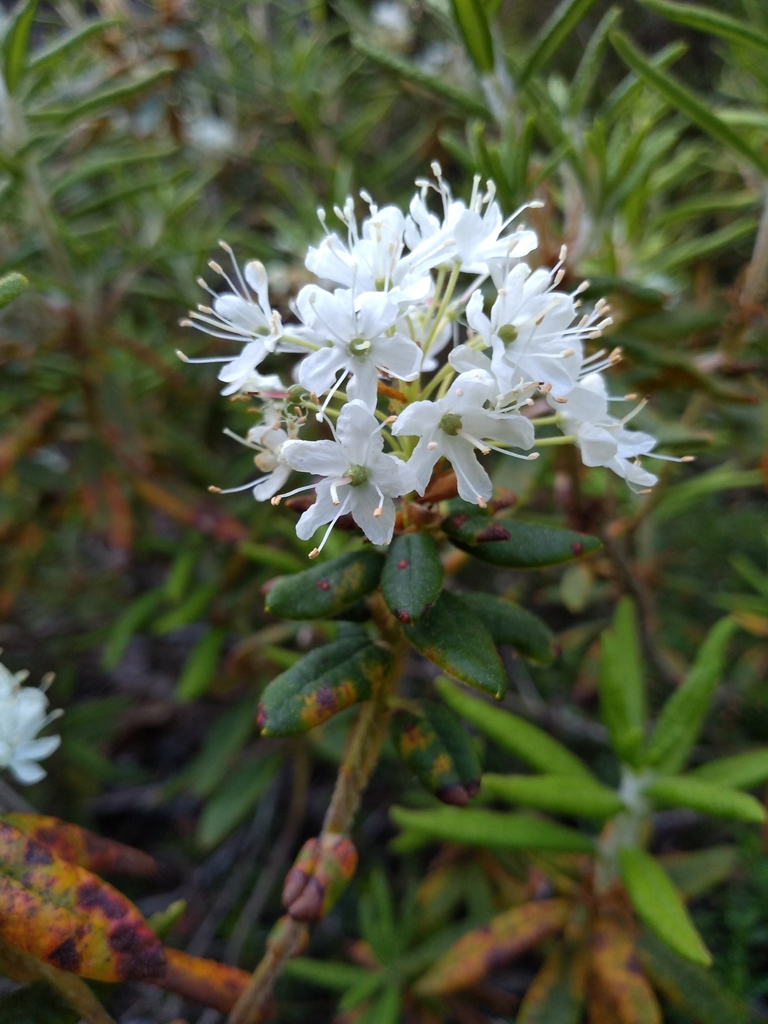
Bog Labrador Tea is a low evergreen shrub with narrow leathery leaves whose rolled margins frame a dense rusty felt beneath. Rounded clusters of small white flowers rise above the foliage across acidic bogs, muskeg, and open spruce wetlands.
Bog ShrubEvergreen LeavesRusty Leaf Undersides
—observations
—countries
—peak records
Not EvaluatedConservation statusIUCN Red List categoriesLCNTVUENCREWEXNot Evaluated — not placed on the risk ladderRed List categories, explained →
Diet & prey
- Produces energy through photosynthesis and absorbs scarce nutrients through shallow roots in acidic peat
Predators
- Moose
- Snowshoe hares
- Leaf-feeding caterpillars
ThreatsPeat extraction, wetland drainage, severe fire, off-road vehicles, shrub expansion, and rapid northern climate change
HabitatsPeat bogs, muskeg, tundra, black spruce forest, wet barrens, and acidic northern wetlands
Life spanA slow-growing woody perennial that can persist for many decades
Size / weightNot available
Classification
- OrderEricales
- FamilyEricaceae
- GenusRhododendron
- SpeciesRhododendron groenlandicum
Range data is not available yet.
Interaction riskHigh
- Low
- Moderate
- High
- Very high
- Why interaction risk is high
- Leaves contain potent compounds that can cause poisoning; do not brew or ingest wild-collected plant material.
- Why it is dangerous
- Labrador tea foliage contains grayanotoxins and other active compounds, and an excessive or incorrectly identified preparation can cause serious illness.
- How to recognize a risky encounter
- Check narrow evergreen leaves with strongly rolled edges and a thick rusty-brown felt on the lower surface.
- What to do
- Do not taste, brew, or give wild material to people or animals; contact poison specialists after suspected ingestion.
Responsible observation
- Underside: View the dense rusty hairs beneath a rolled leaf margin without picking it.
- Flowers: Look for a rounded cluster of small white five-petaled blooms.
- Wetland: Stay on boardwalks or firm routes to protect fragile peat and shallow roots.
Help improve the field guideSomething wrong?
Checking your Fauna account…Report a name, category, or profile issue for review.