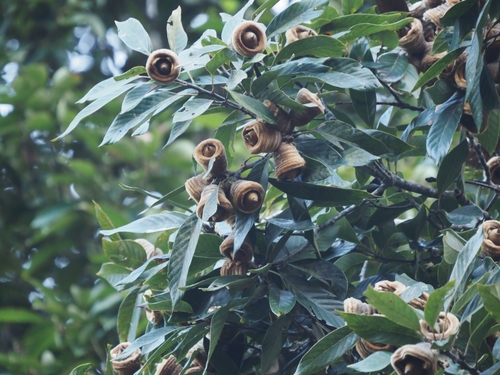
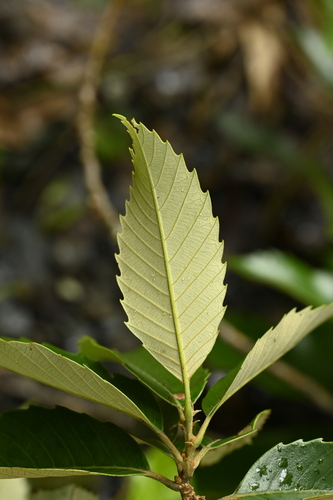
Quercus rex stands out among Asian ring-cupped oaks for bearing massive acorns enclosed by velvety, concentrically scaled cups. Towering up to thirty meters, this evergreen tree anchors the canopy of seasonal tropical and subtropical hill forests across the Indo-Burma biodiversity hotspot. Its heavy timber and substantial annual seed crops sustain diverse montane wildlife, though mature stands have diminished under shifting cultivation and timber harvesting.
Acorns and foliage contain high levels of tannins that are toxic to dogs and livestock if ingested.
Why it is dangerous
Leaves and raw acorns contain gallotannins that break down into toxic metabolites, causing potential gastrointestinal ulceration and renal damage in grazing animals or companion pets.
How to recognize a risky encounter
Recognizable by exceptionally large acorns seated in saucer-like cups with concentric rings and large, stiff evergreen leaves.
What to do
Keep horses, cattle, and domestic dogs from foraging on fallen acorns or young sapling foliage.
What to notice
Look for a tall canopy oak producing massive, velvety-cupped acorns in moist submontane valleys.
Support conservation
Leave fallen acorns and seedlings undisturbed on the forest floor to aid natural canopy regeneration.
Responsible observation
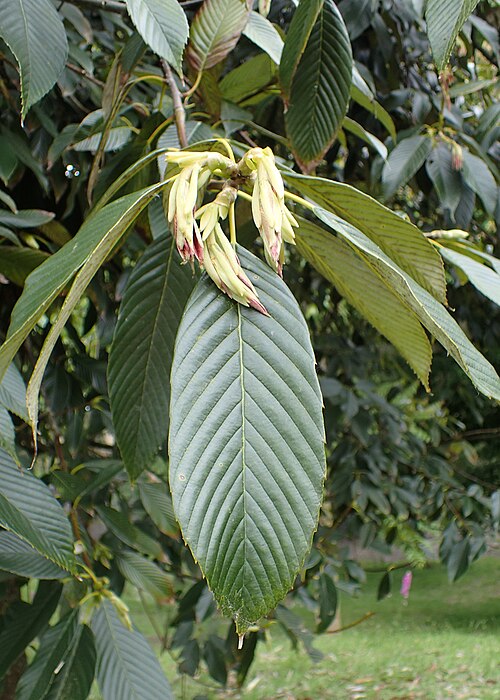
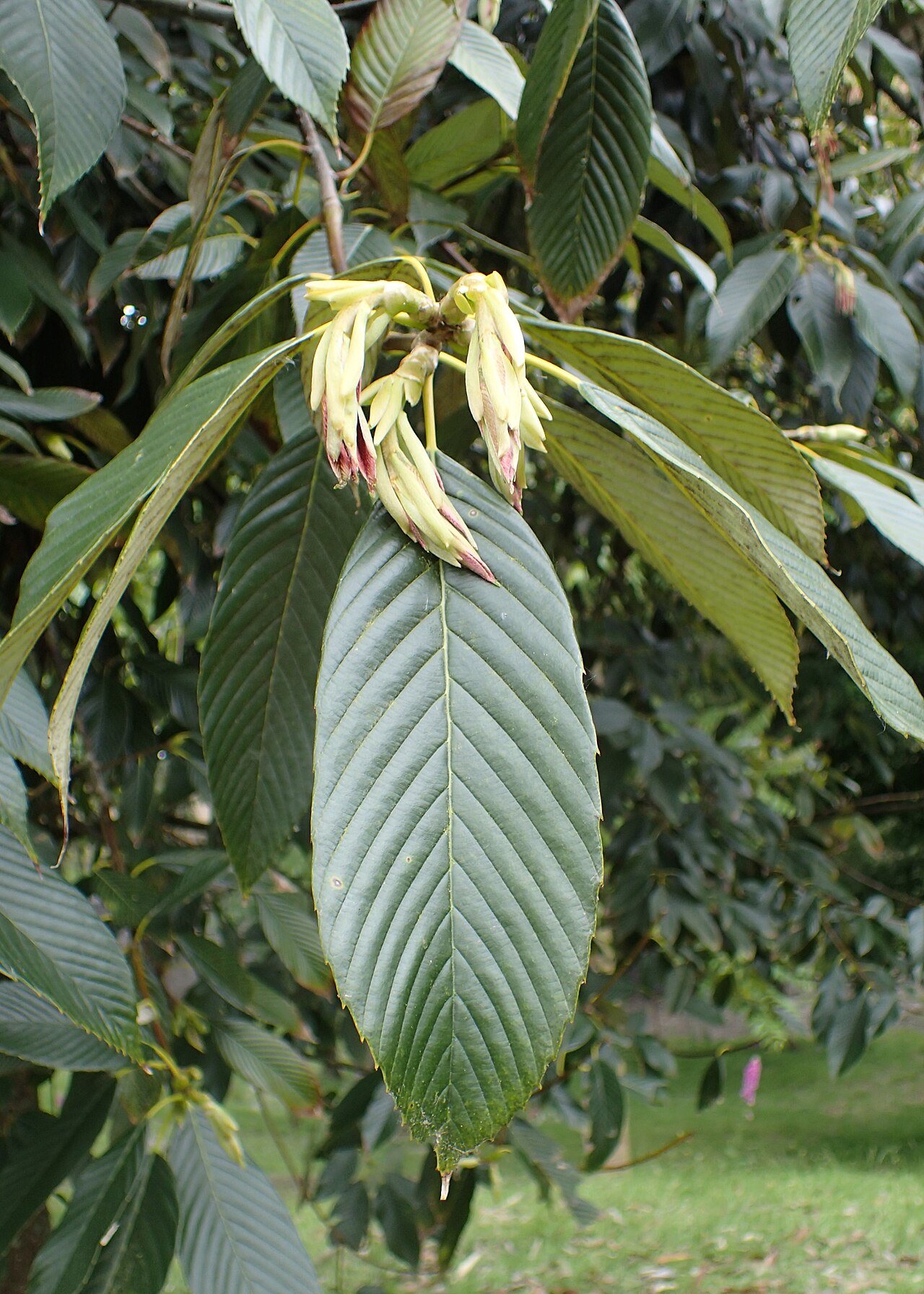
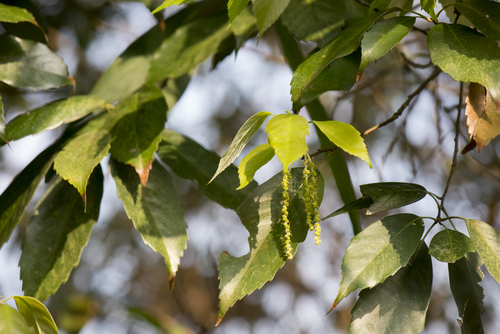
Leaf Inspection: Look for large, leathery leaves with smooth to slightly wavy margins clustered near branch ends.
Acorn Identification: Search the ground below mature canopies for unusually heavy acorns wrapped in ringed, velvety cups.
Habitat Spotting: Seek mature trees in undisturbed, humid valleys and ravine evergreen forests at mid elevations.