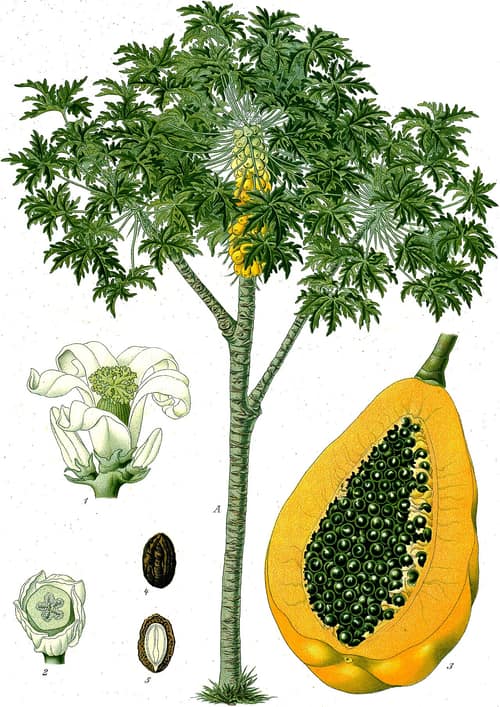
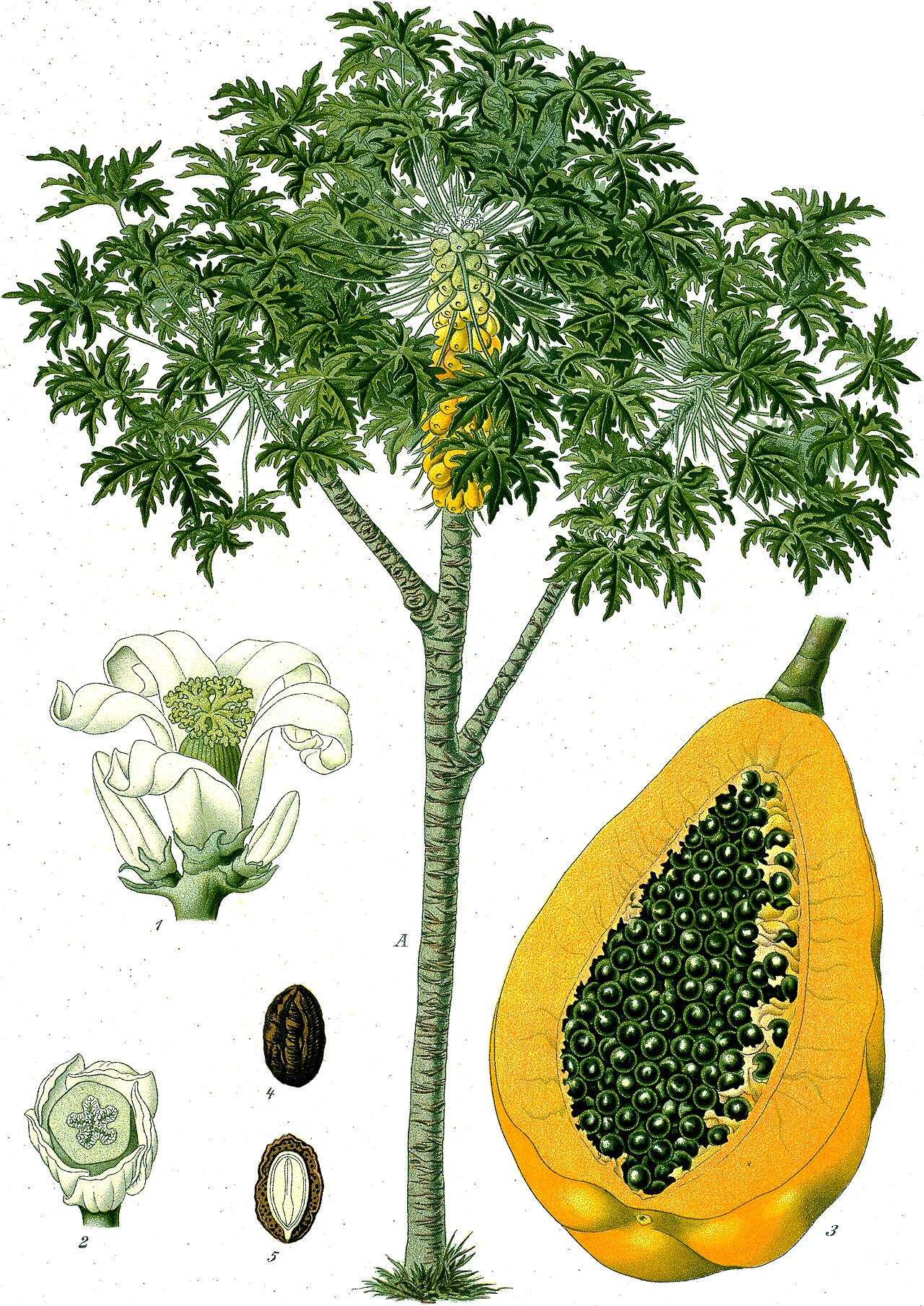
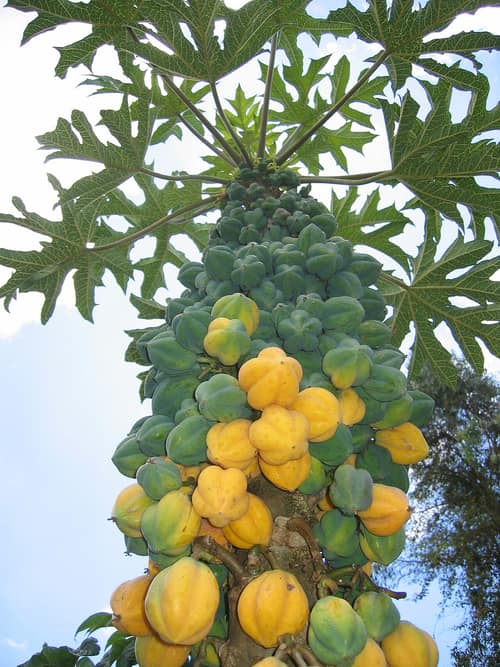
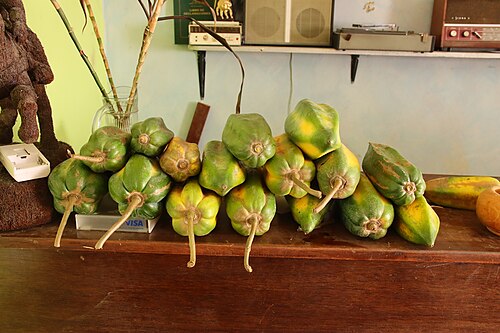
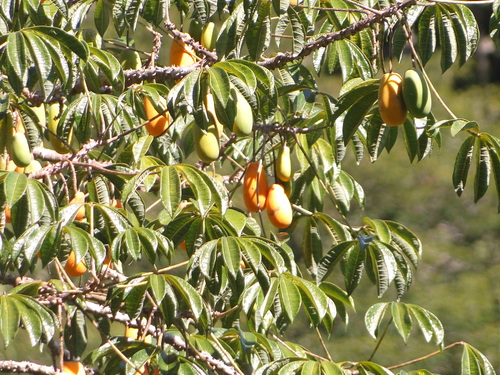
Resembling a slender palm but structurally a giant herbaceous plant, papaya develops a hollow, spongy trunk crowned by a dramatic umbrella of deeply palmately lobed leaves. Plants display complex sexual expression, appearing as distinct male, female, or self-pollinating hermaphrodite individuals whose flowers determine whether fruit develops on long pendulous stalks or tight against the stem. In tropical understories, the dense clusters of melon-like fruit serve as an important energy source for fruit-eating bats and birds, which spread the seeds through forest clearings.
Data DeficientConservation statusIUCN Red List categoriesLCNTVUENCREWEXData Deficient — not placed on the risk ladderRed List categories, explained →
Key facts
Diet & preySunlight, Water, Soil Nutrients
Predators
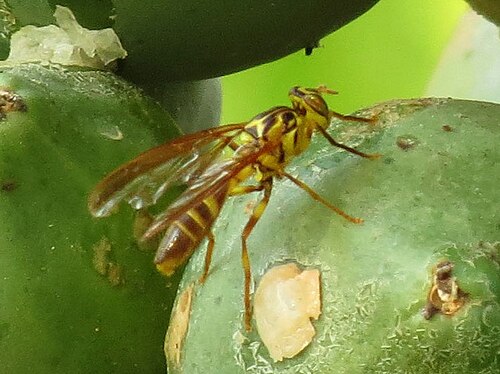
Papaya Fruit Fly
Two-Spotted Spider Mite
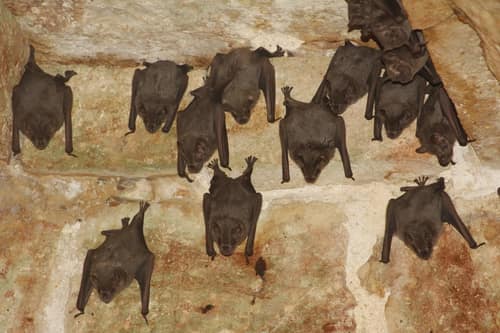
Jamaican Fruit Bat
ThreatsPapaya ringspot virus, anthracnose, phytophthora root rot, and freezing temperatures
HabitatsTropical rainforest borders, riverbanks, disturbed gaps, and agricultural groves
Life span4–10 years
Classification
OrderBrassicales
FamilyCaricaceae
GenusCarica
SpeciesCarica papaya
Range & activity
Range data is not available yet.
Safe observation
Interaction riskLow
Low
Moderate
High
Very high
Why interaction risk is low
Milky latex can irritate skin, and wild fruits have toxic look-alikes; avoid contact and do not ingest.
Why it is dangerous
Produces white milky latex containing the proteolytic enzyme papain, which breaks down skin proteins to cause contact dermatitis and painful eye inflammation.
How to recognize a risky encounter
Recognizable by an unbranched ring-scarred green trunk, giant umbrella-like lobed leaves, and large hanging fruit that leaks white sap if bruised.
What to do
Wear protective gloves when pruning, avoid touching the eyes after contact, and immediately wash exposed skin with cool water and soap.
Responsible observation
Sap Caution: Avoid bare-skin contact with the white sap from wounded stems, as it can cause irritation.
Sex Identification: Look for flowers along long dangling sprays for males or tight stem clusters for females.
Wildlife Watching: Check ripe fruit canopies around sunset to spot foraging fruit bats and nocturnal insects.