
Plant · GBIF taxon 2874220
Yellow Passionflower
Passiflora luteaAlso known as Small-flowered Passionflower, Yellow Passion-vine
Yellow passionflower weaves delicate tendrils through moist woodlands, rich thickets, and shaded stream banks across eastern North America. Its subtle, star-like flowers feature pale greenish-yellow fringes and attract specialist mining bees that feed almost exclusively on its pollen. Bright orange Gulf Fritillary caterpillars frequently strip the smooth, three-lobed leaves, forming a vital ecological link in native forest understories.
Perennial VineNative WildflowerHost Plant
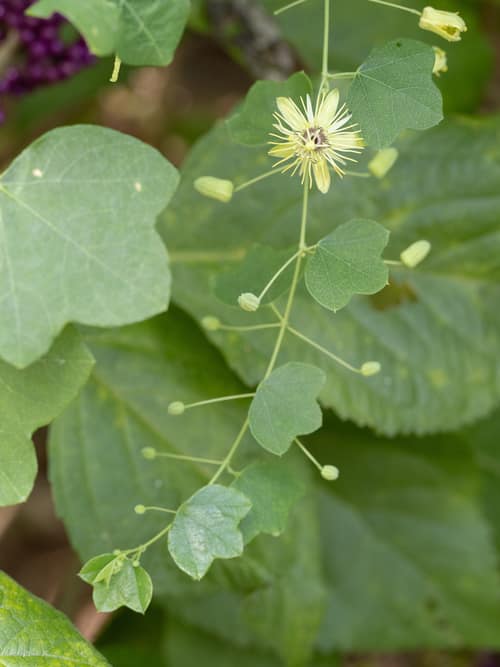
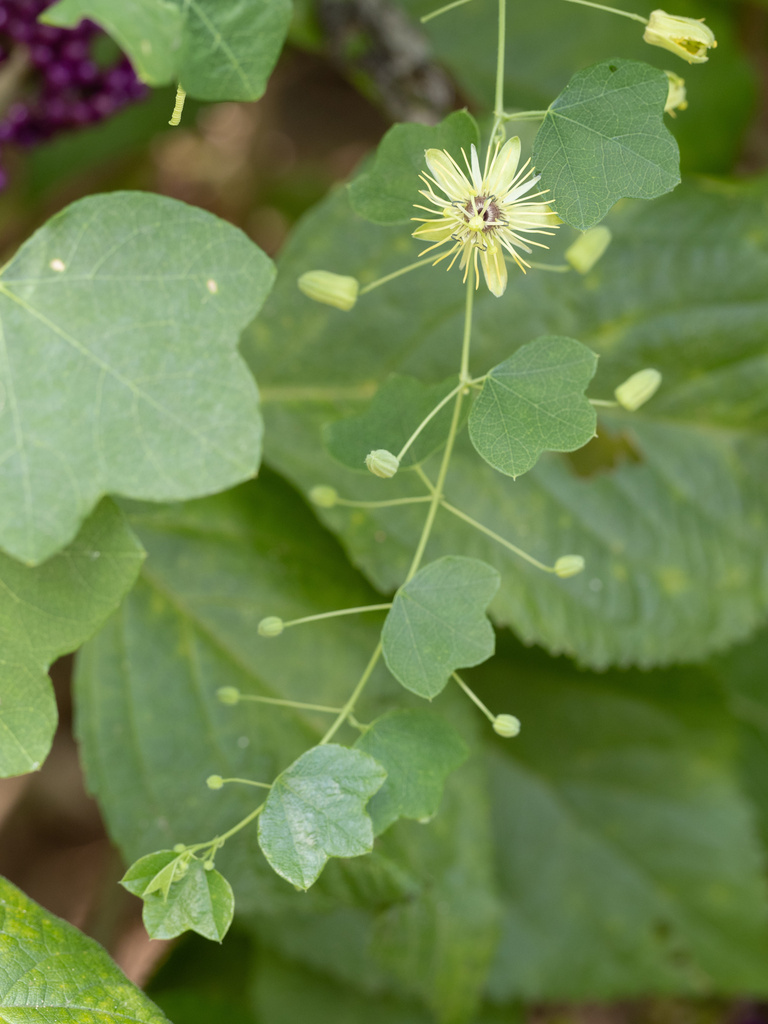 1 / 7
1 / 7—observations
—countries
—peak records
Least ConcernConservation statusIUCN Red List categoriesLCNTVUENCREWEXLeast ConcernRed List categories, explained →
Diet & prey
- Autotrophic (Photosynthetic)
Predators
- Gulf Fritillary Caterpillar
- Zebra Heliconian Caterpillar
- Variegated Fritillary Caterpillar
ThreatsHabitat clearance, land development, invasive vine competition
HabitatsMoist woodlands, stream banks, river bottoms, rich thickets
Life spanPerennial
Size / weightNot available
Classification
- FamilyPassifloraceae
- SpeciesPassiflora lutea
Range data is not available yet.
Interaction riskLow
- Low
- Moderate
- High
- Very high
- Why interaction risk is low
- Wild berries have toxic look-alikes; never eat based on app identification alone.
Responsible observation
- Look Closely: Search for the tiny greenish-yellow blooms tucked under dense leaf canopy in midsummer.
- Check Leaves: Inspect the three-lobed leaves for bright orange caterpillars and clear egg dots.
- Provide Support: Offer a light trellis or nearby shrubs for tendrils to climb in native shade gardens.
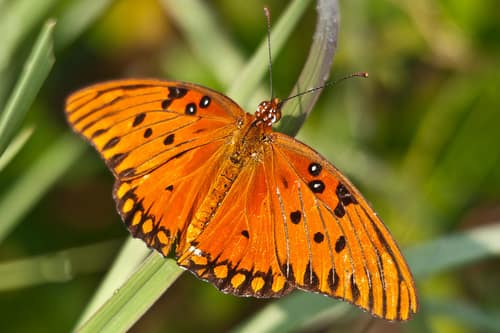
Herbivore "Gulf Fritillary butterfly" by USFWS/Southeast is licensed under CC BY 2.0. To view a copy of this license, visit https://creativecommons.org/licenses/by/2.0/. · cc-by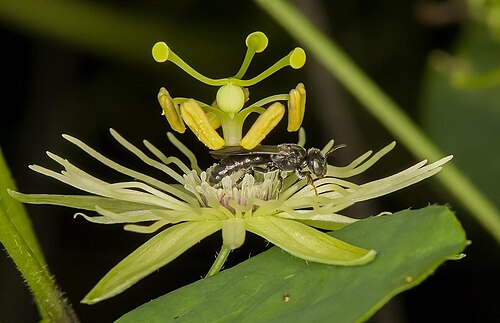
Pollinator no rights reserved / CC0 · cc0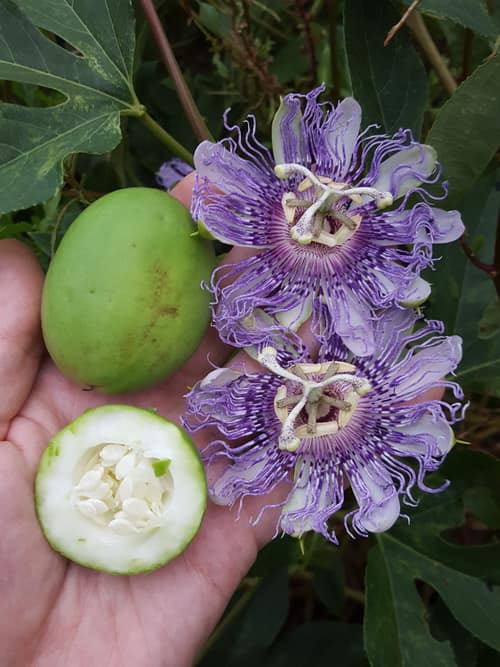
Close Relative (c) Alex Abair, some rights reserved (CC BY), uploaded by Alex Abair · cc-by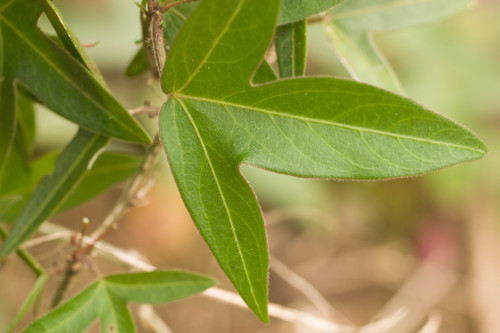
Close Relative (c) Kevin Faccenda, some rights reserved (CC BY) · cc-by
Help improve the field guideSomething wrong?
Checking your Fauna account…Report a name, category, or profile issue for review.