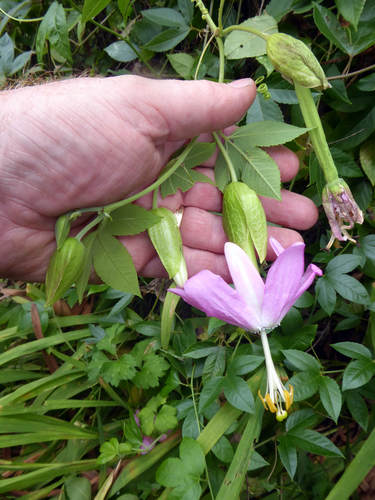
Also known as Blue Passionflower, Common Passion Flower
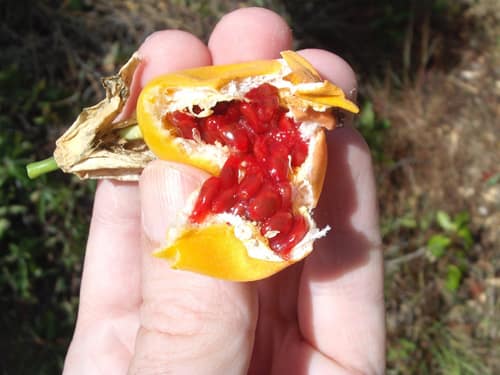
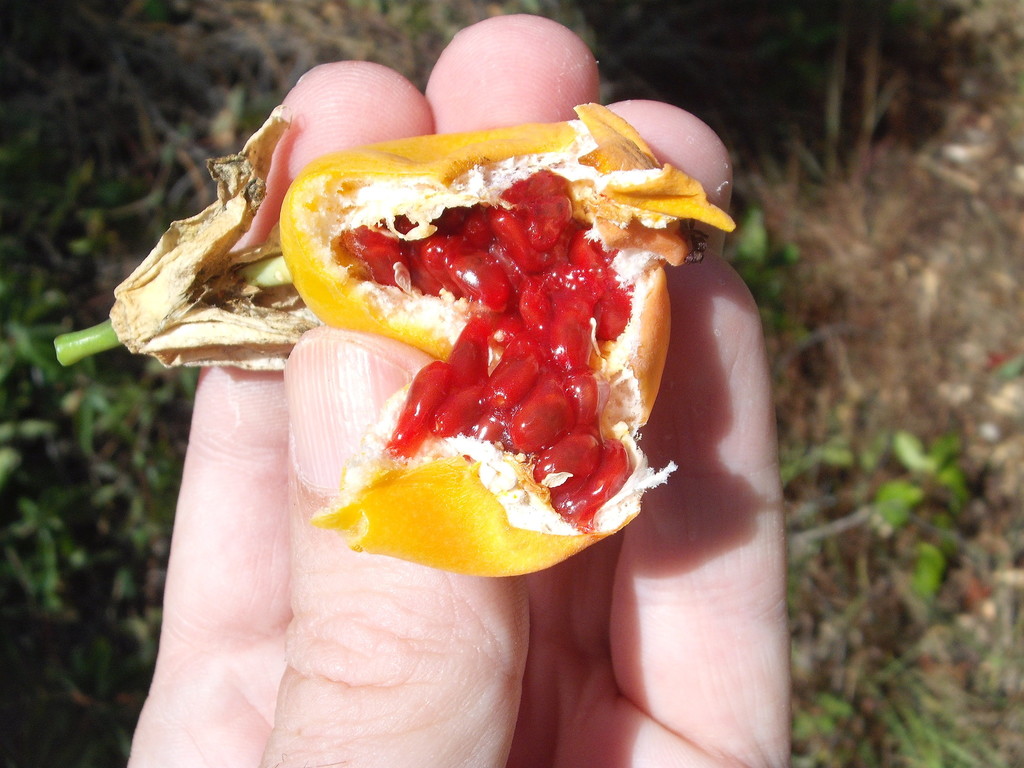
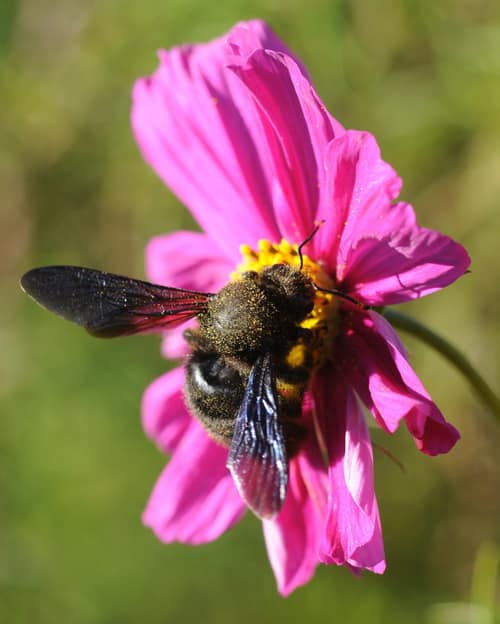
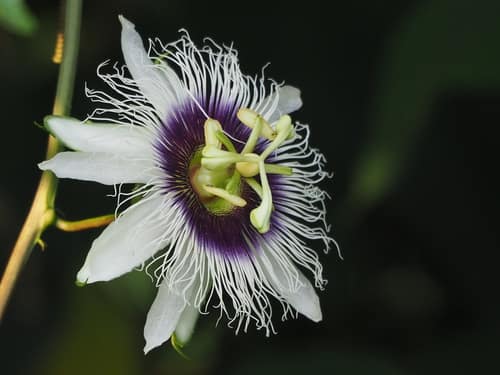
Bluecrown passionflower scales trellises and canopy edges using slender, coiling tendrils that anchor its vigorous woody vines. Large, intricate blooms open for just a single day, displaying a complex crown of blue, white, and purple filaments engineered to dust large visiting carpenter bees with pollen. In autumn, the pollinated flowers develop into oval, leathery orange fruits eagerly stripped by wild birds that disperse the seeds across wide distances.
Foliage and raw unripe fruit contain cyanogenic compounds; wild fruits also carry toxic look-alikes.
Why it is dangerous
Foliage, roots, and unripe fruit contain cyanogenic glycosides that degrade into hydrogen cyanide when chewed, causing vomiting, lethargy, and respiratory distress in humans and pets.
How to recognize a risky encounter
Look for deeply five-lobed palmate leaves, central rings of blue-banded filaments, and oval orange fruits dangling on wiry stems.
What to do
Keep ornamental plantings out of reach of browsing dogs and cats, and never consume the raw plant tissues.
Responsible observation
Garden Trellising: Provide sturdy wires or wooden lattice supports to accommodate rapid vertical climbing.
Pollinator Watching: Inspect open blossoms around midday to observe heavy carpenter bees foraging at the central crown.
Winter Care: Mulch root zones deeply in colder climates so stems can re-emerge if frost kills surface vines.