Also known as Corpse Flower, Corpse Plant, Bunga Bangkai
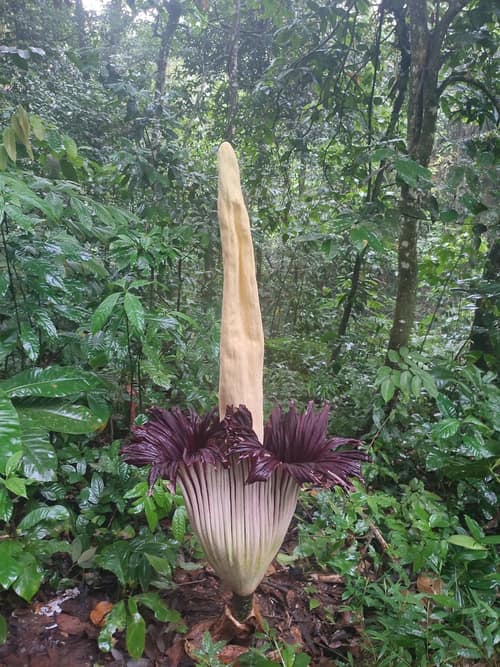
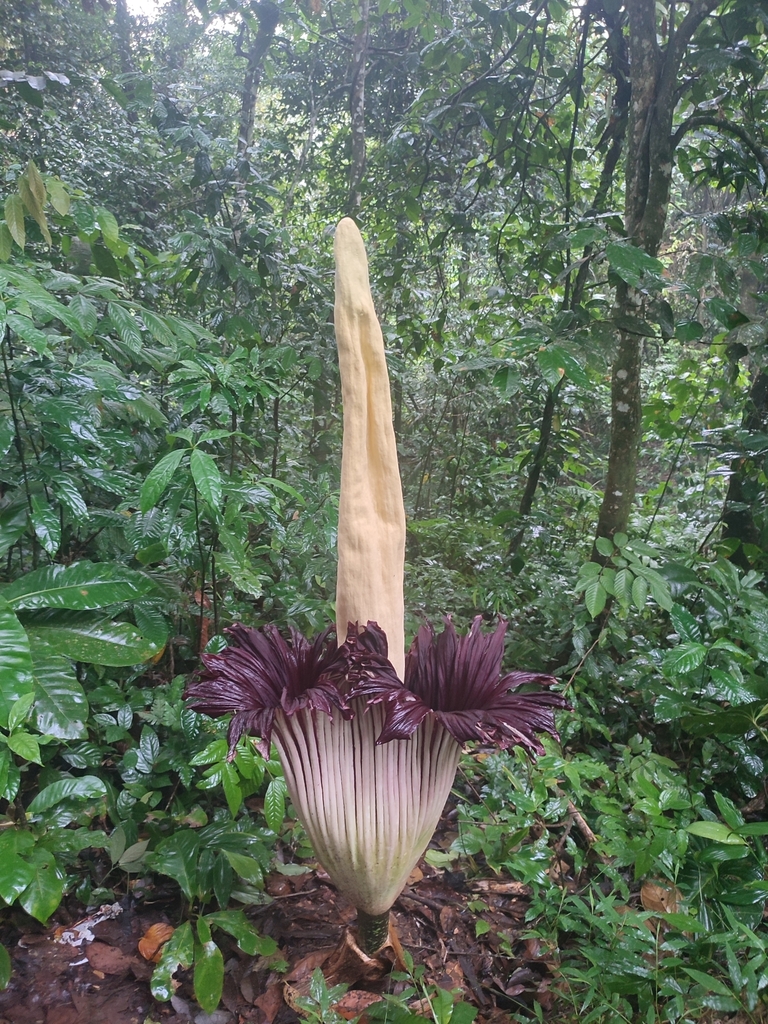
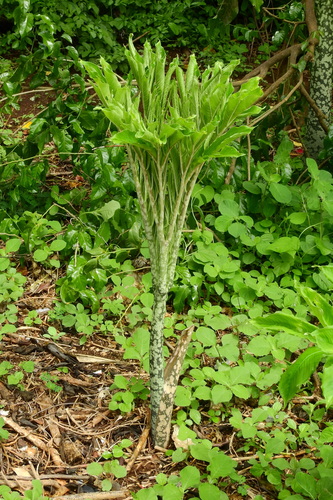
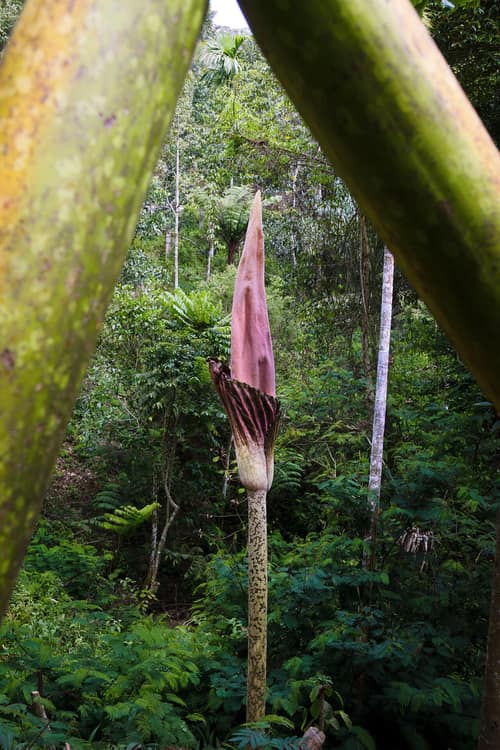
Reaching immense proportions from a massive underground corm, Titan arum produces the world's largest unbranched inflorescence, which blooms for merely 24 to 48 hours every several years. During its brief opening, the ruffled spathe unfurls to reveal a deep maroon interior while releasing a potent odor of decaying flesh to draw carrion beetles and flesh flies. Between flowering events, the plant pushes up a single leaf that grows as large as a small tree to gather solar energy and replenish its underground storage.
ThreatsDeforestation, habitat fragmentation, and agricultural encroachment
HabitatsEquatorial rainforests and steep limestone hillsides
Life span30–40 years
Size / weightNot available
Classification
OrderAlismatales
FamilyAraceae
GenusAmorphophallus
SpeciesAmorphophallus titanum
Range & activity
Range data is not available yet.
Safe observation
Interaction riskHigh
Low
Moderate
High
Very high
Why interaction risk is high
Sap contains sharp calcium oxalate crystals; avoid contact and never ingest wild berries or plant tissues.
Why it is dangerous
Plant tissues contain microscopic needle-like calcium oxalate crystals that cause severe mouth pain, swelling, and localized skin inflammation upon contact.
How to recognize a risky encounter
Recognized by its huge central column surrounded by a deep maroon, frilled spathe or its single, tree-sized leaf.
What to do
Do not touch broken tissue or plant sap, and keep pets away from cultivated specimens.
What to notice
Endemic exclusively to the rainforests of Sumatra, growing on low canopy forest floors and steep hills.
Support conservation
Observe cultivated specimens in accredited botanical gardens and avoid purchasing wild-collected corms or seeds.
Responsible observation
Track Botanical Announcements: Greenhouses publicly announce impending blooms days in advance.
Prepare for Odor: Expect a short-lived but intense stench during the first night the spathe unfurls.
Appreciate from a Distance: Respect barrier ropes in conservatories to protect delicate spathe tissue.