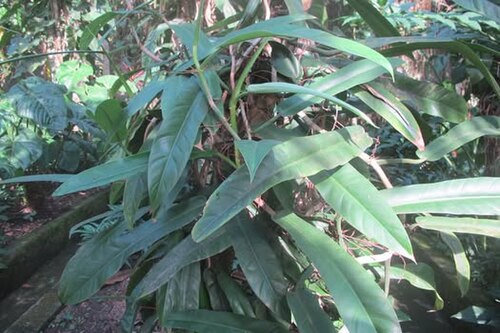
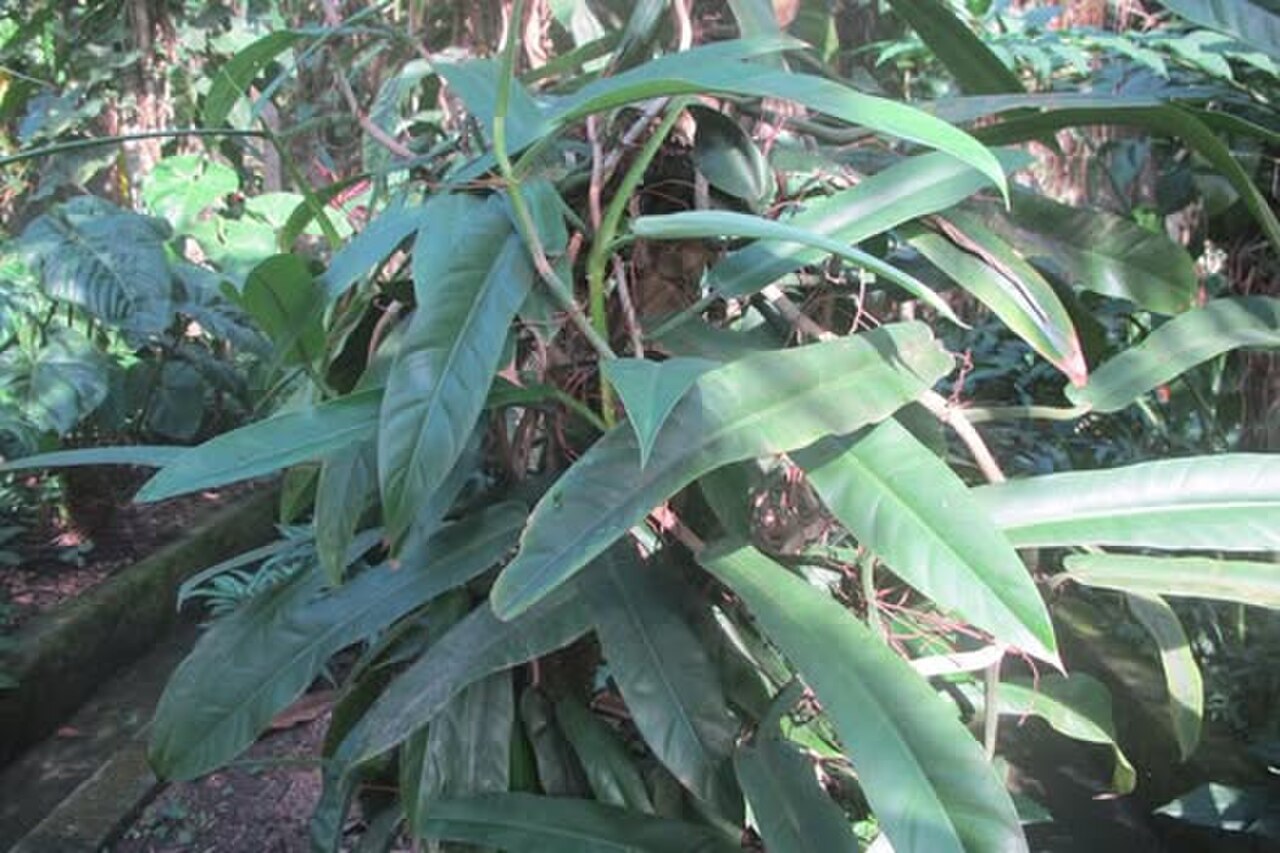
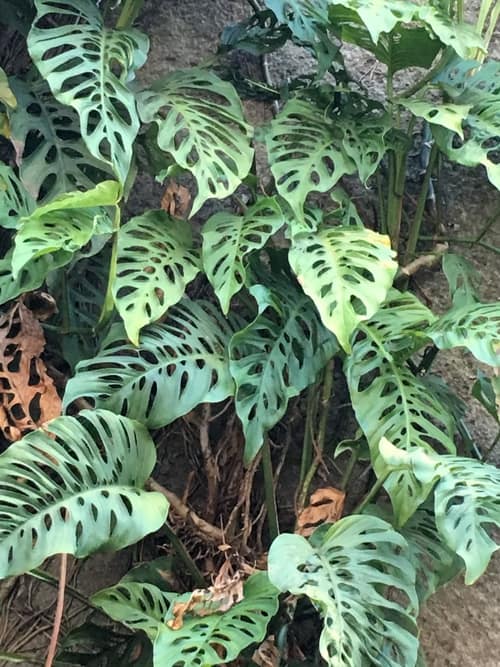
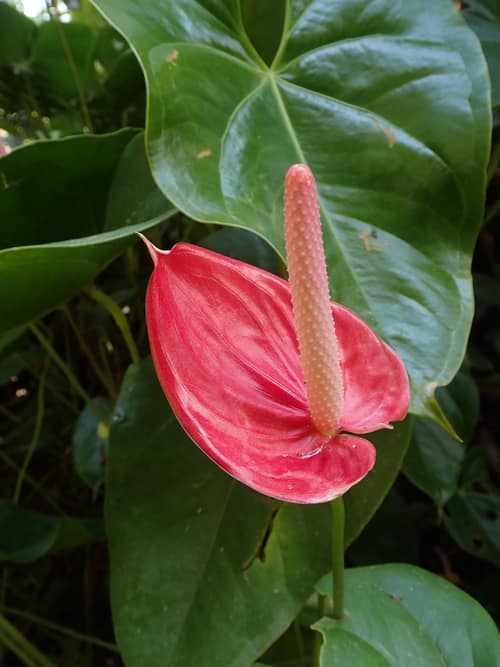
Philodendron burle-marxii is a vigorous tropical climber native to humid forests from Colombia to Ecuador and Brazil, named by botanist Graziela Barroso in honor of landscape architect Roberto Burle Marx. Its glossy, narrowly oblong green leaves sprout in dense, branching clusters along thick stems anchored by clinging aerial roots. In the wild, it scrambles up shaded tree trunks and mossy boulders, producing hooded spathe-and-spadix inflorescences that attract nocturnal pollinating beetles.
Not EvaluatedConservation statusIUCN Red List categoriesLCNTVUENCREWEXNot Evaluated — not placed on the risk ladderRed List categories, explained →
Key facts
Diet & preyPhotosynthetic autotroph absorbing moisture and minerals via terrestrial and aerial roots
Predators
Leafcutter ants
Slugs and snails
Scale insects
ThreatsDeforestation, agricultural land conversion, and localized wild harvesting
HabitatsHumid tropical rainforests, climbing tree trunks and rocky slopes from Colombia to Ecuador and Brazil
Life spanPerennial, living for decades
Classification
OrderAlismatales
FamilyAraceae
GenusPhilodendron
SpeciesPhilodendron burle-marxii
Range & activity
Range data is not available yet.
Safe observation
Interaction riskHigh
Low
Moderate
High
Very high
Why interaction risk is high
Sap and leaves are toxic to humans and pets if ingested and can irritate skin.
Why it is dangerous
Tissues contain insoluble calcium oxalate crystals (raphides) that penetrate mucous membranes on contact, causing immediate burning, swelling of the mouth and throat, drooling, and vomiting, while raw sap can trigger mild contact dermatitis.
How to recognize a risky encounter
Look for thick, branching green stems bearing aerial roots and dense rosettes of glossy, narrowly oblong leaves, sometimes accompanied by pale green hooded spathes.
What to do
Wear gloves when pruning or handling cut stems, wash hands thoroughly afterward, and keep all plant parts out of reach of children and pets.
Responsible observation
Observation: Scan shaded tree trunks and mossy rocks for dense, branching clusters of narrowly oblong glossy leaves.
Safety: Avoid snapping stems or leaves, as the sap can irritate skin and cause mouth swelling if chewed.
Pollination: Check mature spathe-and-spadix blooms at dusk for visiting scarab beetles.