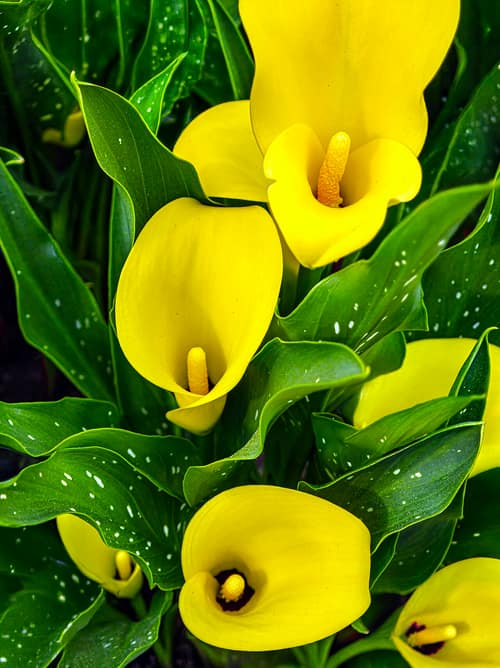
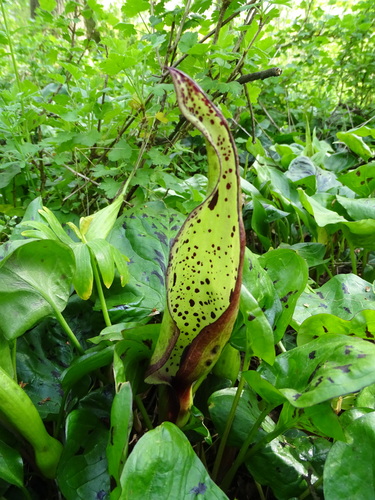
Also known as White Spotted Arum, Spotted Calla, Spotted Arum Lily
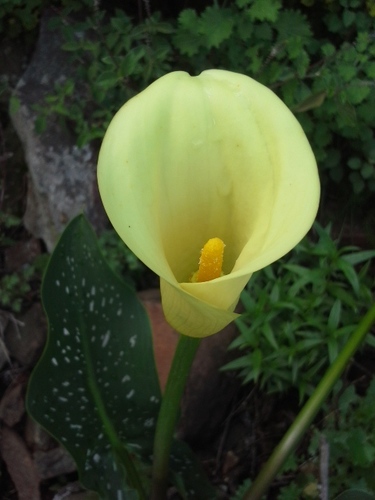
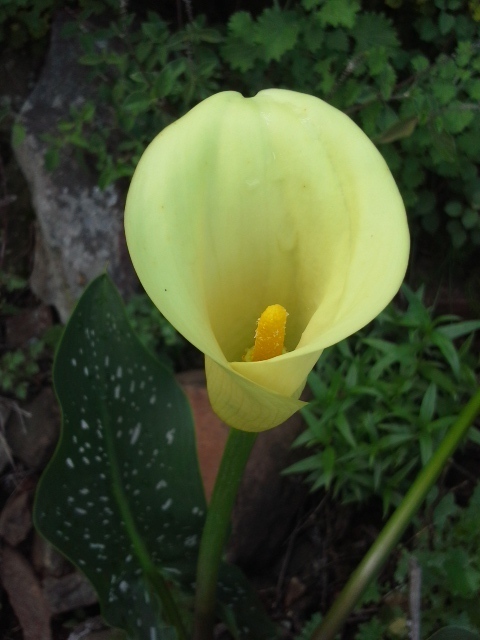
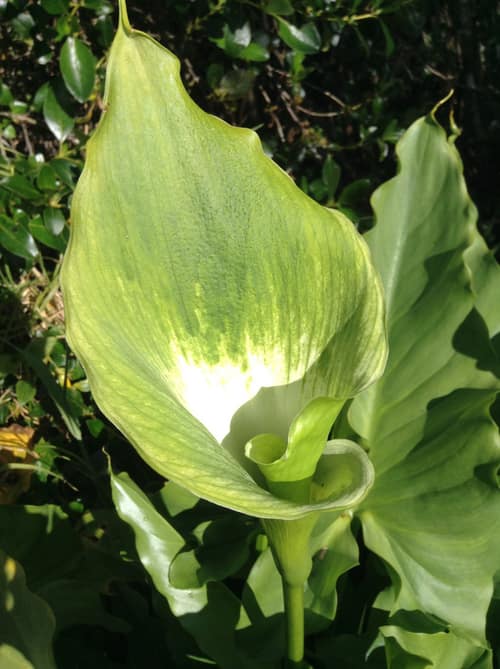
Spotted calla lilies produce translucent white flecks across their arrow-shaped leaves, creating a dappled foliage display along moist slopes and stream margins. A clean white spathe wraps around a bright yellow spadix, drawing in pollinating beetles and small flies during midsummer blooms. Underground tubers expand each year, allowing dense colonies to reemerge continuously throughout the warm season.
ThreatsHabitat conversion, over-collection for horticulture, and invasive weed competition
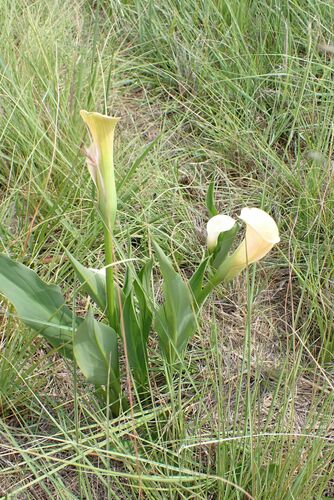
HabitatsMoist grasslands, rocky hillsides, and marshy streambanks
Life spanPerennial (rhizomes persist indefinitely)
Classification
OrderAlismatales
FamilyAraceae
GenusZantedeschia
SpeciesZantedeschia albomaculata
Range & activity
Range data is not available yet.
Safe observation
Interaction riskHigh
Low
Moderate
High
Very high
Why interaction risk is high
Contains calcium oxalate crystals; toxic to humans and pets if ingested. Keep away from curious animals.
Why it is dangerous
Contains insoluble calcium oxalate crystals that cause immediate oral burning, swelling of the tongue, and severe digestive distress if chewed or swallowed.
How to recognize a risky encounter
Recognized by arrow-shaped leaves dotted with translucent white specks and a smooth white trumpet-like spathe.
What to do
Wear gloves when dividing or pruning tubers, and keep all plant parts away from pets and young children.
Responsible observation
Garden Placement: Plant in moist, well-drained soil under full sun to partial shade for optimal foliage patterning.
Handling Caution: Wear gloves when dividing rhizomes or trimming foliage to avoid irritation from plant juices.
Pet Protection: Position garden and indoor plants where roaming cats and dogs cannot chew on leaves.