Also known as Useful Cobra Lily, Himalayan Cobra Lily
Sikkim cobra lilies emerge each spring from underground tubers in the high-elevation forests and alpine meadows of the Himalayas. Their solitary, three-parted leaves frame an extraordinary hooded inflorescence patterned with bold purple-brown and white stripes. The dramatic spadix terminates in a long, slender thread that curves outward, luring small fungus gnats inside the chamber to facilitate pollination before the structure collapses to reveal a tight cluster of bright scarlet berries.
Not EvaluatedConservation statusIUCN Red List categoriesLCNTVUENCREWEXNot Evaluated — not placed on the risk ladderRed List categories, explained →
Key facts
Diet & preyAutotrophic (photosynthetic)
Predators
Moth larvae
Slugs
Root-knot nematodes
ThreatsHabitat disruption from overgrazing, alpine trail erosion, and horticultural over-collection
HabitatsRhododendron forests, montane scrub, alpine meadows, and moist rocky slopes
Life spanPerennial (decades via tuber regeneration)
Classification
FamilyAraceae
SpeciesArisaema utile
Range & activity
Range data is not available yet.
Safe observation
Interaction riskHigh
Low
Moderate
High
Very high
Why interaction risk is high
Tuber and raw sap contain sharp calcium oxalate crystals; wild berries are toxic and must never be ingested.
Why it is dangerous
Plant tissues contain bundles of needle-like calcium oxalate crystals and toxic sap that cause intense oral burning, swelling, and severe skin irritation.
How to recognize a risky encounter
Look for a trifoliate leaf beside an overarching, deep purple hood with distinct white longitudinal stripes and a whip-like spadix tail.
What to do
Do not touch broken stems or dig tubers; wash exposed skin immediately with cold running water if sap makes contact.
Responsible observation
Observation distance: Admire the intricate spathe from the trail without stepping onto delicate alpine soils.
Handling caution: Avoid crushing foliage or touching sap, as oxalates cause burning skin rashes.

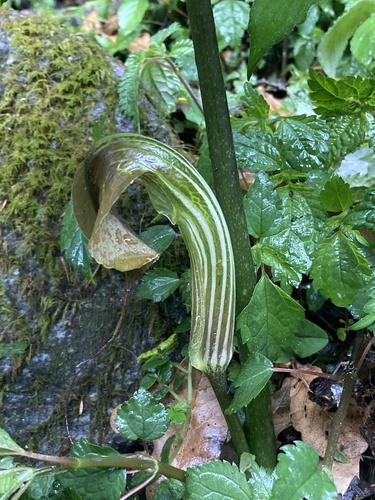
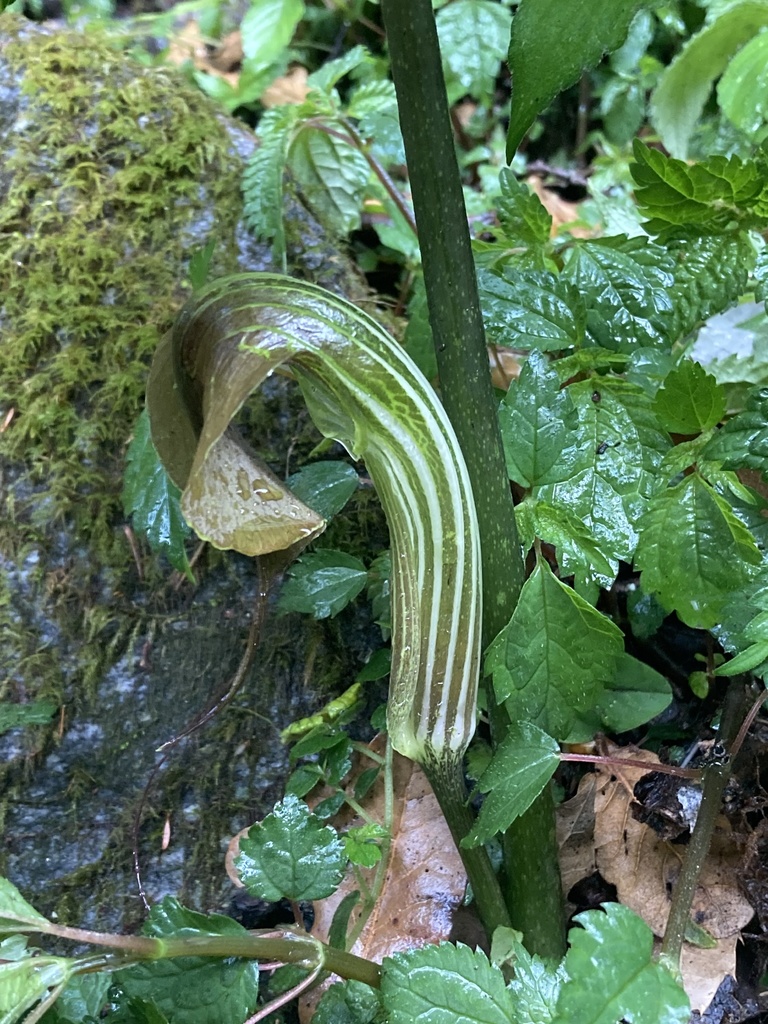
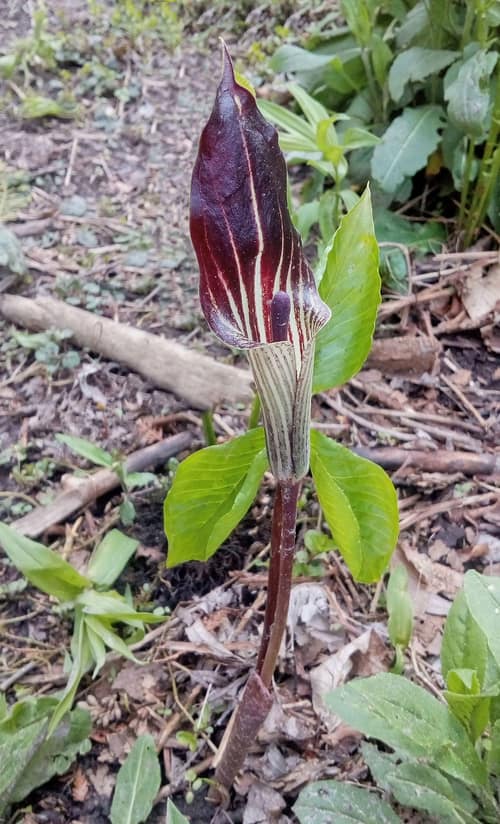
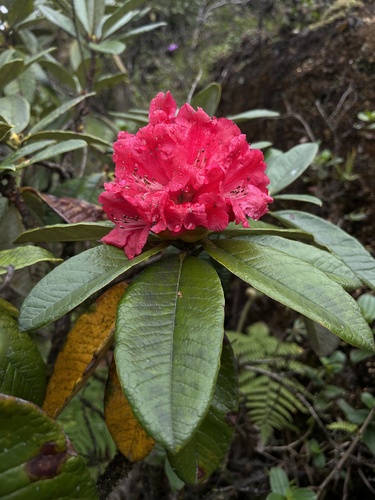
 Image unavailable