
Plant · GBIF taxon 2846281
Bulbophyllum cocoinum
Bulbophyllum cocoinumAlso known as Coconut Bulbophyllum
Bulbophyllum cocoinum perches high in the canopies of West and Central African rainforests, anchoring its four-angled pseudobulbs to mossy tree branches. Arching, densely packed inflorescences emerge from the base of mature pseudobulbs, producing bottlebrush-like sprays of miniature, translucent white to pale pink flowers. The blossoms release a subtle, sweet coconut-like scent to lure small pollinating flies into their hinged labella.
EpiphyticFloweringFragrant
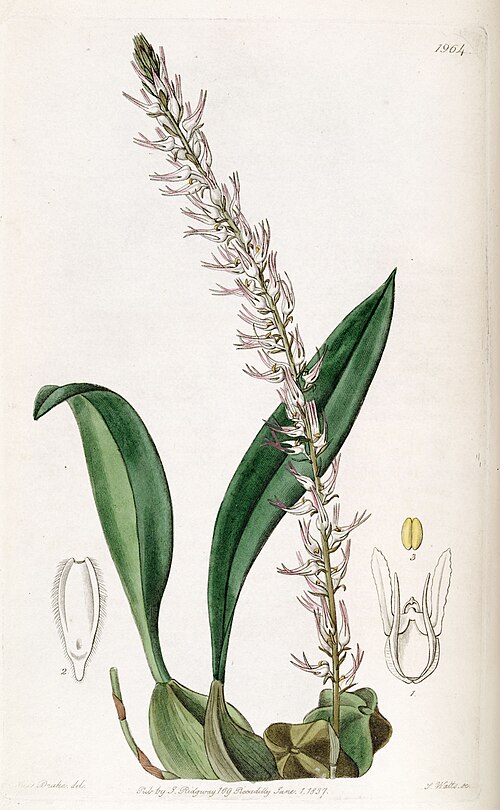
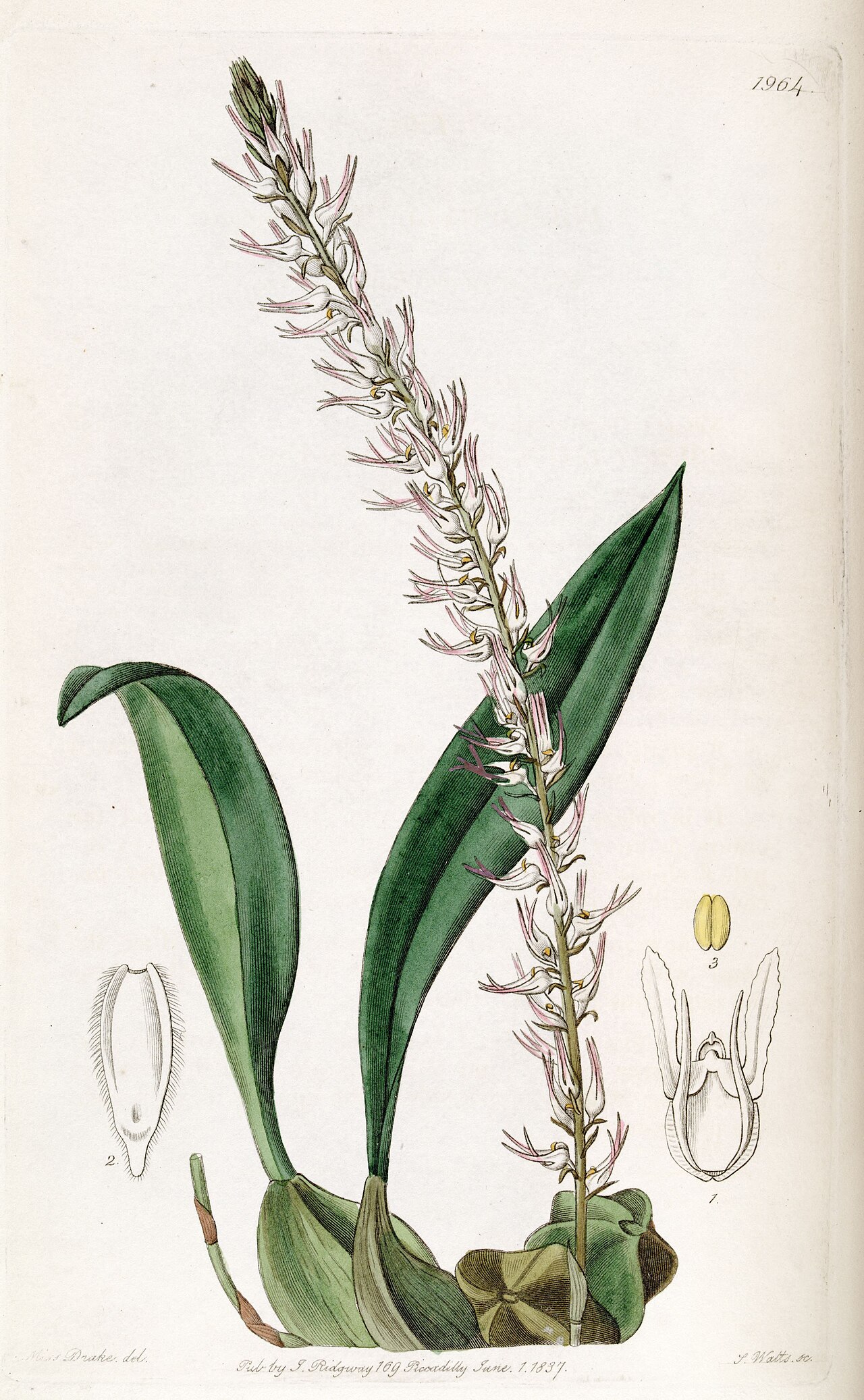
Licensed referenceMiss Drake (1803-1857) del., J. Watts sc. / Public domain · cc0
—observations
—countries
—peak records
VulnerableConservation statusIUCN Red List categoriesLCNTVUENCREWEXVulnerableRed List categories, explained →
Diet & prey
- Autotrophic (photosynthetic)
Predators
- Herbivorous insects
- Slugs
- Snails
ThreatsDeforestation, logging of host trees, and illegal wild collection
HabitatsTropical lowland rainforests and submontane evergreen forests
Life spanPerennial (several decades)
Classification
- FamilyOrchidaceae
- SpeciesBulbophyllum cocoinum
Range data is not available yet.
Interaction riskLow
- Low
- Moderate
- High
- Very high
- Why interaction risk is low
- Safe to observe at a normal distance.
- What to notice
- Recognized by clustered, sharply four-angled pseudobulbs bearing single leathery leaves and dense racemes of tiny whitish flowers.
- Support conservation
- Do not detach plants from tree trunks or disturb surrounding epiphyte communities.
Responsible observation
- Canopy Observation: Bring binoculars to study blooming clusters high up in the forks of mature rainforest trees.
- Fragrance Detection: Check flowers around midday when warmth enhances the faint coconut-like scent.
- Conservation Stewardship: Leave wild orchids attached to their host trees to avoid contributing to illegal trade.
 Image unavailable
Neighbor 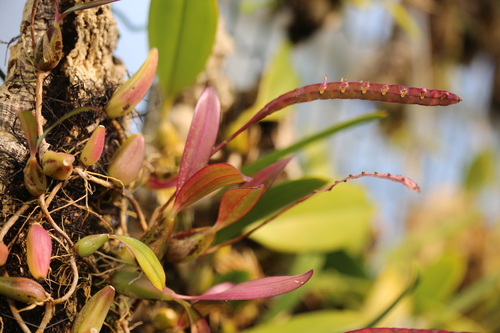
Close Relative (c) Averater, some rights reserved (CC BY-SA) · cc-by-sa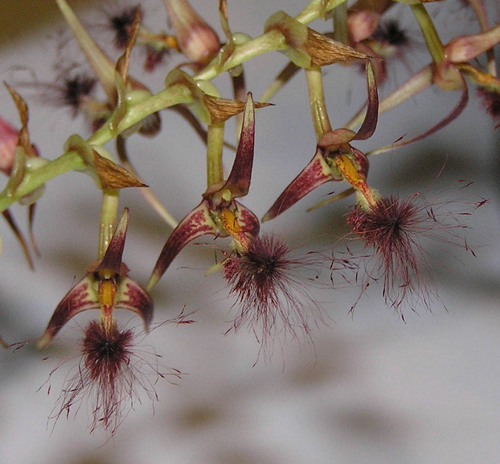
Close Relative (c) 阿橋 HQ, some rights reserved (CC BY-SA) · cc-by-sa
Help improve the field guideSomething wrong?
Checking your Fauna account…Report a name, category, or profile issue for review.