
Plant
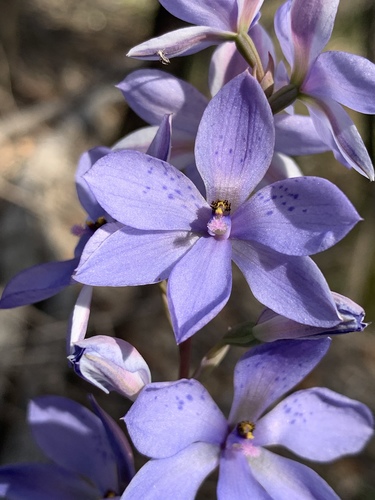
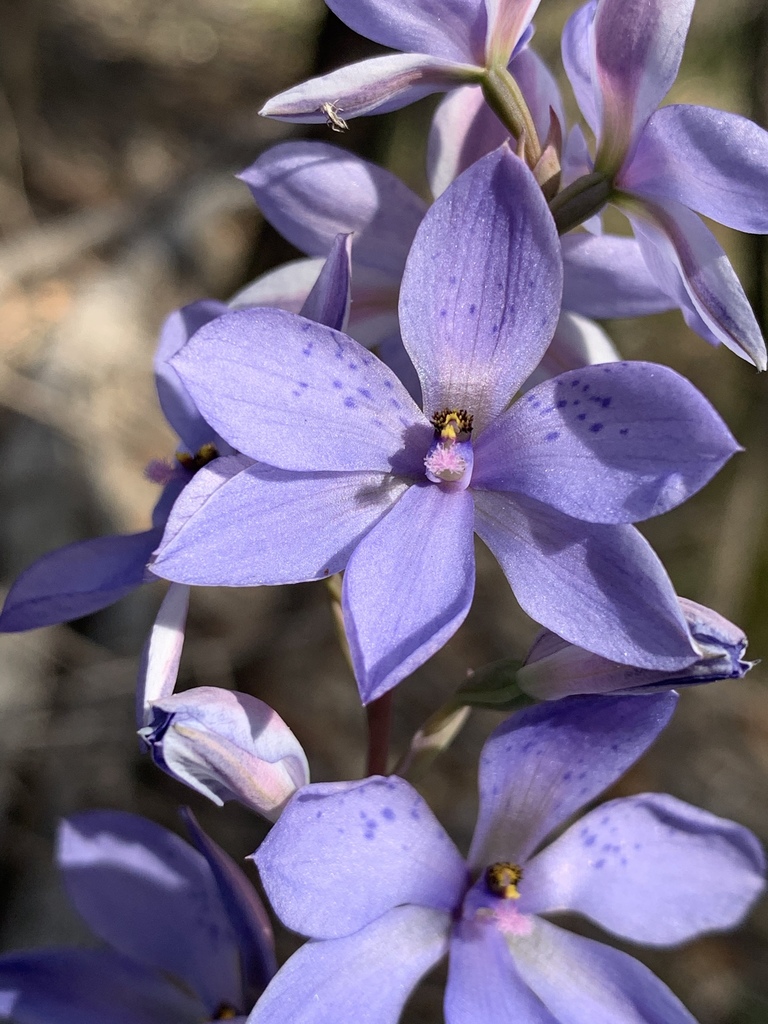
Spotted Sun-orchid
Thelymitra ixioidesAlso known as Dotted Sun Orchid
Spotted sun-orchids open their dotted blue blossoms exclusively on warm, sunny days, folding their petals tightly shut whenever clouds roll in or temperatures dip. They deceitfully attract native solitary bees by mimicking pollen-rich nectar plants, offering no reward while relying on deceptive lures to secure cross-pollination. Underground fleshy tubers allow each plant to survive seasonal drought and wildfires, re-sprouting a solitary slender leaf each autumn.
Terrestrial OrchidAustralian NativeSun-loving
—observations
—countries
—peak records
Least ConcernConservation statusIUCN Red List categoriesLCNTVUENCREWEXLeast ConcernRed List categories, explained →
Diet & preyPhotosynthesis and mycorrhizal nutrient uptake
Predators
- Feral Pigs
- Swamp Wallabies
- Herbivorous Caterpillars
ThreatsHabitat clearance, weed invasion, and altered fire regimes
HabitatsHeathlands, open eucalyptus forests, and coastal scrub
Life spanPerennial (tubers persist for decades)
Classification
- FamilyOrchidaceae
- SpeciesThelymitra ixioides
Range data is not available yet.
Interaction riskLow
- Low
- Moderate
- High
- Very high
- Why interaction risk is low
- Safe to observe at a normal distance.
- What to notice
- Look for a single channelled leaf accompanying a slender stalk of dark-spotted blue or mauve flowers.
- Support conservation
- Never dig up tubers or pick flower spikes; photograph specimens without disturbing nearby soil.
Responsible observation
- Timing Visits: Search open heathlands during warm, sunny afternoons when flowers open fully.
- Footwear Caution: Stay on formed tracks to prevent compacting fragile soil around dormant tubers.
- Close Examination: Inspect the center of open blooms to see the brush-like white column tufts.
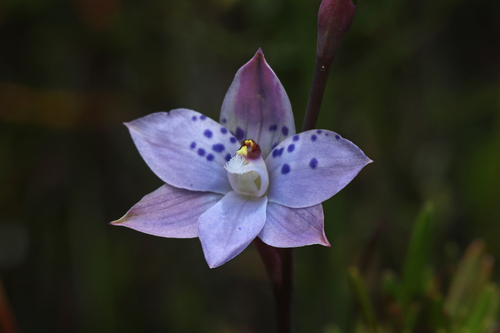
Close Relative (c) Connor Margetts, some rights reserved (CC BY), uploaded by Connor Margetts · cc-by Image unavailable
Close Relative 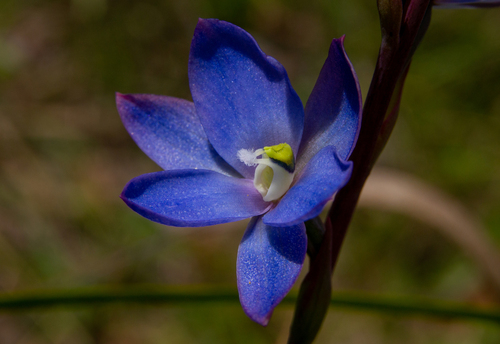
Close Relative (c) Eamonn Culhane, some rights reserved (CC BY), uploaded by Eamonn Culhane · cc-by
Help improve the field guideSomething wrong?
Checking your Fauna account…Report a name, category, or profile issue for review.