
Plant
Mountain Aloe
Aloe marlothiiAlso known as Bergalwyn, Marloth's Aloe, Flat-flowered Aloe
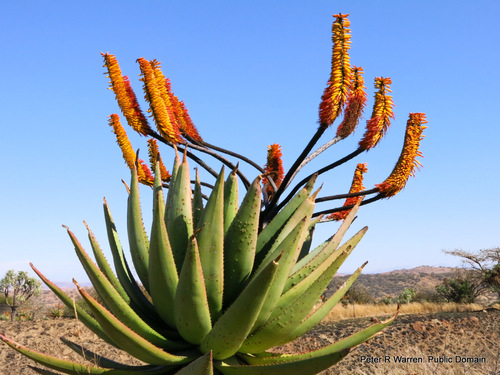
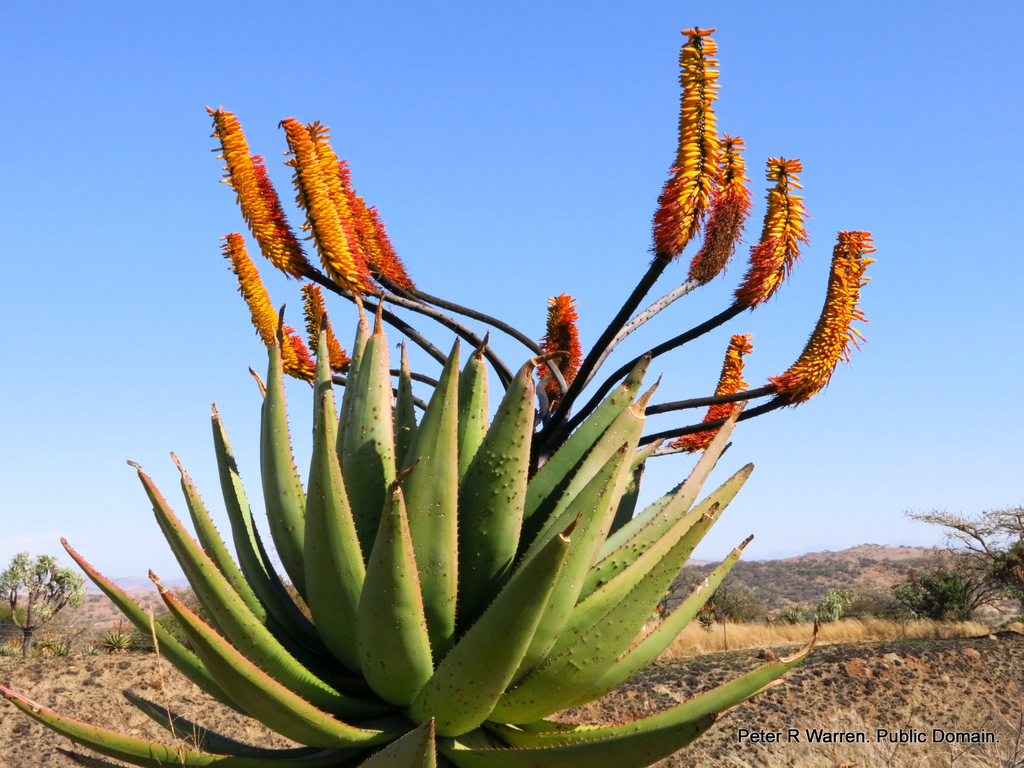
Mountain aloes dominate rocky ridges across southern Africa, crowned by massive rosettes of succulent leaves studded with rigid, reddish-brown spines. Old dried leaves persist as a dense, protective skirt below the living crown, shielding the trunk against veld fires and hungry herbivores. During midwinter, towering candelabra-like flower spikes burst into brilliant shades of orange and red, drawing flocks of sunbirds and insects to feast on abundant nectar.
SucculentArborescentDrought-Tolerant
—observations
—countries
—peak records
Least ConcernConservation statusIUCN Red List categoriesLCNTVUENCREWEXLeast ConcernRed List categories, explained →
Diet & preyAutotrophic (photosynthetic)
Predators
- Chacma Baboon
- Aloe Weevil
- Greater Kudu
ThreatsIllegal harvesting for horticulture, habitat loss, severe wildfires
HabitatsRocky hillsides, bushveld, arid savannas, open grassland
Life span50 to 100+ years
Classification
- OrderAsparagales
- FamilyAsphodelaceae
- GenusAloe
- SpeciesAloe marlothii
Range data is not available yet.
Interaction riskHigh
- Low
- Moderate
- High
- Very high
- Why interaction risk is high
- Toxic to dogs and cats if ingested; sharp leaf spines can puncture or scratch bare skin.
- Why it is dangerous
- Sap contains anthraquinone glycosides that induce vomiting, diarrhea, and lethargy in dogs and cats if chewed.
- How to recognize a risky encounter
- Look for a tall solitary trunk skirted by dried foliage and broad blue-green leaves lined with reddish spines.
- What to do
- Wear sturdy gloves to avoid punctures when clearing debris, and keep domestic pets away from fallen leaf fragments.
Responsible observation
- Winter viewing: Visit rocky hillsides during June and July when bright blossoms attract dozens of sunbirds.
- Spine safety: Keep clear of the rosette perimeter to avoid catching clothes or skin on stiff spines.
- Cultivation tip: Plant in gritty, well-draining soil under full sun to prevent root rot and leaf pests.
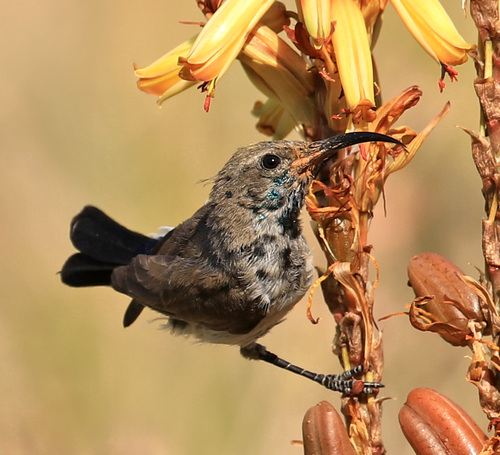
Pollinator (c) Wynand Uys, some rights reserved (CC BY), uploaded by Wynand Uys · cc-by Image unavailable
Same Genus 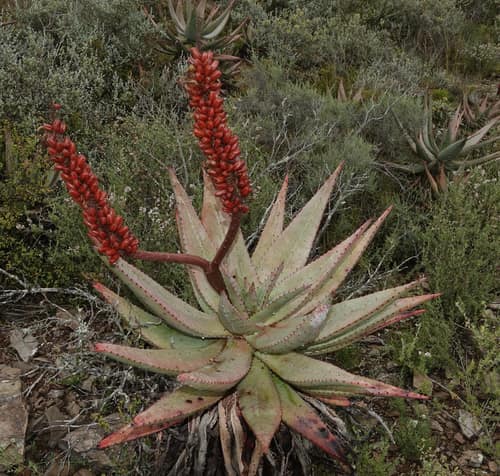
Close Relative (c) desertnaturalist, some rights reserved (CC BY), uploaded by desertnaturalist · cc-by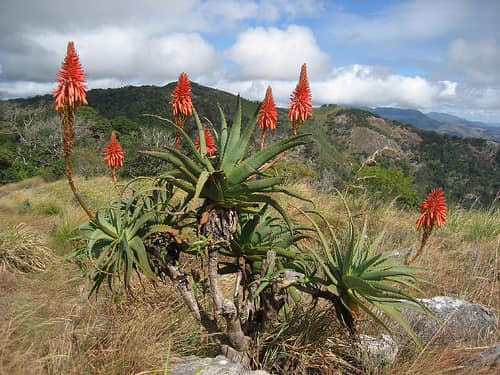
Close Relative (c) Ton Rulkens, some rights reserved (CC BY-SA) · cc-by-sa
Help improve the field guideSomething wrong?
Checking your Fauna account…Report a name, category, or profile issue for review.