
Plant · GBIF taxon 2777855
Uitenhage Aloe
Aloe africanaAlso known as African Aloe
Uitenhage aloes form striking single-stemmed tree rosettes clothed in dense skirts of dried, persistent foliage. During the cool winter months, their branched flowering spikes erupt into bright yellow and orange racemes whose tubular florets curve distinctly upward at the tips. These generous nectar blooms serve as an essential midwinter food source for resident sunbirds and pollinators across the rugged Eastern Cape thickets.
SucculentFloweringDrought-tolerant
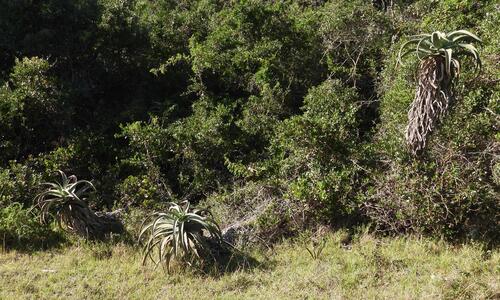
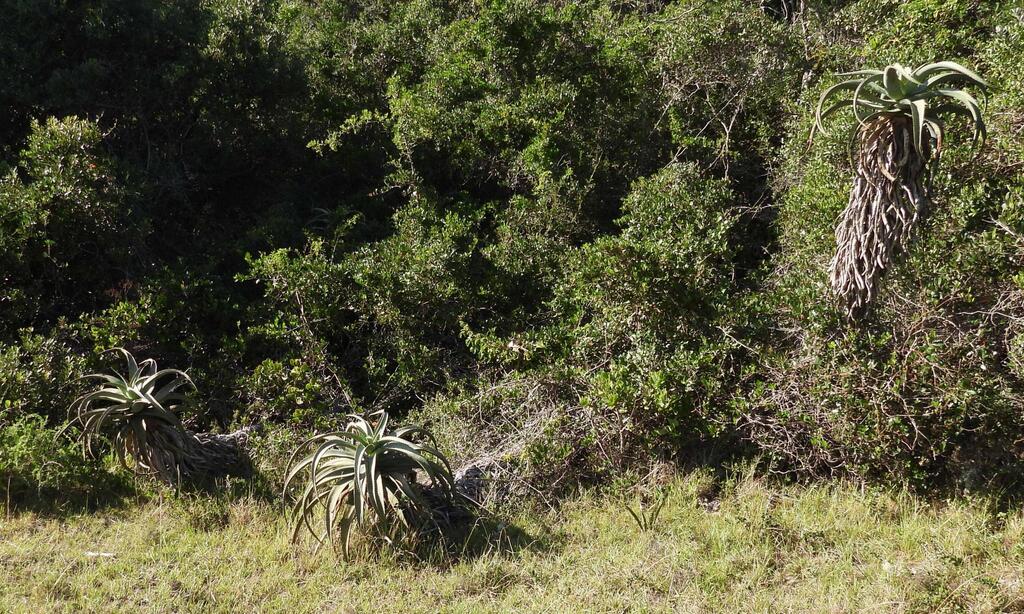
Licensed reference(c) Henry de Lange, some rights reserved (CC BY) · cc-by
—observations
—countries
—peak records
Least ConcernConservation statusIUCN Red List categoriesLCNTVUENCREWEXLeast ConcernRed List categories, explained →
Diet & prey
- Autotrophic (photosynthesis)
Predators
- Chacma Baboon
- Aloe Snout Beetle
ThreatsHabitat clearing, invasive alien plants, overgrazing
HabitatsAlbany thicket, coastal scrub, renosterveld
Life span50–100 years
Size / weightNot available
Classification
- OrderAsparagales
- FamilyAsphodelaceae
- GenusAloe
- SpeciesAloe africana
Range data is not available yet.
Interaction riskHigh
- Low
- Moderate
- High
- Very high
- Why interaction risk is high
- Sap contains purgative aloin toxic to dogs and cats if ingested; sharp spines can scratch skin.
- Why it is dangerous
- Leaves contain bitter anthraquinone glycosides like aloin, causing severe vomiting, diarrhea, and abdominal cramping in domestic pets.
- How to recognize a risky encounter
- Recognizable by its single arborescent trunk, skirt of old dry leaves, and upward-curved winter flowers.
- What to do
- Wear durable leather gloves when pruning or transplanting, and keep chewing pets away from fallen leaf fragments.
Responsible observation
- Sunbird Watching: Observe mature blooming spikes during midwinter to watch sunbirds probe the upward-curving flowers.
- Spine Awareness: Keep a comfortable distance when navigating near the plant, as leaf margins bear sharp, rigid reddish teeth.
- Garden Placement: Plant in full sun and well-draining rocky soil well clear of narrow pedestrian walkways.
 Image unavailable
Pollinator 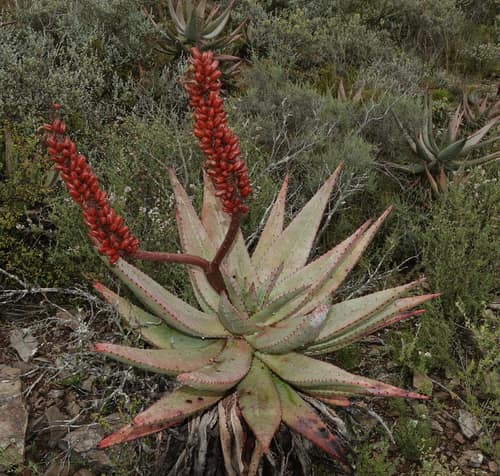
Close Relative (c) desertnaturalist, some rights reserved (CC BY), uploaded by desertnaturalist · cc-by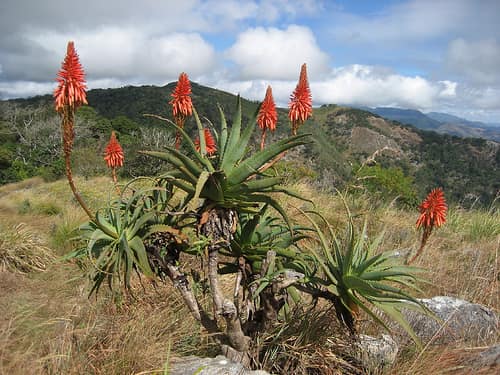
Close Relative (c) Ton Rulkens, some rights reserved (CC BY-SA) · cc-by-saClose Relative
Help improve the field guideSomething wrong?
Checking your Fauna account…Report a name, category, or profile issue for review.