
Plant
Mitre Aloe
Aloe perfoliataAlso known as Rubble Aloe
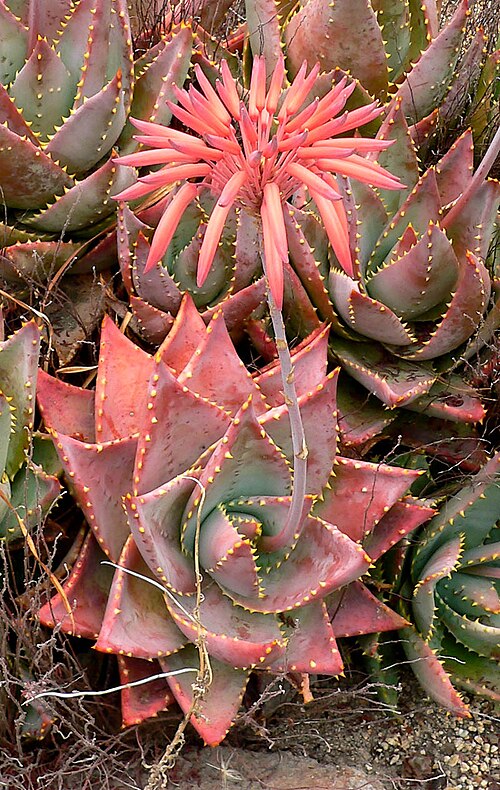
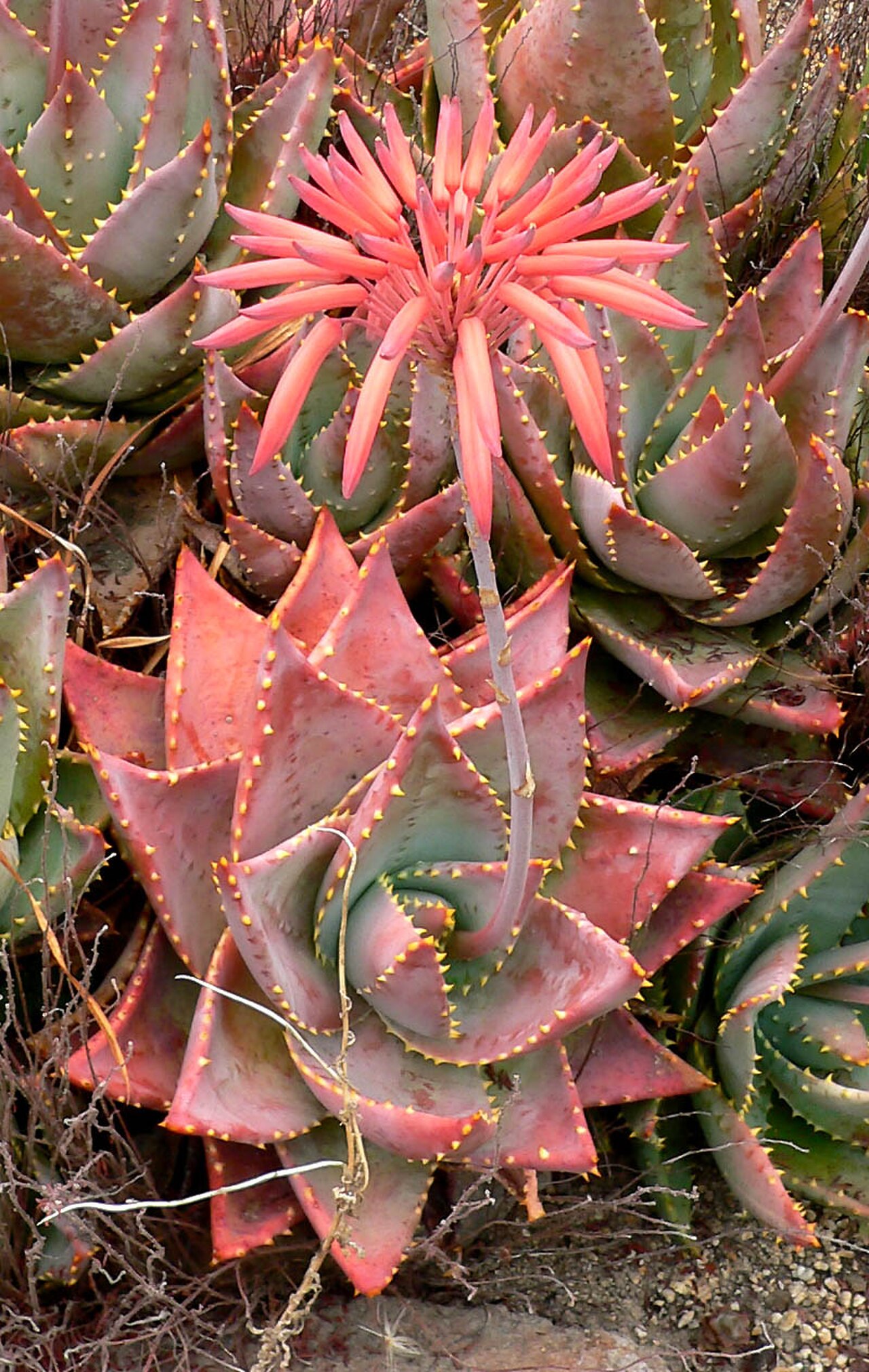
Mitre aloes sprawl across arid sandstone ledges, creeping along the rock face on long, prostrate stems that branch into striking rosettes. Each cluster features curved, fleshy blue-green leaves edged with pale, harmless teeth that blush deep red under intense sun or drought stress. In the heat of summer, dense conical racemes of bright scarlet flowers rise above the rocks to offer an essential nectar source for resident sunbirds.
SucculentDrought-TolerantFlowering
—observations
—countries
—peak records
Least ConcernConservation statusIUCN Red List categoriesLCNTVUENCREWEXLeast ConcernRed List categories, explained →
Diet & preyAutotrophic (Photosynthetic)
Predators
- Chacma Baboon
- Cape Porcupine
ThreatsIllegal succulent poaching, urban development, invasive alien vegetation
HabitatsRocky sandstone cliffs, granite outcrops, mountainous fynbos
Life span20–50 years
Classification
- OrderAsparagales
- FamilyAsphodelaceae
- GenusAloe
- SpeciesAloe perfoliata
Range data is not available yet.
Interaction riskHigh
- Low
- Moderate
- High
- Very high
- Why interaction risk is high
- Sap contains aloin; toxic to dogs and cats if ingested.
- Why it is dangerous
- Contains anthraquinone glycosides including aloin, causing vomiting, diarrhea, and lethargy if chewed by domestic pets.
- How to recognize a risky encounter
- Look for creeping succulent rosettes of curved blue-green leaves lined with small white-tipped teeth on rocky slopes.
- What to do
- Leave wild plants undisturbed on their cliffs, and keep landscape specimens out of reach of curious pets.
Responsible observation
- Observation: Look for sprawling colonies clinging to rocky cliff faces in direct sunlight.
- Pollinator Watching: Watch flowering heads in midsummer to observe sunbirds feeding on nectar.
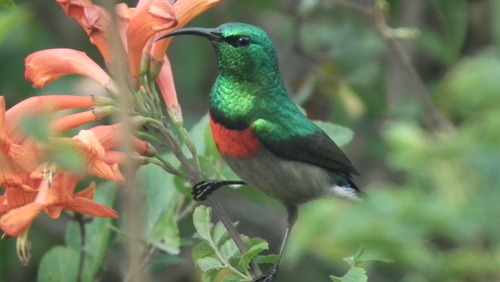
Pollinator (c) Shaun Swanepoel, some rights reserved (CC BY) · cc-by Image unavailable
Parasite 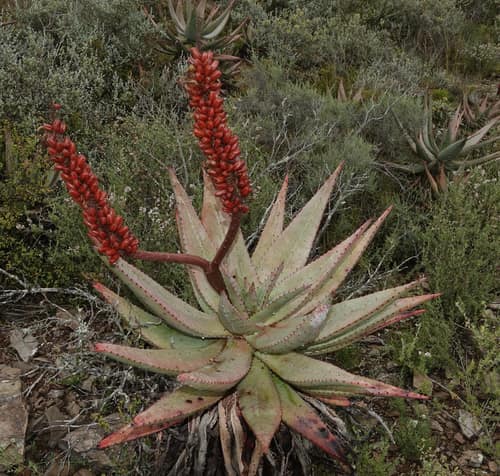
Close Relative (c) desertnaturalist, some rights reserved (CC BY), uploaded by desertnaturalist · cc-by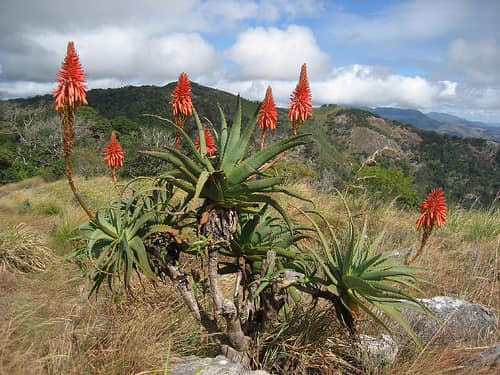
Close Relative (c) Ton Rulkens, some rights reserved (CC BY-SA) · cc-by-sa
Help improve the field guideSomething wrong?
Checking your Fauna account…Report a name, category, or profile issue for review.