Also known as Laurel-leaved Butcher's-broom, Spineless Butcher's-broom, Horse Tongue
Spanish butcher's-broom thrives in dim forest understories across the Mediterranean basin, using flattened evergreen stems called cladodes that take over the function of leaves. Tiny pale flowers bloom directly from the upper or lower surface of these false leaves, later maturing into glossy crimson berries. This tough perennial spreads through stout rhizomes, forming dense evergreen clumps that tolerate deep shade and summer drought.
ThreatsHabitat clearing, severe overgrazing, and soil erosion
HabitatsDense oak woodlands, ravines, limestone outcrops, and coastal macchia
Life spanPerennial (15 to 30 years or more)
Size / weightNot available
Classification
OrderAsparagales
FamilyAsparagaceae
GenusRuscus
SpeciesRuscus hypophyllum
Range & activity
Range data is not available yet.
Safe observation
Interaction riskHigh
Low
Moderate
High
Very high
Why interaction risk is high
Berries contain toxic saponins; wild berries have look-alikes and should never be ingested.
Why it is dangerous
The berries and rhizomes contain steroidal saponins, which provoke severe gastrointestinal irritation, vomiting, and diarrhea in humans and household pets.
How to recognize a risky encounter
Look for broad, smooth, spineless green cladodes bearing bright red spherical berries perched midway along the stem surface.
What to do
Leave wild plants undisturbed, and ensure dogs and children do not forage or chew on the bright red berries.
Responsible observation
Inspect the cladodes: Look closely at the center of the leaf-like stems to spot the diminutive flowers or developing berries.
Preserve wild stands: Avoid digging up underground rhizomes in native Mediterranean woodlands where colonies recover slowly.

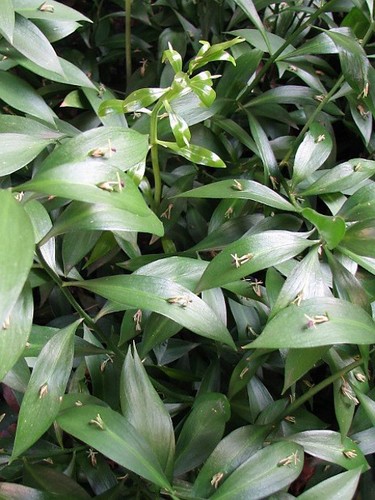
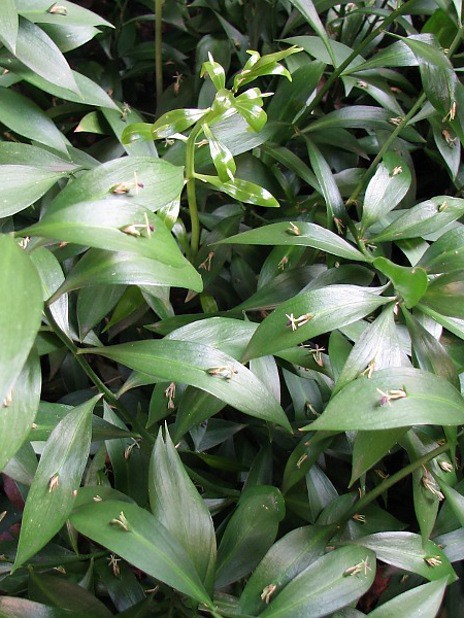
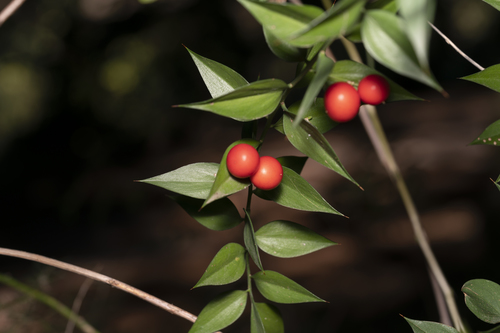
 Image unavailable