
Plant
Common Asparagus Fern
Asparagus setaceusAlso known as Lace Fern, Climbing Asparagus, Ferny Asparagus, Asparagus Grass
Asparagus setaceus scrambles through forest canopies and underbrush using wiry twining stems armed with sharp, backward-pointing spines. Its delicate foliage consists not of true leaves, but of flattened, thread-like stem clusters known as cladodes that gather light in shaded understories. Popular globally as an ornamental houseplant, it readily naturalizes in mild climates where dense tuberous root systems outcompete native groundcovers.
ClimbingFeathery FoliagePerennial
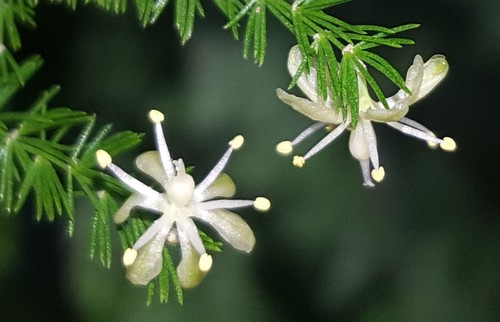
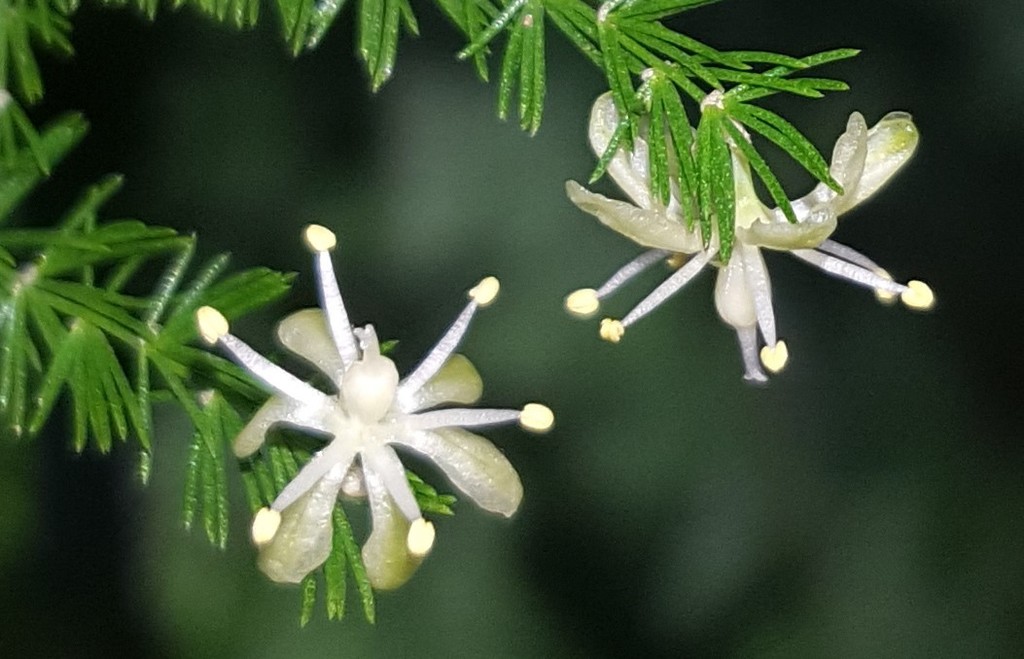
—observations
—countries
—peak records
Not EvaluatedConservation statusIUCN Red List categoriesLCNTVUENCREWEXNot Evaluated — not placed on the risk ladderRed List categories, explained →
Diet & preyAutotrophic (photosynthesis)
Predators
- Spider Mites
- Scale Insects
- Mealybugs
ThreatsHabitat clearing in its native range; managed as an aggressive weed where introduced
HabitatsRainforest margins, coastal scrub, disturbed woodlands, and cultivated gardens
Life span10–20+ years
Classification
- FamilyAsparagaceae
- SpeciesAsparagus setaceus
Range data is not available yet.
Interaction riskHigh
- Low
- Moderate
- High
- Very high
- Why interaction risk is high
- Berries and sap are toxic to dogs and cats; never eat wild berries based on app identification alone.
- Why it is dangerous
- Contains steroidal sapogenins that cause vomiting, diarrhea, and gastric pain in dogs and cats, while stem sap induces allergic contact dermatitis.
- How to recognize a risky encounter
- Recognizable by its horizontal, flat, lace-like sprays of fine needles, small greenish flowers, and tiny purple-black berries.
- What to do
- Handle with gloves when weeding or trimming, and prevent household pets from chewing on foliage or dropped fruit.
Responsible observation
- Pruning: Wear sturdy gloves to avoid painful punctures from the small, recurved spines along mature stems.
- Houseplant Safety: Position potted specimens well out of reach of cats and dogs to prevent accidental ingestion or contact dermatitis.
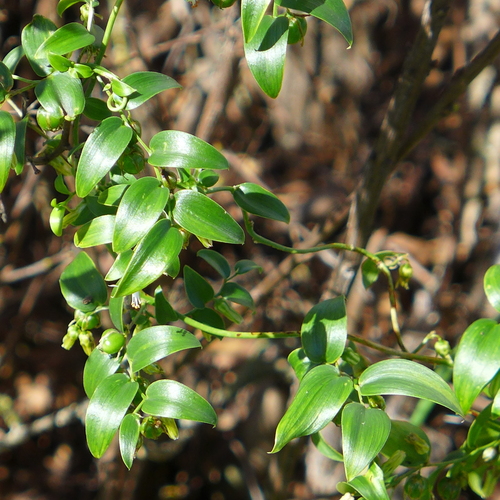
Same Genus (c) John Hibbard, some rights reserved (CC BY), uploaded by John Hibbard · cc-by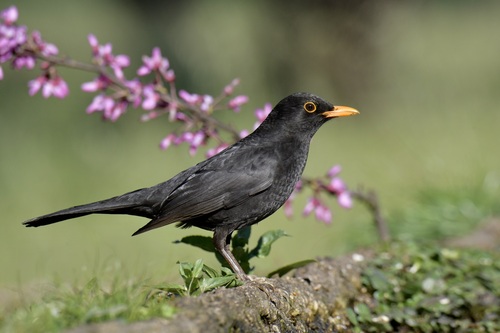
Seed Disperser (c) Luiz Lapa, some rights reserved (CC BY) · cc-by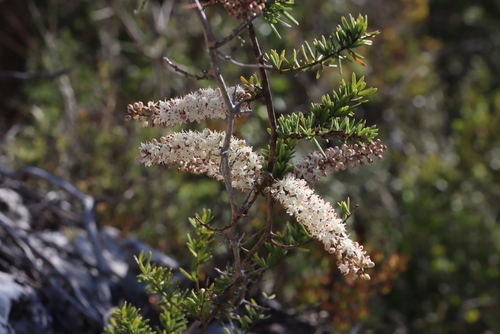
Close Relative (c) Tony Rebelo, some rights reserved (CC BY-SA), uploaded by Tony Rebelo · cc-by-sa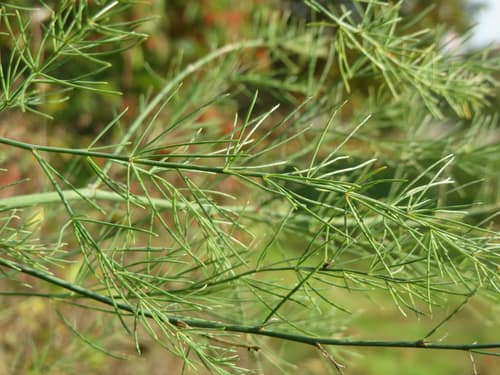
Close Relative (c) Andreas Rockstein, some rights reserved (CC BY-SA) · cc-by-sa
Help improve the field guideSomething wrong?
Checking your Fauna account…Report a name, category, or profile issue for review.