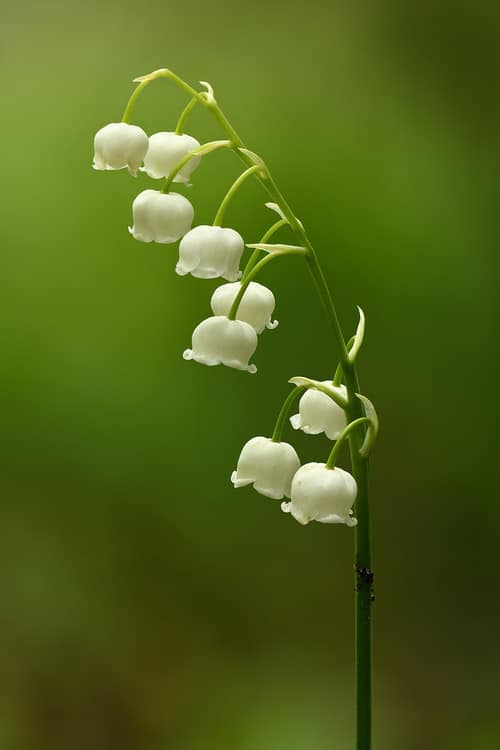
Asian lily-of-the-valley forms dense, clonal colonies across shaded temperate woodlands, spreading steadily through slender underground rhizomes. Each spring, paired elliptic leaves unfurl around arching flower stalks hung with fragrant, bell-shaped white blooms that attract early-season bees. By late summer, fertilized flowers mature into glossy red berries that persist into autumn while the broad foliage yellows and dies back for winter.
ThreatsHabitat loss from logging and localized over-collection for horticulture
HabitatsTemperate deciduous and mixed forests, woodland edges, and shaded mountain slopes
Life spanPerennial; clonal colonies persist for decades
Classification
FamilyAsparagaceae
SpeciesConvallaria keiskei
Range & activity
Range data is not available yet.
Safe observation
Interaction riskHigh
Low
Moderate
High
Very high
Why interaction risk is high
All parts contain cardiac glycosides toxic to humans and pets; never ingest any part or wild berries.
Why it is dangerous
All parts, especially the rhizomes and red berries, contain cardiac glycosides such as convallatoxin, which disrupt heart rhythm and cause severe vomiting, dizziness, and potentially fatal cardiac arrest.
How to recognize a risky encounter
Produces paired, broad, parallel-veined basal leaves and arching stems of nodding, bell-shaped white flowers in spring, followed by round red berries in late summer.
What to do
Avoid touching your mouth after handling the plant, wash hands thoroughly, and keep children and pets away from both wild stands and garden plantings.
Responsible observation
Scent Check: Notice the sweet fragrance of the nodding white bells in late spring.
Safe Viewing: Admire and photograph the flowers and berries without picking or ingesting any part.
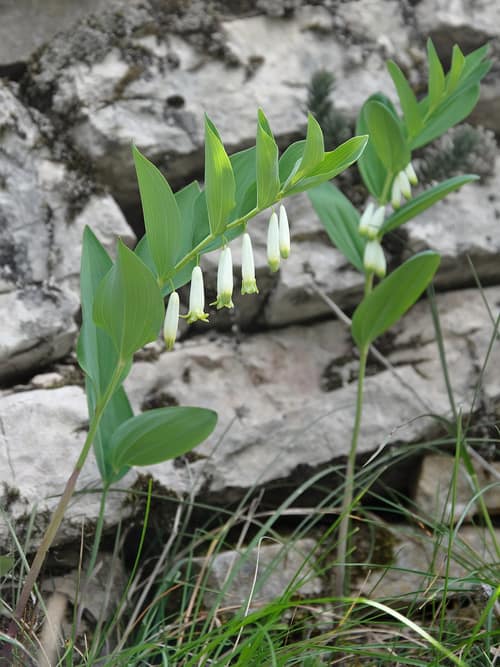
Look-alike Caution: Distinguish its unscented, paired leaves from wild alliums, which smell strongly of garlic.

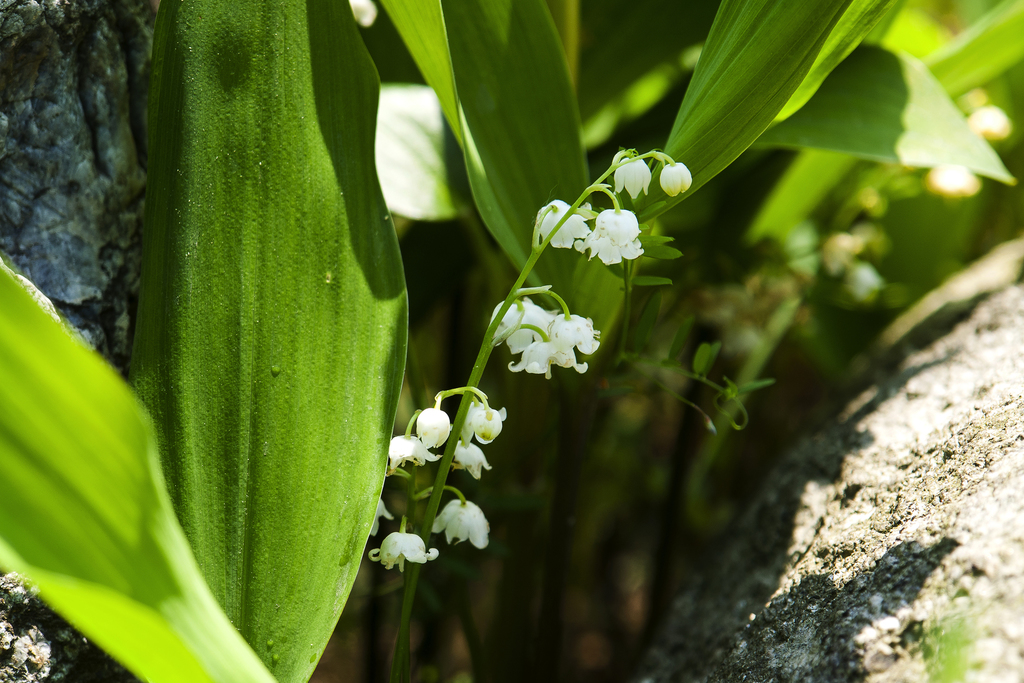
 Image unavailable