
Giant Bird-of-paradise Flower
Strelitzia nicolaiAlso known as Wild Banana, Giant White Bird of Paradise, Natal Wild Banana, White Bird of Paradise
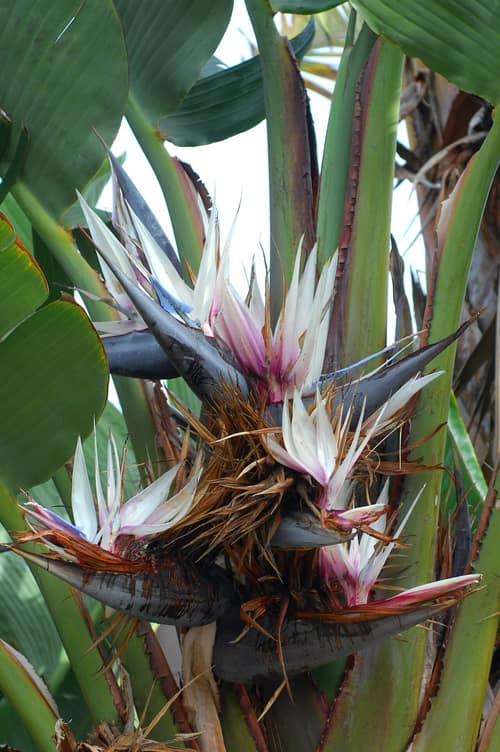
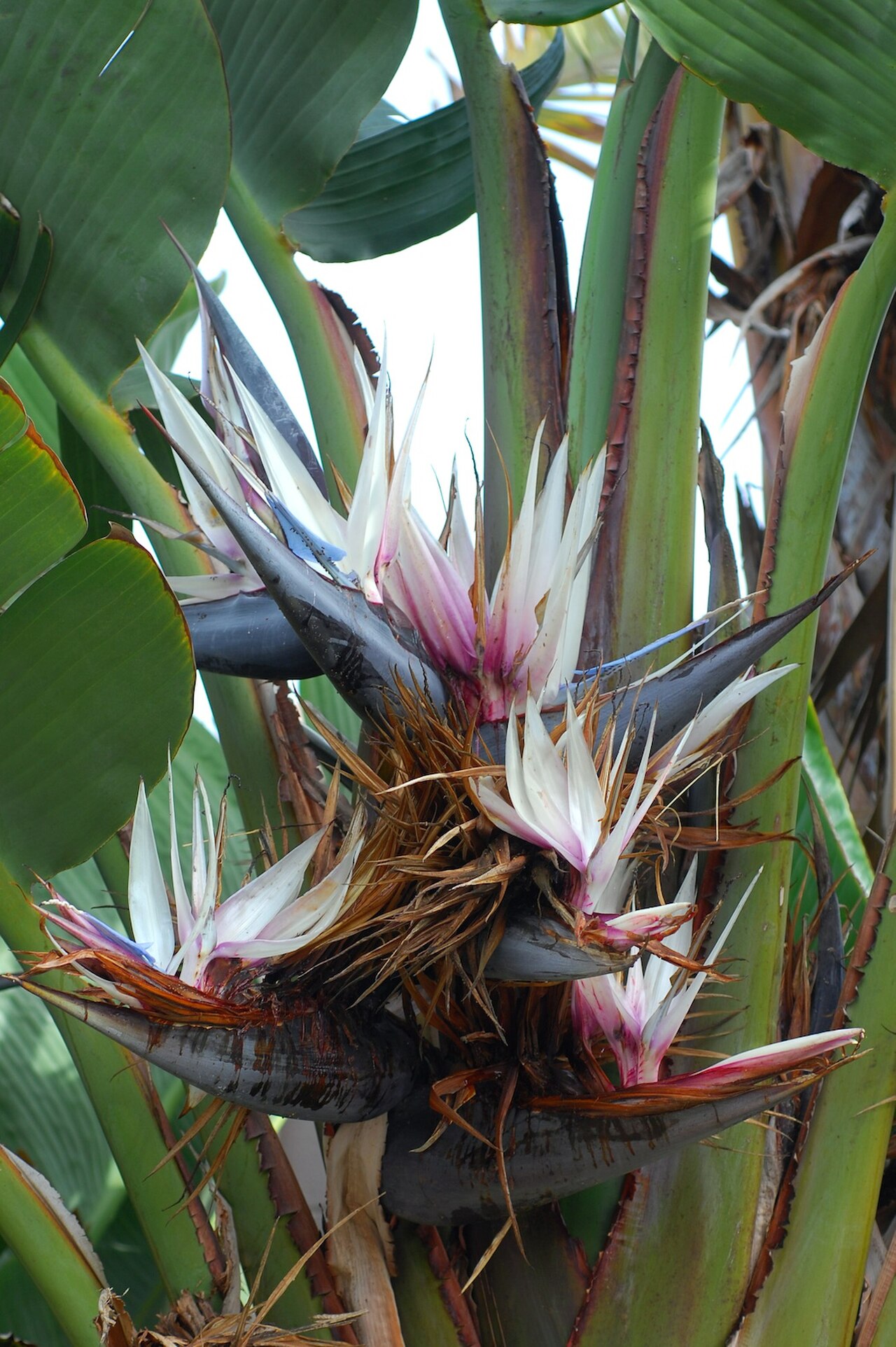
Giant bird-of-paradise flowers dominate subtropical coastlines with towering, woody pseudostems that fan out into enormous banana-like leaves. Unlike their smaller orange relatives, their striking crane-like floral bracts are charcoal-toned, sheltering pure white sepals and pale blue petals dripping with abundant nectar. Vervet monkeys and sunbirds regularly visit the rigid inflorescences to drink the nectar, inadvertently pollinating the flowers as they clamber across the sturdy spathes.
- Vervet monkeys
- Samango monkeys
- OrderZingiberales
- FamilyStrelitziaceae
- GenusStrelitzia
- SpeciesStrelitzia nicolai
- Low
- Moderate
- High
- Very high
- Why interaction risk is high
- Mildly toxic to dogs and cats if ingested; keep pets away from fallen seeds and foliage.
- Why it is dangerous
- Contains tannins and mild gastrointestinal irritants that induce vomiting, nausea, and lethargy in domestic pets.
- How to recognize a risky encounter
- Recognized by its massive palm-like trunk, fan-arranged fronds, and purplish bracts bearing white and blue flowers.
- What to do
- Grow out of reach of household pets, and immediately sweep up fallen seeds or trimmed leaf parts.
- Landscape Placement: Give plants ample clearance from walls and foundations because massive clumps spread aggressively.
- Pruning Maintenance: Cut shredded, aging fronds cleanly at the trunk base to display the clean ringed stems.
- Indoor Cultivation: Provide intense indirect light and high humidity to prevent foliage edges from browning.
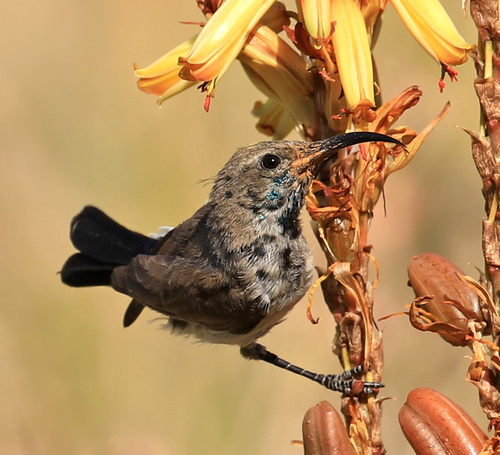
Pollinator (c) Wynand Uys, some rights reserved (CC BY), uploaded by Wynand Uys · cc-by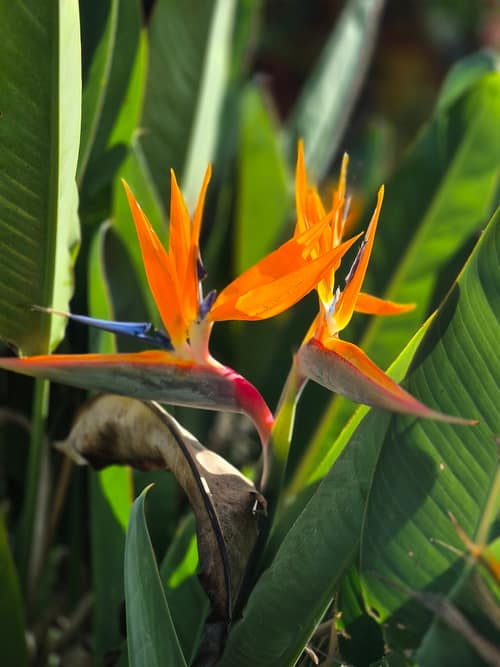
Close Relative Gabriel Collares / CC BY 4.0 · cc-by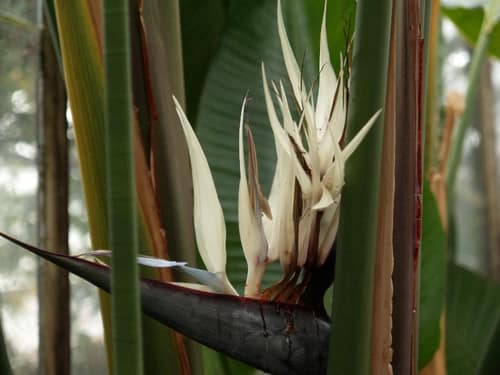
Close Relative Wayne Boucher / CC BY-SA 2.5 · cc-by-sa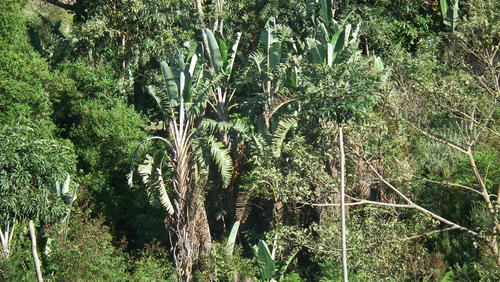
Close Relative (c) Shaun Swanepoel, some rights reserved (CC BY), uploaded by Shaun Swanepoel · cc-by
Found in Collections
Windowsill Flora
Giant Bird-of-paradise Flower is found in this collection. Identify it in Fauna to fill this slot and continue your progress.
Unlock to track progress
Report a name, category, or profile issue for review.