
Flower · GBIF taxon 2742427
Large Fortnight Lily
Dietes grandifloraAlso known as Large Wild Iris, African Iris, Fairy Iris, Fortnight Lily
Large fortnight lilies form sturdy, evergreen clumps of stiff, sword-shaped foliage that burst into mass bloom in synchronised waves roughly every two weeks throughout spring and summer. Each pristine white blossom opens for just a single day, flaunting bright yellow nectar guides and striking violet style arms to attract foraging bees. Native to coastal forest margins and coastal bush in eastern South Africa, they thrive in drought-prone landscapes and saline coastal breezes.
FloweringPerennialDrought-Tolerant
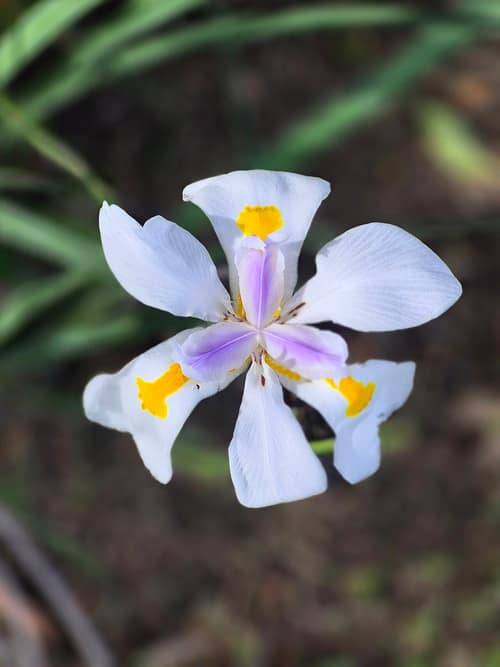
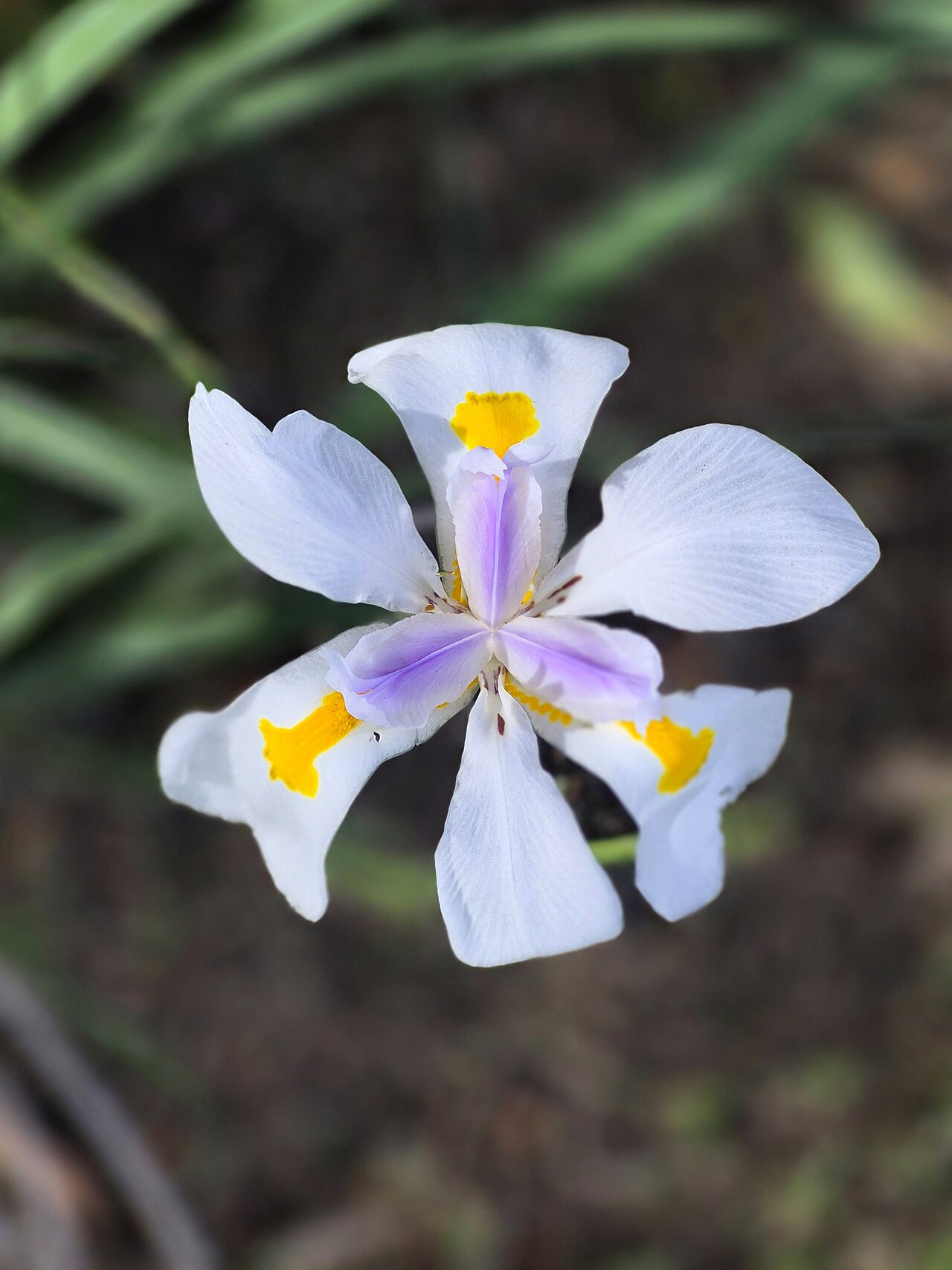
Licensed referenceO Tupinólogo / CC BY 4.0 · cc-by
—observations
—countries
—peak records
Least ConcernConservation statusIUCN Red List categoriesLCNTVUENCREWEXLeast ConcernRed List categories, explained →
Diet & prey
- Photoautotroph (sunlight, water, and soil minerals)
Predators
- Garden snails
- Slugs
- Armyworms
ThreatsHabitat loss from coastal development and competition from invasive weeds
HabitatsCoastal bush, forest margins, coastal stream banks, and cultivated gardens
Life span10–20+ years (perennial clump)
Size / weightNot available
Classification
- OrderAsparagales
- FamilyIridaceae
- GenusDietes
- SpeciesDietes grandiflora
Range data is not available yet.
Interaction riskHigh
- Low
- Moderate
- High
- Very high
- Why interaction risk is high
- Rhizomes are toxic to dogs and cats if ingested; keep away from curious pets.
- Why it is dangerous
- Rhizomes contain irritating compounds and glycosides that cause vomiting, excessive drooling, and abdominal distress in pets if chewed or eaten.
- How to recognize a risky encounter
- Look for fan-shaped clumps of stiff, strap-like leaves with white iris blossoms marked by orange nectar blotches and violet styles.
- What to do
- Keep garden pets away from newly divided rootstocks and plant them securely below soil level.
Responsible observation
- Pruning: Leave green flower stems intact after blossoms drop, as buds rebloom repeatedly from old stalks.
- Cultivation: Grow in full sun or light shade with well-drained soil for maximum flower production.
- Pet Safety: Discourage dogs from digging near the root mass to prevent ingestion of irritating rhizomes.
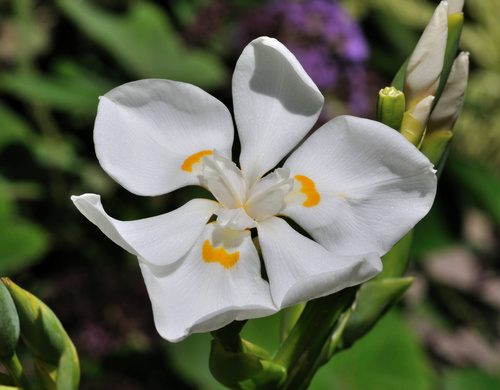
Same Genus (c) Quartl, some rights reserved (CC BY-SA) · cc-by-sa Image unavailable
Pollinator 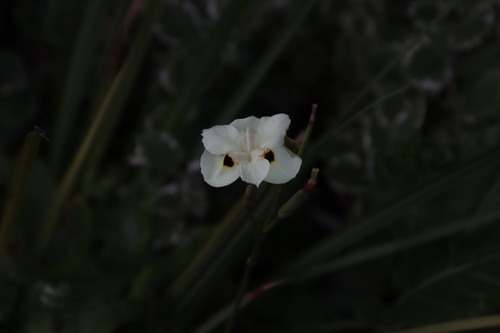
Close Relative (c) Tony Rebelo, some rights reserved (CC BY-SA) · cc-by-sa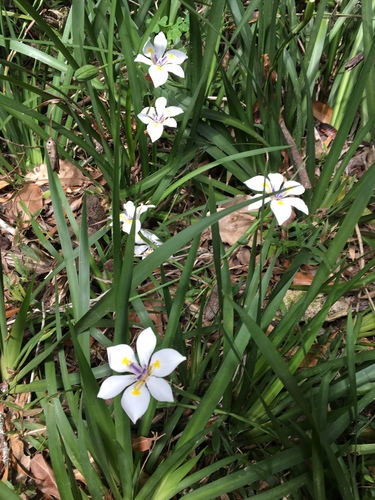
Close Relative no rights reserved, uploaded by Scott Edmunds · cc0
Help improve the field guideSomething wrong?
Checking your Fauna account…Report a name, category, or profile issue for review.