Also known as Clustering Fishtail Palm, Fishtail Palm, Clustered Fishtail Palm
Burmese fishtail-palms form dense, multi-stemmed clumps of slender trunks crowned by bipinnate fronds with distinctive ragged, wedge-shaped leaflets resembling torn fish fins. Each individual trunk is monocarpic, flowering progressively from the crown downward over several years before dying, while new suckers continuously replenish the cluster from the base. Widely cultivated in tropical and subtropical landscaping, clumps frequently escape into shaded forest understories and hammocks.
Diet & preySunlight, water, and soil nutrients via photosynthesis
Predators
Palm weevil larvae
Spider mites
Frugivorous birds
ThreatsHabitat clearance in native ranges; treated as an invasive weed in non-native subtopics
HabitatsTropical rainforest understories, disturbed woodlands, hammocks, and coastal secondary growth
Life span20–30 years per clump (individual stems die after flowering)
Classification
OrderArecales
FamilyArecaceae
GenusCaryota
SpeciesCaryota mitis
Range & activity
Range data is not available yet.
Safe observation
Interaction riskHigh
Low
Moderate
High
Very high
Why interaction risk is high
Fruits contain calcium oxalate crystals; avoid skin contact and never ingest wild berries.
Why it is dangerous
Fruits, foliage, and sap contain sharp calcium oxalate raphide crystals that cause severe contact dermatitis, burning skin irritation, and painful oral swelling if chewed.
How to recognize a risky encounter
Look for dangling strings of round green to dark reddish-purple berries hanging below distinctive fishtail-shaped foliage.
What to do
Wear thick gloves when clearing fallen fruit or trimming fronds, and keep curious pets and children away from the berries.
Responsible observation
Leaf Shape: Look for uniquely jagged, fan-split leaflets resembling fishtails along bipinnate fronds.
Fruit Cautions: Wear protective gloves if pruning fruiting stems to prevent painful oxalate rashes.
Growth Habit: Distinguish it from solitary relatives by its multi-stemmed, suckering base.

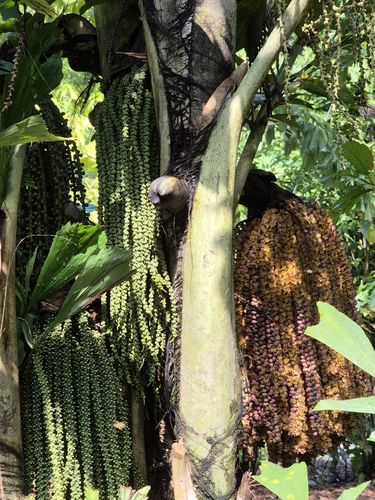
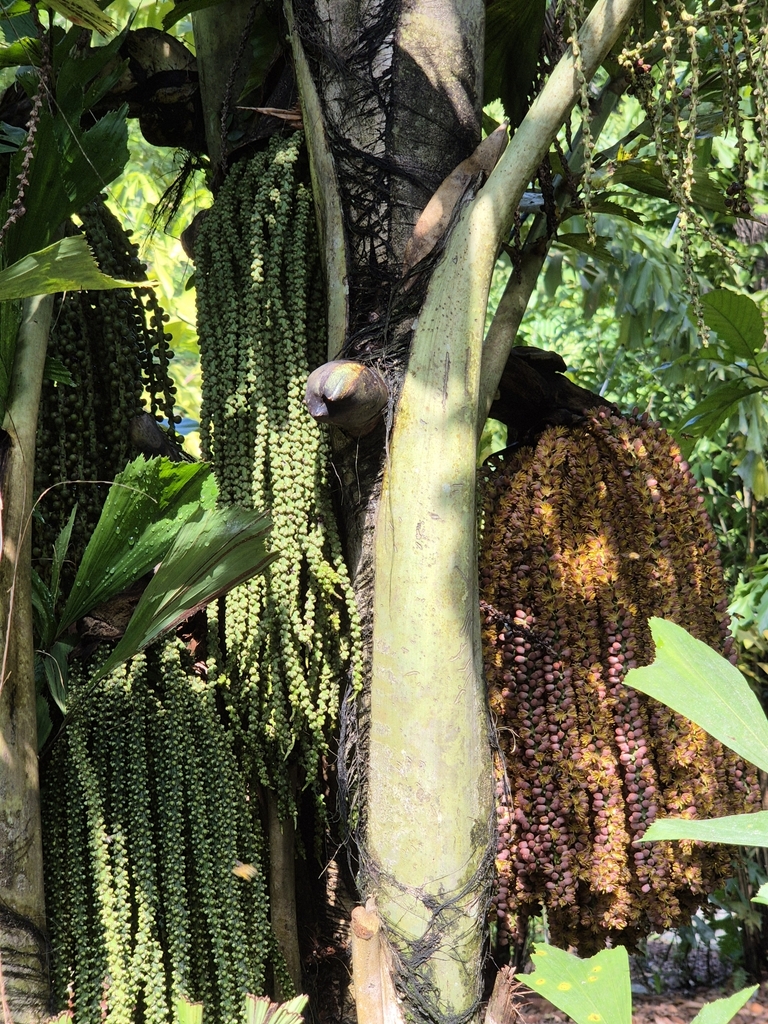
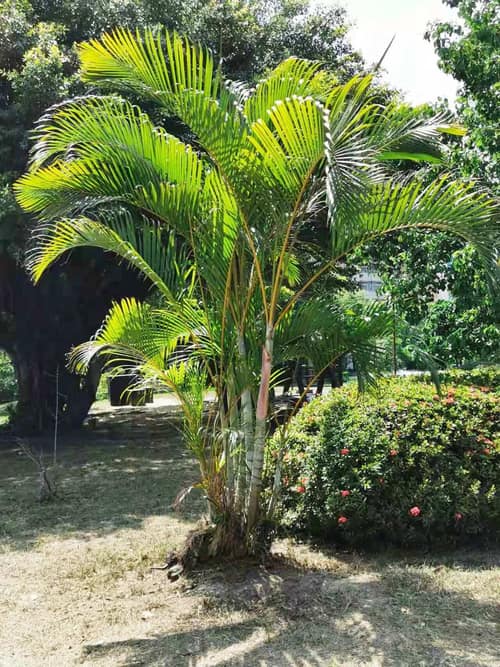
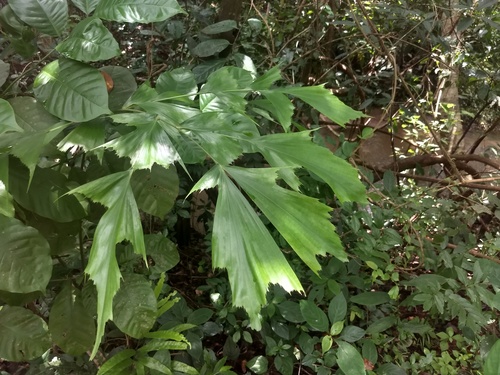
 Image unavailable