
Plant
Piccabeen Palm
Archontophoenix cunninghamianaAlso known as Bangalow Palm, King Palm, Illawarra Palm
Piccabeen palms rise with sleek, ringed trunks and smooth green crownshafts above moist gully floors and rainforest understories across eastern Australia. Feathery fronds arch gracefully outward, while dense clusters of bright red fruits hang beneath the canopy to feed native birds and flying foxes. Indigenous Australians historically utilized the broad, flexible leaf sheaths to craft durable water-carrying baskets.
TropicalEvergreenRainforest
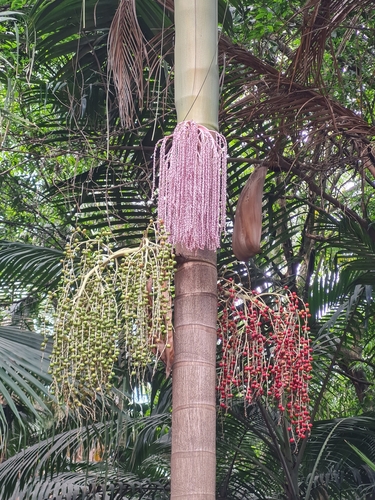
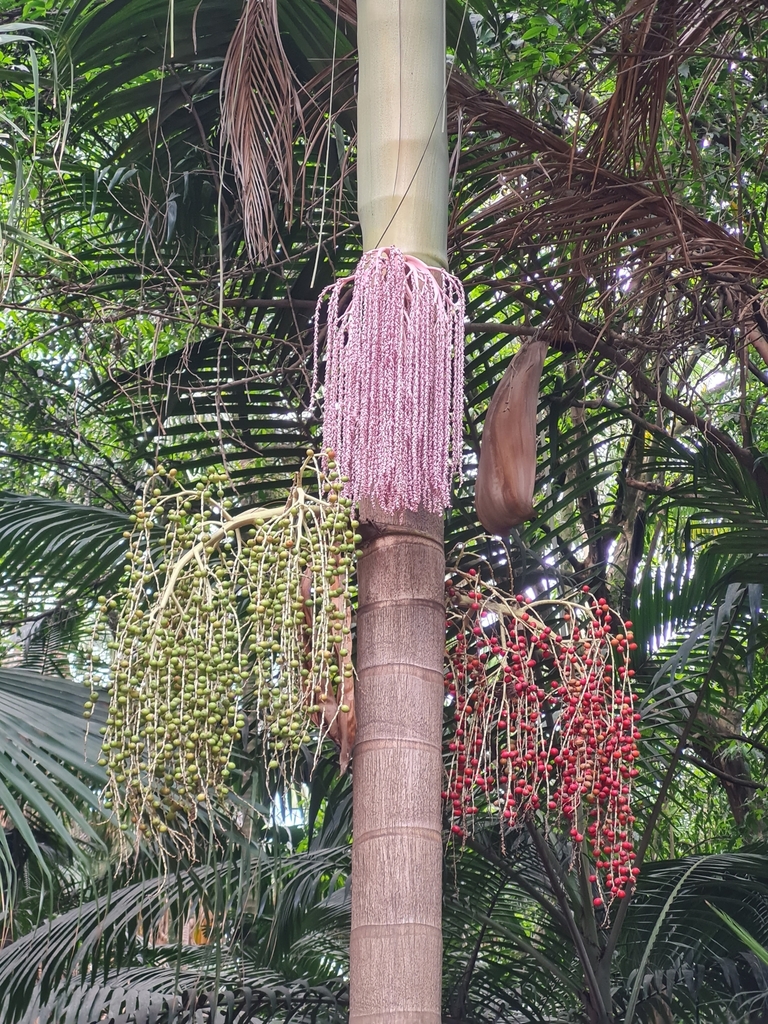
—observations
—countries
—peak records
Least ConcernConservation statusIUCN Red List categoriesLCNTVUENCREWEXLeast ConcernRed List categories, explained →
Diet & preySunlight, Water, Soil nutrients
ThreatsHabitat clearing, competition from invasive weeds
HabitatsSubtropical rainforests, wet sclerophyll forests, riverbanks, moist gullies
Life span50–100 years
Classification
- OrderArecales
- FamilyArecaceae
- GenusArchontophoenix
- SpeciesArchontophoenix cunninghamiana
Range data is not available yet.
Interaction riskLow
- Low
- Moderate
- High
- Very high
- Why interaction risk is low
- Wild berries have toxic look-alikes; never eat based on app identification alone.
Responsible observation
- Observation: Look for ringed trunk scars marking old leaf attachments near wet stream beds.
- Identification: Check for a smooth green crownshaft and silver-green frond undersides.
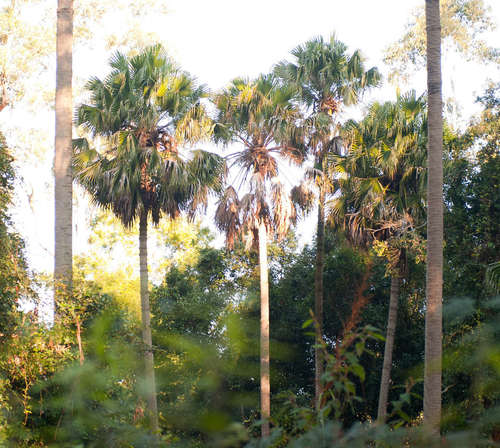
Co-occurring Native (c) Chris Clarke, some rights reserved (CC BY), uploaded by Chris Clarke · cc-by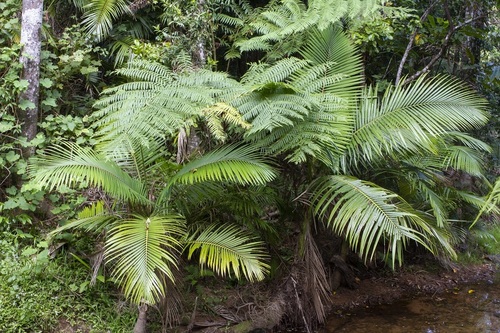
Close Relative (c) dhfischer, some rights reserved (CC BY), uploaded by dhfischer · cc-by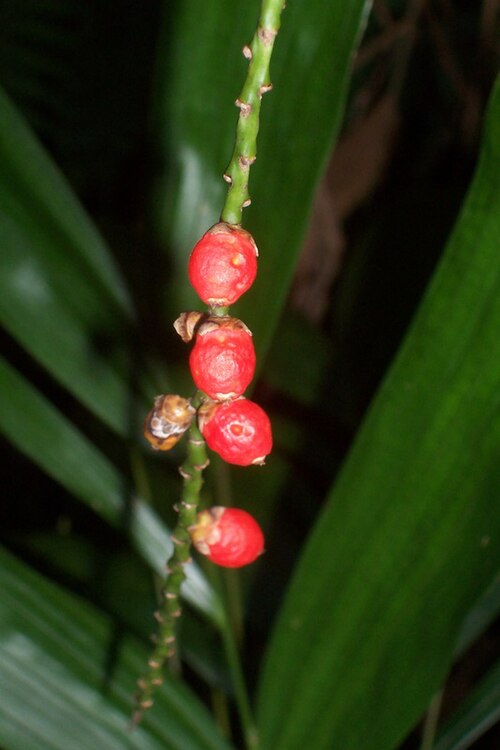
Understory Relative Poyt448 Peter Woodard / Public domain · cc0
Help improve the field guideSomething wrong?
Checking your Fauna account…Report a name, category, or profile issue for review.