
Plant · GBIF taxon 2706107
Sand Bluestem
Andropogon halliiAlso known as Hall's Bluestem
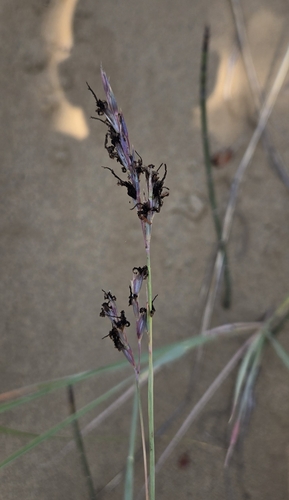
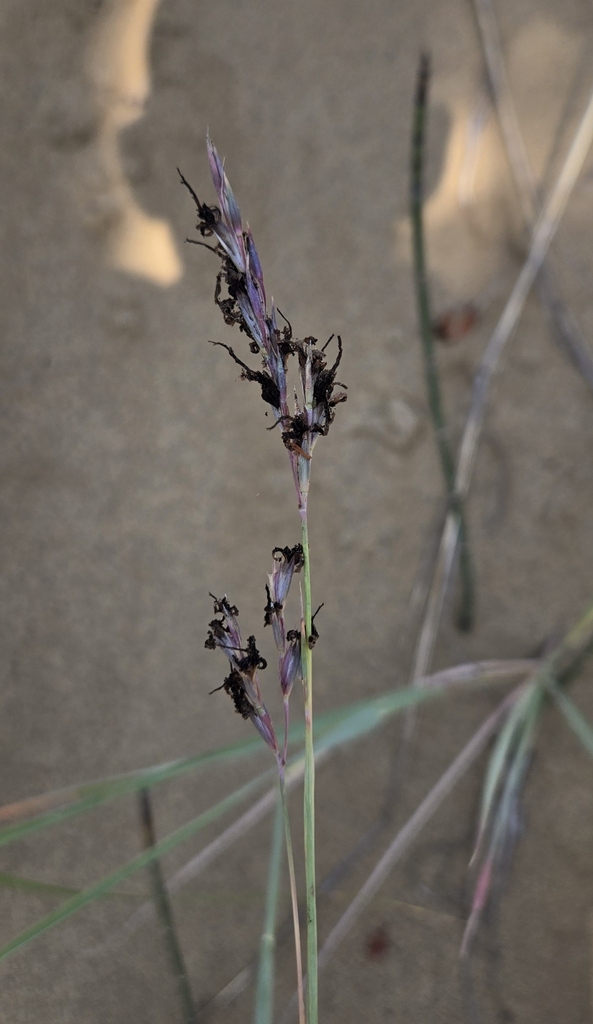
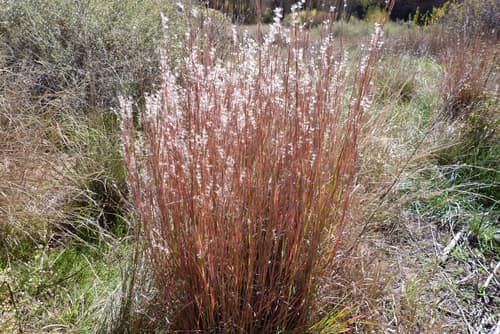
Sand bluestem anchors shifting dunes across the North American Great Plains, spreading vigorous rhizomes that stabilize deep, porous soils where few other prairie grasses take hold. Distinctive powdery blue-green culms produce golden, silky-haired seed heads in late summer, giving flowering colonies an iridescent sheen in the prairie wind. The plant hybridizes readily with its close kin big bluestem along ecotones where loose sand transitions into finer prairie loam.
GrasslandPerennialNative
—observations
—countries
—peak records
Not EvaluatedConservation statusIUCN Red List categoriesLCNTVUENCREWEXNot Evaluated — not placed on the risk ladderRed List categories, explained →
Diet & prey
- Photoautotrophic (absorbs sunlight, carbon dioxide, water, and soil minerals)
Predators
- Plains Bison
- Grasshoppers
- Spur-throated Grasshopper
ThreatsOvergrazing, fire suppression, agricultural conversion, and dune stabilization by woody encroachment
HabitatsSand dunes, blowout margins, deep sand prairies, and sandy plains
Life span10 to 30 years (clonal colonies can persist for centuries)
Classification
- FamilyPoaceae
- SpeciesAndropogon hallii
Range data is not available yet.
Interaction riskLow
- Low
- Moderate
- High
- Very high
- Why interaction risk is low
- Safe to observe at a normal distance.
Responsible observation
- Identification: Look for yellowish, heavily villous hairs on the seed heads, contrasting with the sparser, grayish hairs of big bluestem.
- Habitat Clues: Search shifting sandhills and active dune fields where the powder-blue stems stand out above surrounding dune grasses.
Neighbor (c) Colin Meurk, some rights reserved (CC BY-SA), uploaded by Colin Meurk · cc-by-sa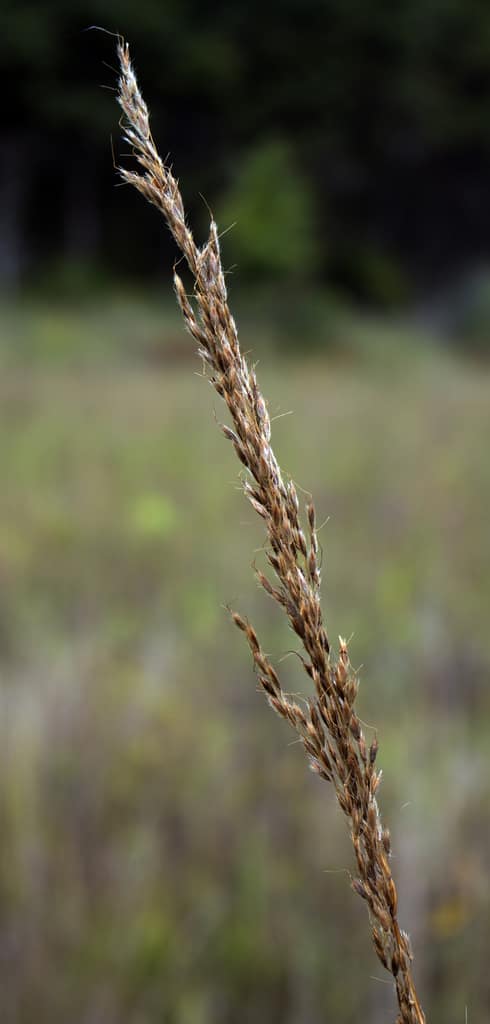
Neighbor (c) aarongunnar, some rights reserved (CC BY), uploaded by aarongunnar · cc-by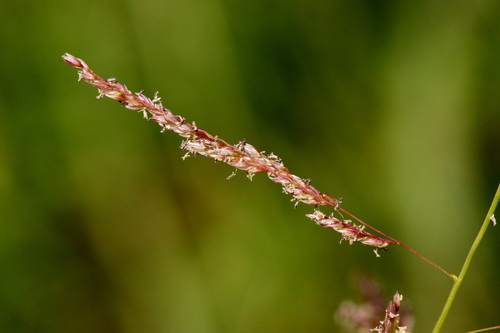
Competitor no rights reserved · cc0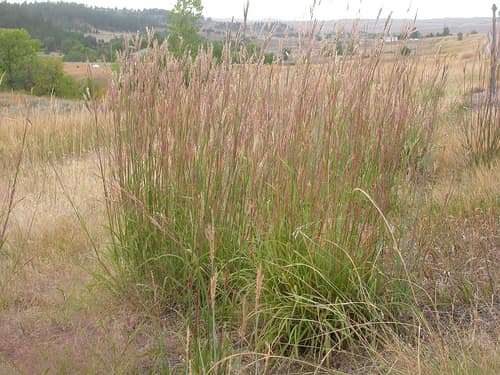
Close Relative Matt Lavin from Bozeman, Montana, USA / CC BY-SA 2.0 · cc-by-sa
Help improve the field guideSomething wrong?
Checking your Fauna account…Report a name, category, or profile issue for review.