Also known as Bobtail Barley, Squirreltail Barley, Intermediate Barley
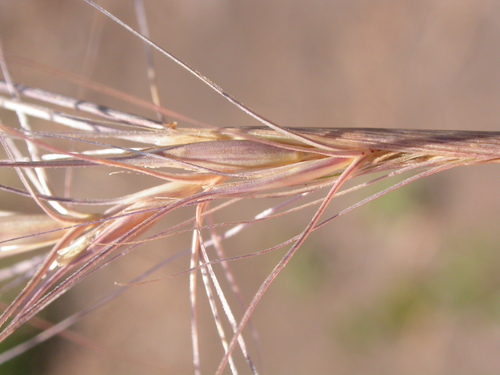
Foxtail barley forms dense tufts of soft green leaves topped by shimmering, feathery flower spikes that catch the wind. As the bushy spikes mature in midsummer, their long, slender awns turn silvery-purple to golden-straw and break apart into prickly seed clusters. Highly tolerant of alkaline and saline soils, this hardy perennial grass readily colonizes disturbed roadsides, pastures, and marsh edges across cool temperate zones.
Sharp barbed awns can lodge in pets' skin, ears, and mouths; avoid dry stands with dogs.
Why it is dangerous
The dry flower spikes break into sharp, barbed awns that easily pierce the skin, ears, eyes, and gums of dogs and livestock, causing painful infections.
How to recognize a risky encounter
Look for dense tufts of grass topped by bushy, nodding pinkish-purple to tan spikes with long, hair-like bristly awns.
What to do
Avoid walking pets near mature stands in late summer and clear any hooked seed bristles from coats immediately.
Responsible observation
Identification: Look for long, silky, nodding spikelets that shimmer pinkish-purple before turning golden.
Pet Safety: Keep dogs away from mature plants to prevent barbed awns from penetrating skin or ears.
Garden Control: Deadhead ornamental plantings before seed heads dry to prevent aggressive self-seeding.

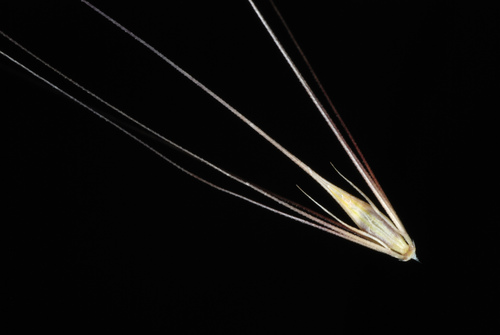
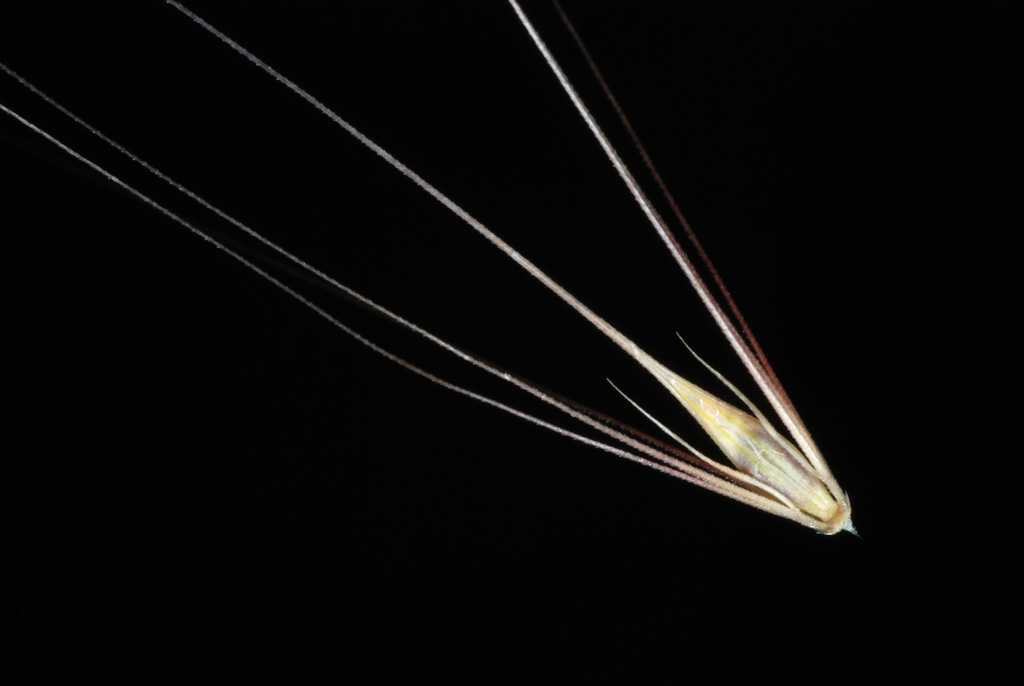
 Image unavailable