
Plant
Sacred Fir
Abies religiosaAlso known as Oyamel Fir, Oyamel
Sacred fir dominates the cool, mist-shrouded volcanic highlands of central and southern Mexico, forming dense montane canopies that maintain vital microclimates. The towering conifers create a critical thermal blanket against freezing winter nights, notably providing the primary overwintering roosting sanctuary for hundreds of millions of eastern monarch butterflies. Its cut boughs are traditionally used across Mexican religious festivals, giving the tree both its scientific and sacred names.
ConiferHigh AltitudeEvergreen
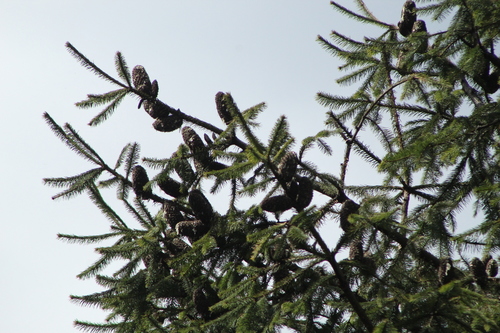
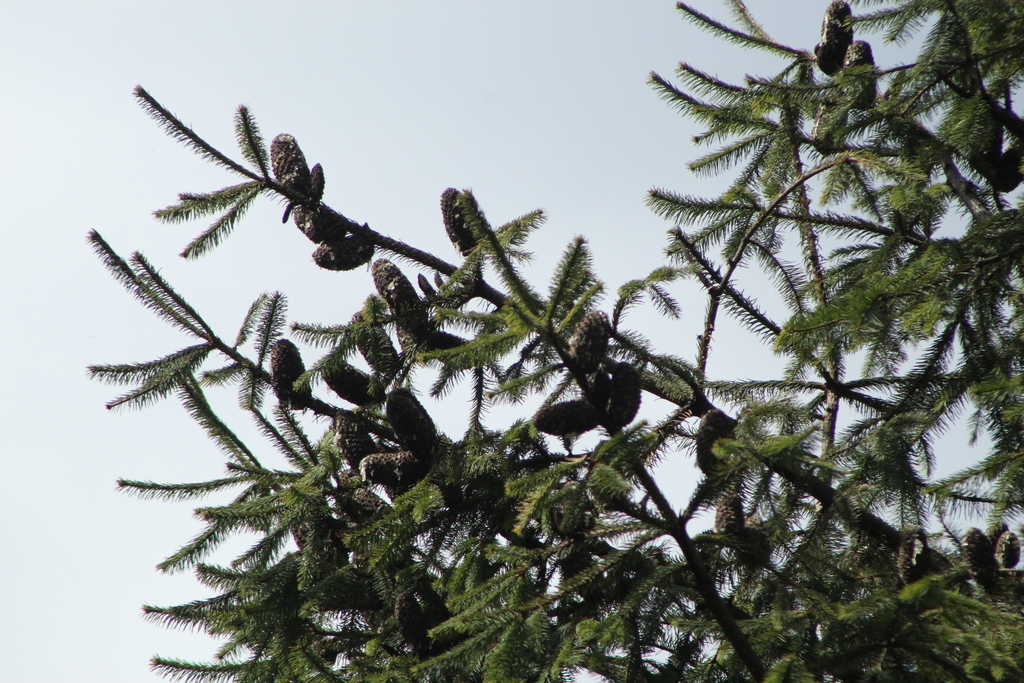
—observations
—countries
—peak records
Least ConcernConservation statusIUCN Red List categoriesLCNTVUENCREWEXLeast ConcernRed List categories, explained →
Diet & preySunlight, Atmospheric moisture, Soil nutrients
Predators
- Bark beetles
- Fungus rot pathogens
- Pine needle caterpillars
ThreatsIllegal logging, agricultural expansion, bark beetle infestations, climate change
HabitatsHigh-elevation cloud forests, humid montane slopes, volcanic ridges
Life span200 to 300 years
Classification
- FamilyPinaceae
- SpeciesAbies religiosa
Range data is not available yet.
Interaction riskLow
- Low
- Moderate
- High
- Very high
- Why interaction risk is low
- Safe to observe at a normal distance.
- What to notice
- Recognize this fir by its pyramidal crown, dense flattened needles with two white bands below, and high-altitude cloud forest habitat.
- Support conservation
- Remain quiet and keep to marked trails when visiting overwintering monarch sites, and avoid breaking low branches or stepping on fallen seedlings.
Responsible observation
- Viewing Etiquette: Stay strictly on designated boardwalks when visiting monarch reserves to protect shallow root systems.
- Identification: Look for erect, cylindrical cones that mature to dark purple before disintegrating on upper branches.
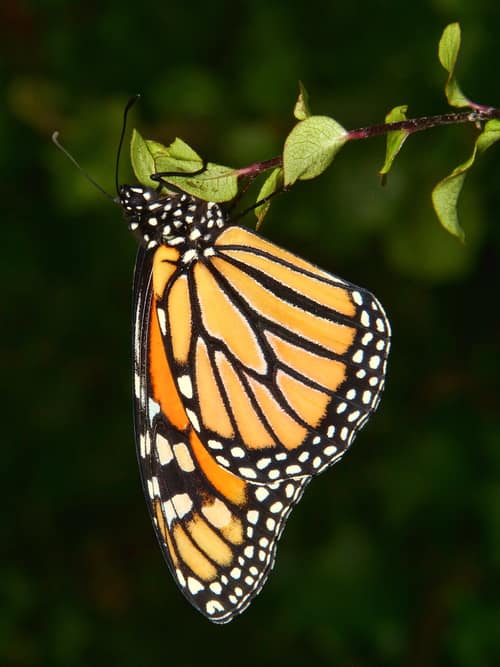
Symbiont Sid Mosdell from New Zealand / CC BY 2.0 · cc-by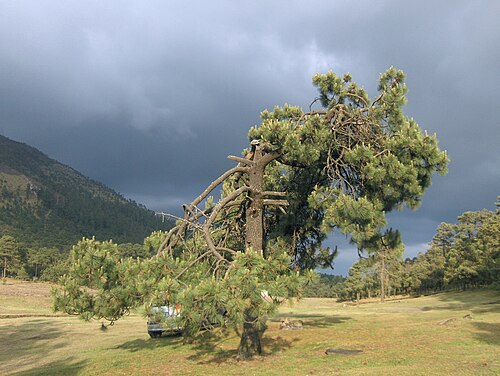
Frequent Companion Respindola23 / CC BY-SA 4.0 · cc-by-sa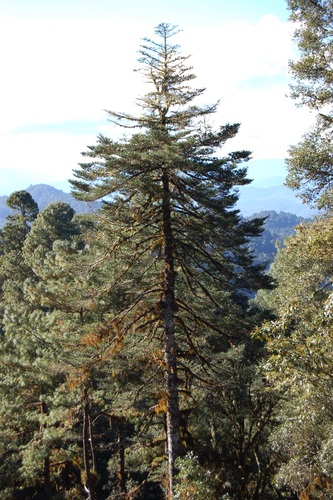
Close Relative (c) Neptalí Ramírez Marcial, some rights reserved (CC BY), uploaded by Neptalí Ramírez Marcial · cc-by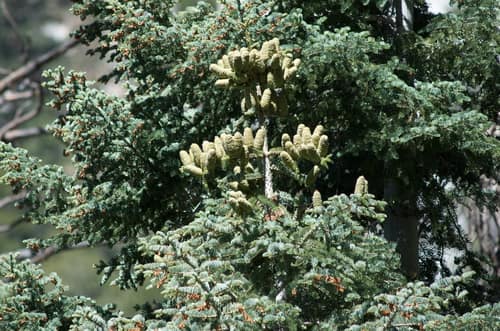
Close Relative (c) Jon Sullivan, some rights reserved (CC BY) · cc-by
Help improve the field guideSomething wrong?
Checking your Fauna account…Report a name, category, or profile issue for review.