
Plant
Mountain Cypress
Austrocedrus chilensisAlso known as Cordilleran Cypress, Chilean Incense-Cedar, Chilean Cedar, Cipres de la Cordillera
Mountain cypresses shape the transitional forest zones of the southern Andes, thriving on arid rocky outcrops where few other trees can survive. Their dense, scale-like leaves feature distinctive white stomatal stripes underneath, giving the foliage a silvery sheen when wind rustles the canopy. As slow-growing long-lived conifers, individual trees can endure for over a millennium, recording centuries of regional climate history in their dense wood.
EvergreenConiferAndean
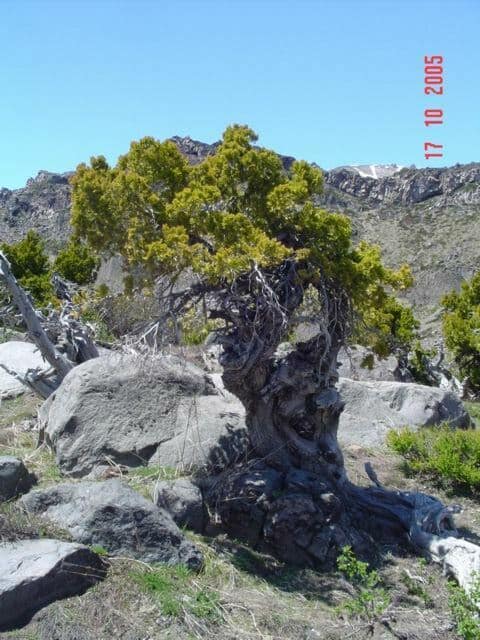
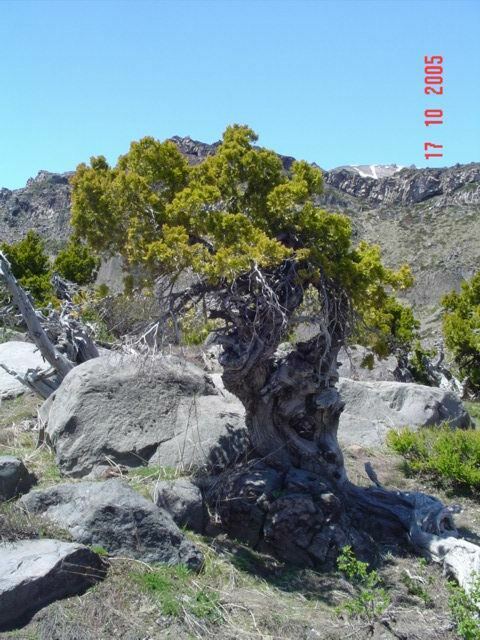
—observations
—countries
—peak records
Near ThreatenedConservation statusIUCN Red List categoriesLCNTVUENCREWEXNear ThreatenedRed List categories, explained →
Diet & preyPhotosynthetic
ThreatsPathogen-induced dieback, forest fires, livestock grazing, historical logging
HabitatsTemperate rain forest edges, mountain slopes, arid steppe-forest transitions
Life spanUp to 1,000 years or more
Classification
- FamilyCupressaceae
- SpeciesAustrocedrus chilensis
Range data is not available yet.
Interaction riskLow
- Low
- Moderate
- High
- Very high
- Why interaction risk is low
- Safe to observe at a normal distance.
- What to notice
- Identifiable by its narrow, conical crown, dark brown furrowed bark, and scale-like leaves arranged in flattened pairs.
- Support conservation
- Tread carefully around seedlings and avoid harvesting wood or foliage in protected Andean habitats.
Responsible observation
- Foliage Inspection: Look closely at the flattened sprays to spot the characteristic white stomatal bands on the underside of the leaves.
- Trail Etiquette: Stick to designated paths in southern Andean reserves to prevent soil compaction around ancient root systems.
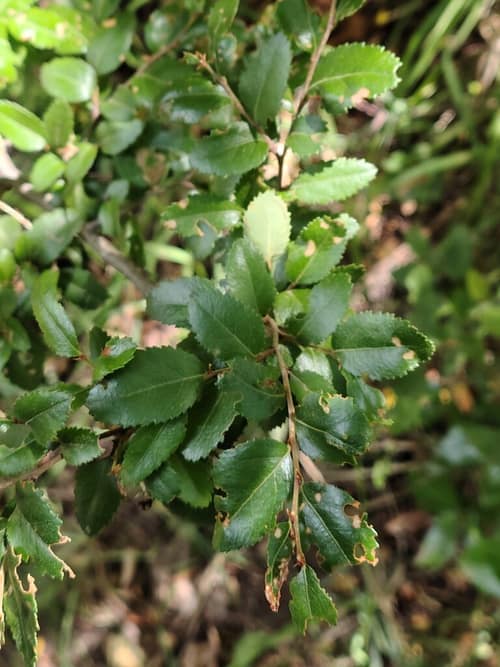
Forest Companion (c) Felipe Horton, some rights reserved (CC BY) · cc-by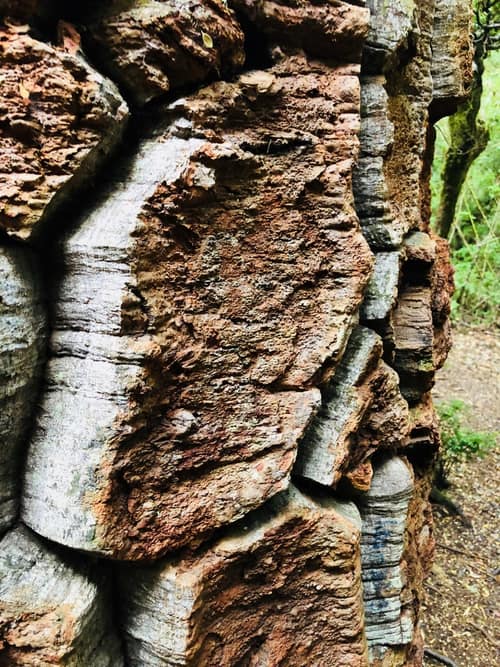
Co-occurring Conifer (c) Francisco E. Fonturbel, some rights reserved (CC BY), uploaded by Francisco E. Fonturbel · cc-by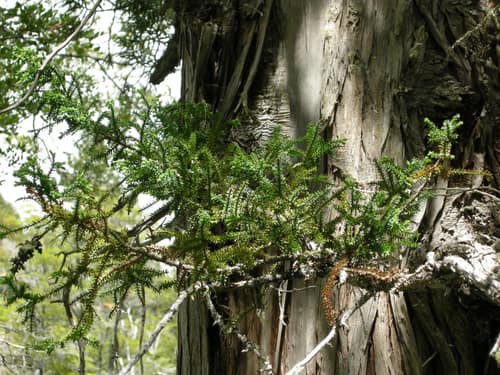
Close Relative (c) Gagea, some rights reserved (CC BY-SA) · cc-by-sa Image unavailable
Close Relative
Help improve the field guideSomething wrong?
Checking your Fauna account…Report a name, category, or profile issue for review.