
Plant
White Cypress-pine
Callitris glaucophyllaAlso known as White Cypress, Murray River Cypress-pine, Northern Cypress-pine, Bribie Island Pine
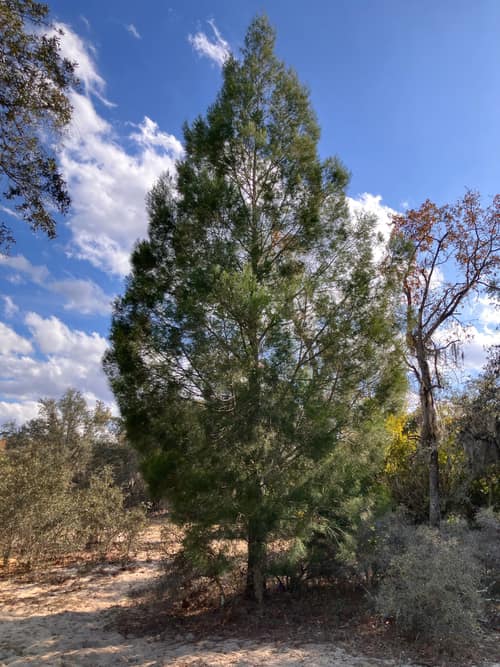
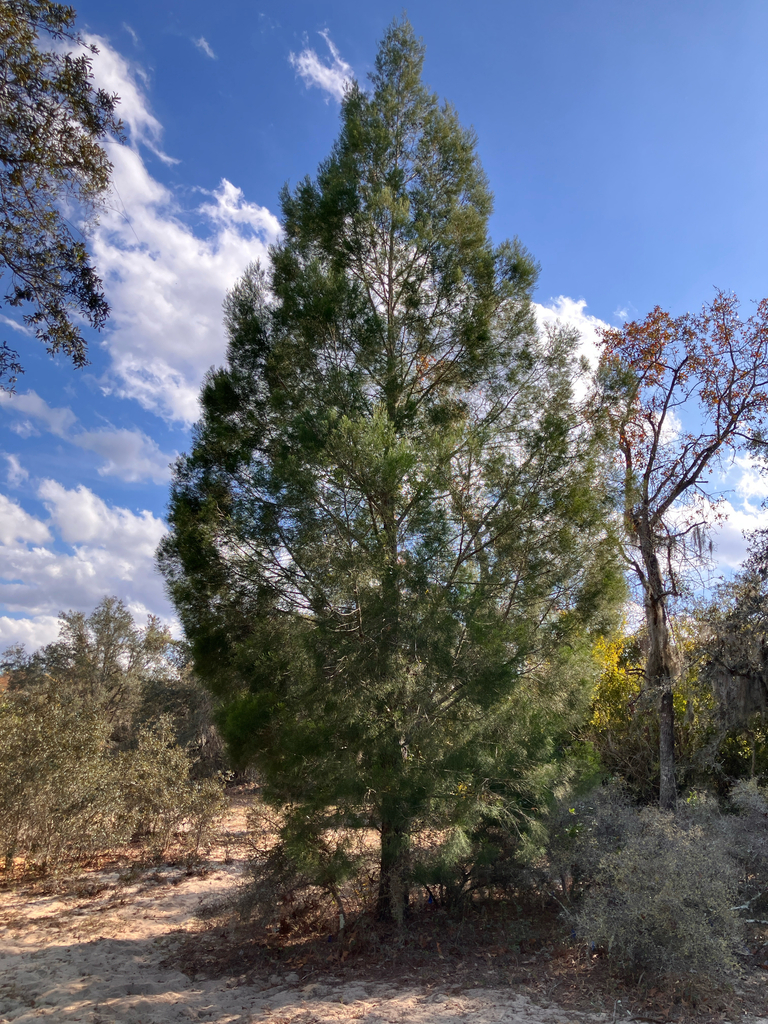
White Cypress-pine dominates vast arid and semi-arid inland woodlands across Australia, recognizable by its upright, conical form and glaucous blue-green foliage. Its dense, naturally termite-resistant timber has made it historically vital for construction, surviving harsh droughts in sandy and nutrient-poor soils. Dense stands frequently establish after favorable rainfall cycles, where protection from high-intensity fire allows seedlings to mature into resilient evergreen canopies.
ConiferEvergreenDrought-Tolerant
—observations
—countries
—peak records
Least ConcernConservation statusIUCN Red List categoriesLCNTVUENCREWEXLeast ConcernRed List categories, explained →
Diet & preyAutotrophic (Photosynthesis)
Predators
- Feral Goats
- Cattle
- Kangaroos
ThreatsFrequent high-intensity wildfires, land clearing, seedling browsing
HabitatsArid and semi-arid woodlands, sandy plains, rocky ridges
Life span100 to 300 years
Classification
- FamilyCupressaceae
- SpeciesCallitris glaucophylla
Range data is not available yet.
Interaction riskLow
- Low
- Moderate
- High
- Very high
- Why interaction risk is low
- Safe to observe at a normal distance.
Responsible observation
- Foliage Identification: Look for scale-like blue-green leaves arranged in whorls of three along slender branchlets.
- Cone Characteristics: Note the small spherical woody cones featuring six alternating scales.
- Habitat Context: Seek out dry inland woodlands and sandy ridges across continental Australia.
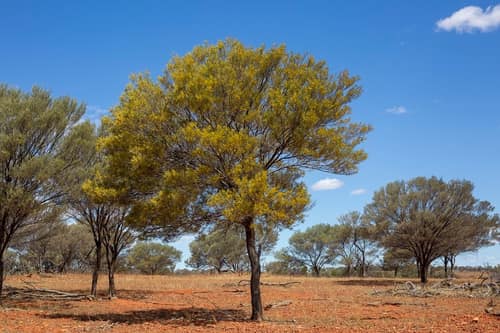
Frequent Companion (c) dhfischer, some rights reserved (CC BY), uploaded by dhfischer · cc-by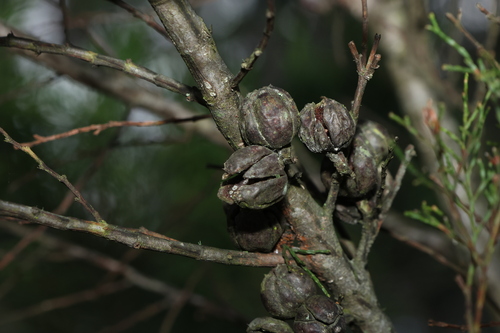
Close Relative (c) Greg Tasney, some rights reserved (CC BY-SA) · cc-by-sa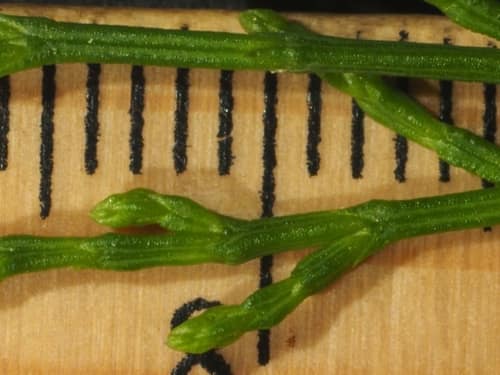
Close Relative (c) Kerri-Lee Harris, some rights reserved (CC BY), uploaded by Kerri-Lee Harris · cc-by
Help improve the field guideSomething wrong?
Checking your Fauna account…Report a name, category, or profile issue for review.