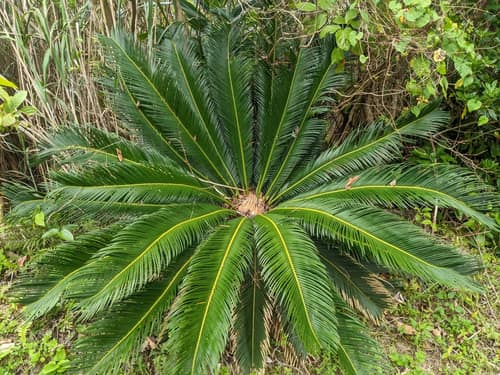
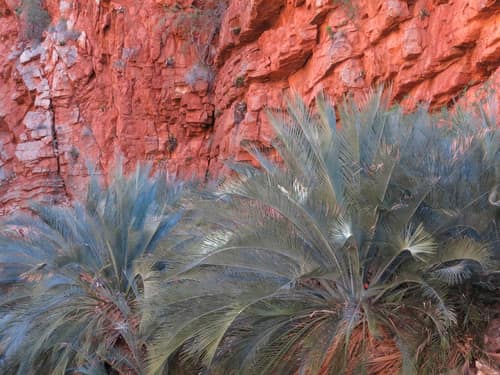
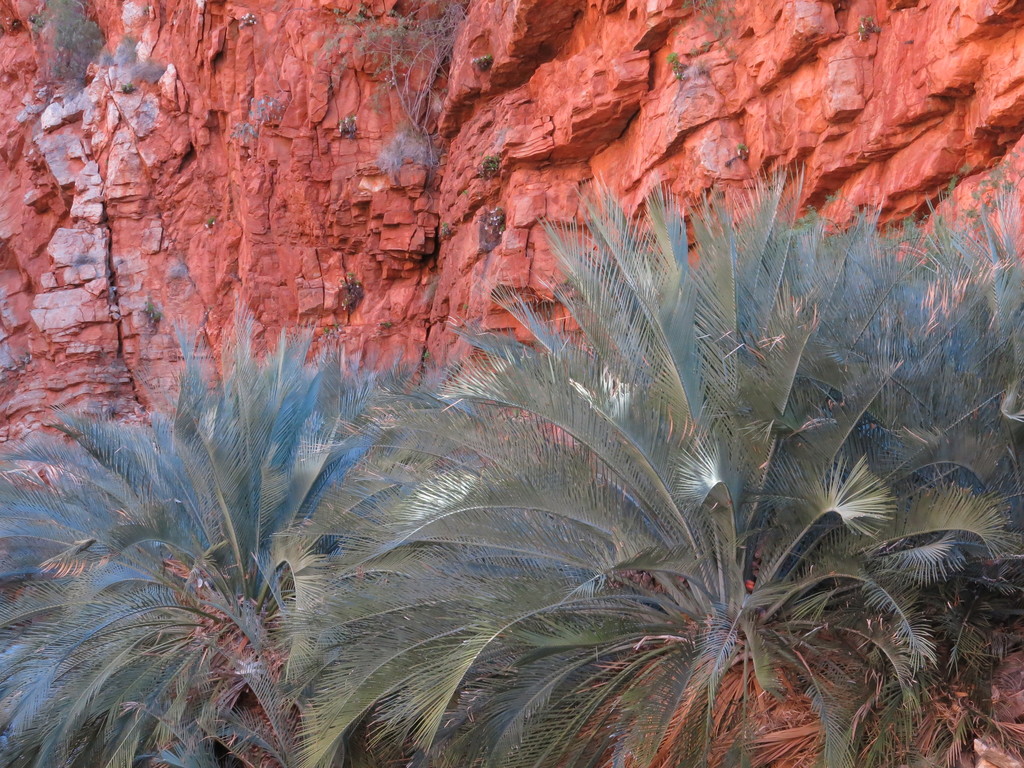
MacDonnell Ranges cycads are ancient, slow-growing relicts of a wetter prehistoric Australia, surviving exclusively in the sheltered gorges and quartzite ridges of Central Australia. Their striking bluish-grey fronds form a bold crown above thick, palm-like trunks, with massive seed cones that rely on specialized thrips for pollination. Despite enduring extreme desert heat and prolonged droughts, these resilient plants can live for hundreds of years.
All parts contain dangerous neurotoxins and carcinogens; do not handle or ingest seeds or foliage. Wild seeds have toxic look-alikes; never eat based on app identification alone.
Why it is dangerous
Contains potent toxins including cycasin and BMAA, which cause severe gastrointestinal distress, liver damage, and neurotoxicity if consumed.
How to recognize a risky encounter
Recognized by stiff, arching blue-green fronds up to two meters long emerging from a thick, fibrous trunk.
What to do
Do not ingest any seeds or plant tissues; observe safely from established footpaths without handling foliage.
What to notice
Look for large blue-green cycad fronds standing out against red quartzite cliffs in Central Australian gorges.
Support conservation
Remain on official walking tracks, avoid stepping on fragile root zones, and report any plant removal to rangers.
Responsible observation
Observe from Trails: Stick to marked paths in West MacDonnell National Park to avoid compacting root systems.
Respect Protected Status: Refrain from collecting seeds or fronds, as all wild plants are protected by law.
Spot the Cones: Look for large male and female cones emerging from the crown center during spring.

 1 / 7
1 / 7 Image unavailable