
Plant · GBIF taxon 2653361
California Jointfir
Ephedra californicaAlso known as California Ephedra, Desert Tea, Mormon Tea, Cañatillo
California jointfir is a distinctive shrub characterized by thick, erect yellow-green stems that carry out most of its photosynthesis. Its leaves are reduced to tiny whorled scales at the jointed nodes, an adaptation that dramatically conserves water in arid habitats. During spring, female plants produce fleshy red cones that attract desert birds and small mammals for seed dispersal.
DesertGymnospermDrought-Tolerant
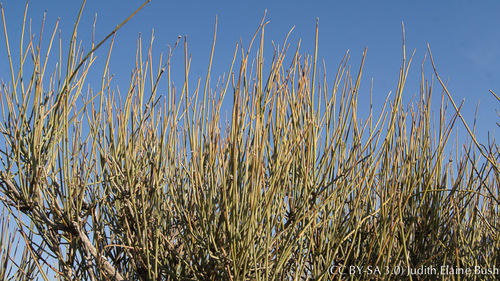
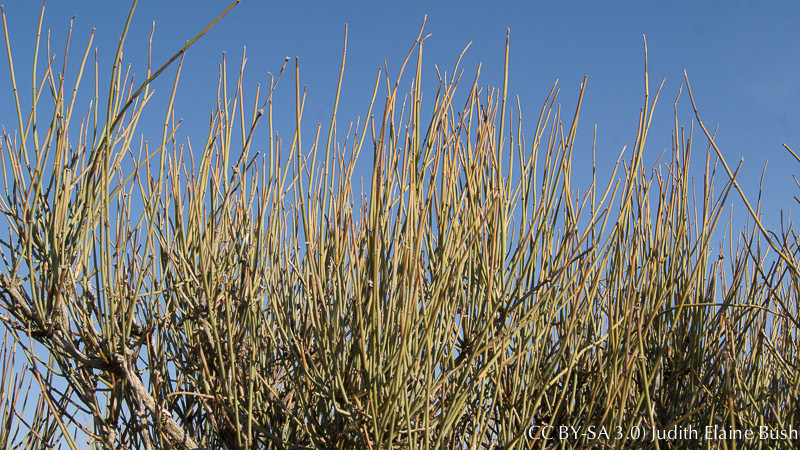 1 / 7
1 / 7—observations
—countries
—peak records
Least ConcernConservation statusIUCN Red List categoriesLCNTVUENCREWEXLeast ConcernRed List categories, explained →
Diet & prey
- Autotrophic (Photosynthetic)
Predators
- Bighorn Sheep
- Black-Tailed Jackrabbit
- Desert Tortoise
ThreatsHabitat loss, urbanization, and altered fire regimes
HabitatsChaparral, desert scrub, sandy plains, and rocky hillsides
Life span20–50 years
Size / weightNot available
Classification
- FamilyEphedraceae
- SpeciesEphedra californica
Range data is not available yet.
Interaction riskLow
- Low
- Moderate
- High
- Very high
- Why interaction risk is low
- Wild desert plants can have toxic look-alikes; never consume wild foliage based on app identification alone.
Responsible observation
- Observe the Stems: Look closely at the nodal rings where true leaves are reduced to tiny scales.
- Spot the Cones: Search for small yellow pollen cones or fleshy seed cones in spring.
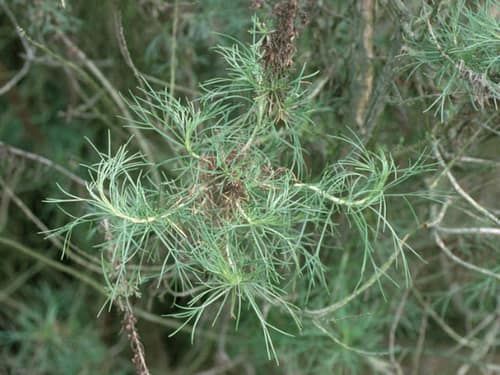
Frequent Companion (c) NatureShutterbug, some rights reserved (CC BY) · cc-by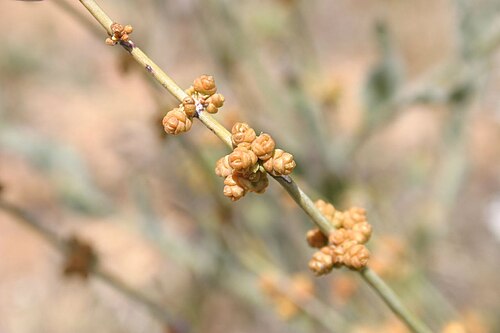
Close Relative Joe Decruyenaere / CC BY-SA 2.0 · cc-by-sa Image unavailable
Close Relative
Help improve the field guideSomething wrong?
Checking your Fauna account…Report a name, category, or profile issue for review.