
Fungus
Black Stone Flower
Parmotrema perlatumAlso known as Powdered Ruffle Lichen, Kalpasi, Dagad Phool, Black Stone Blossom
Powdered ruffle lichen forms broad, loosely attached rosettes of pale mineral-gray lobes with wavy margins fringed by dark, hair-like cilia. As a mutualistic composite organism, it pairs an ascomycete fungus with microscopic green algae that manufacture carbohydrates through photosynthesis. It acts as an exquisite bioindicator of clean air, thriving in damp maritime and montane atmospheres while vanishing quickly from areas tainted by sulfur dioxide pollution.
LichenEpiphyticFoliose
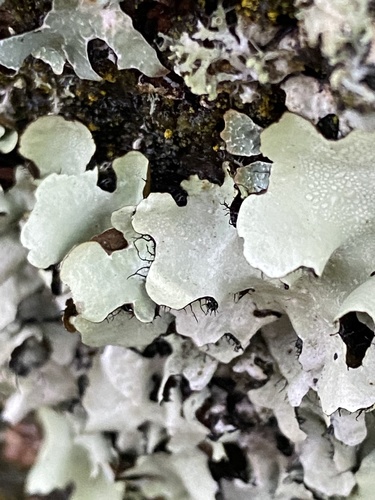
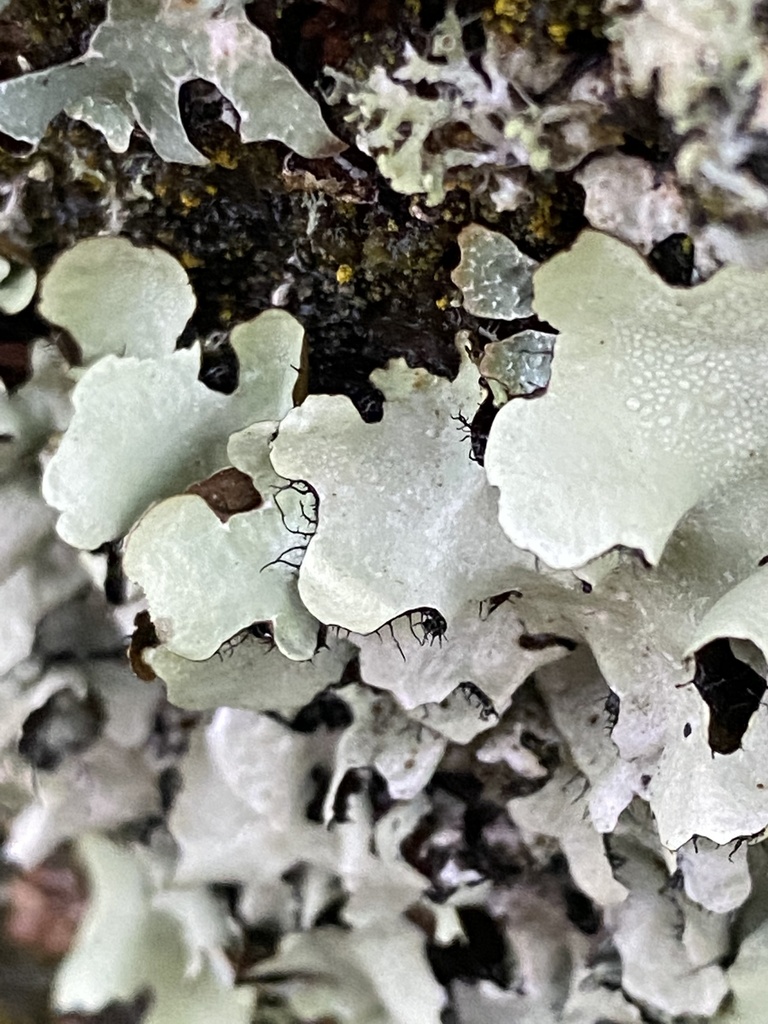
—observations
—countries
—peak records
Least ConcernConservation statusIUCN Red List categoriesLCNTVUENCREWEXLeast ConcernRed List categories, explained →
Diet & preyPhototrophic via photosynthetic algal symbionts
Predators
- Land snails
- Slugs
- Oribatid mites
ThreatsAir pollution, industrial sulfur dioxide emissions, and forest clearance
HabitatsHumid temperate woodlands, coastal forests, and mossy rock faces
Life spanDecades to centuries
Classification
- OrderLecanorales
- FamilyParmeliaceae
- GenusParmotrema
- SpeciesParmotrema perlatum
Range data is not available yet.
Interaction riskLow
- Low
- Moderate
- High
- Very high
- Why interaction risk is low
- Many lichens and wild fungi have toxic look-alikes; never eat wild fungi based on app identification alone.
Responsible observation
- Hand Lens Study: Use a 10x loupe to inspect the powdery margin soralia and dark edge cilia.
- Preserve Substrates: Keep colonies attached to tree bark and stones to avoid damaging fragile thalli.
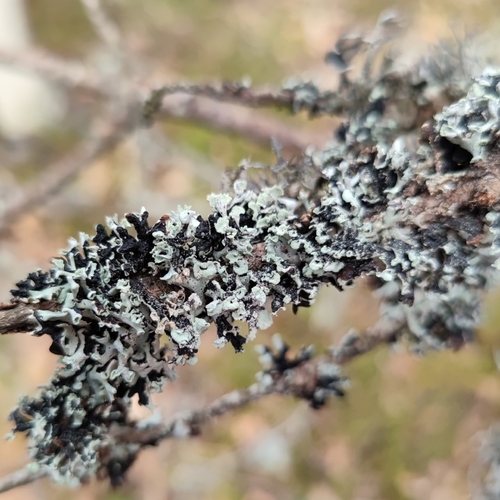
Frequent Companion (c) ponpon42, some rights reserved (CC BY) · cc-by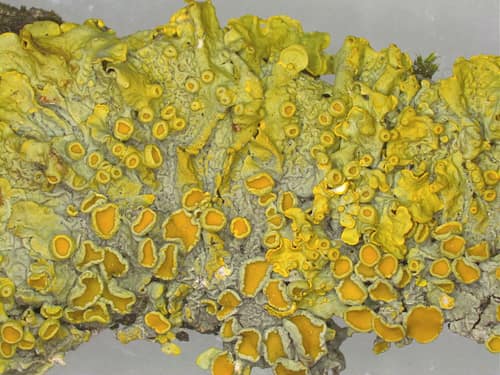
Competitor (c) Donald Hobern, some rights reserved (CC BY) · cc-by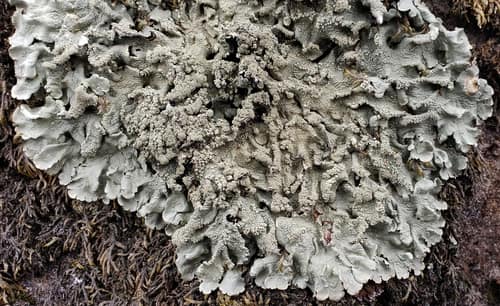
Close Relative (c) aarongunnar, some rights reserved (CC BY), uploaded by aarongunnar · cc-by
Help improve the field guideSomething wrong?
Checking your Fauna account…Report a name, category, or profile issue for review.