
Fungus
Bushy Beard Lichen
Usnea strigosaAlso known as Beard Lichen, Fringed Beard Lichen, Bushy Beard
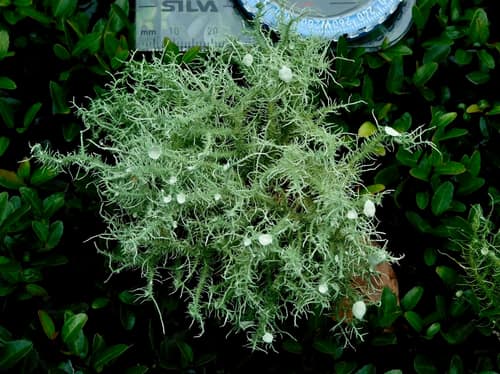
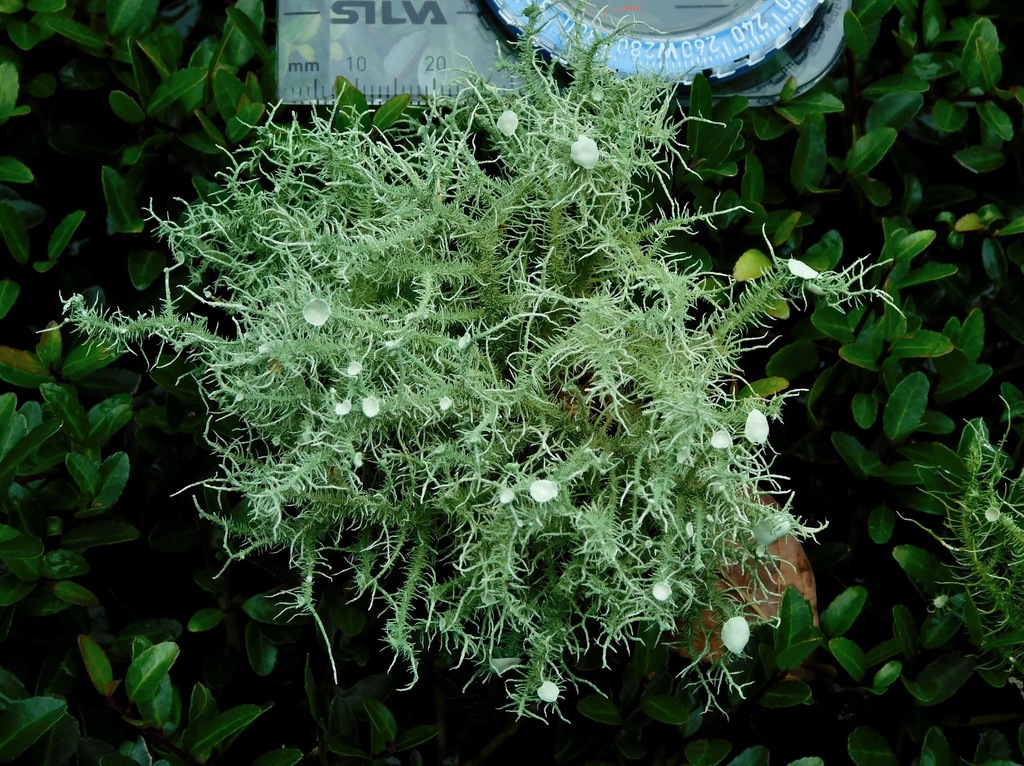
Bushy beard lichen forms distinctive, shrubby yellowish-green tufts clinging to tree bark in sunny, humid woodlands across eastern North America. Unlike many long, hanging beard lichens, it grows in somewhat erect or bushy clusters tipped with prominent, saucer-like reproductive disks fringed by thin, radiating fibrils. Because it absorbs water and dissolved nutrients directly from the air and precipitation, it serves as an excellent natural indicator of atmospheric purity.
LichenEpiphyticIndicator Species
—observations
—countries
—peak records
Not EvaluatedConservation statusIUCN Red List categoriesLCNTVUENCREWEXNot Evaluated — not placed on the risk ladderRed List categories, explained →
Diet & preySymbiotic (Photosynthetic photobiont with fungal partner)
Predators
- Snails and slugs
- Mites
- White-tailed deer
ThreatsAir pollution (sulfur dioxide), heavy atmospheric acidity, forest clear-cutting
HabitatsDeciduous and coniferous forests, open woodlands, orchard trees
Life span10–30 years
Classification
- OrderLecanorales
- FamilyParmeliaceae
- GenusUsnea
- SpeciesUsnea strigosa
Range data is not available yet.
Interaction riskLow
- Low
- Moderate
- High
- Very high
- Why interaction risk is low
- Safe to observe at a normal distance; never eat wild fungi or lichens based on app identification alone.
Responsible observation
- Look for Disk Structures: Examine branch ends for flattened, saucer-like apothecia fringed with thin rays.
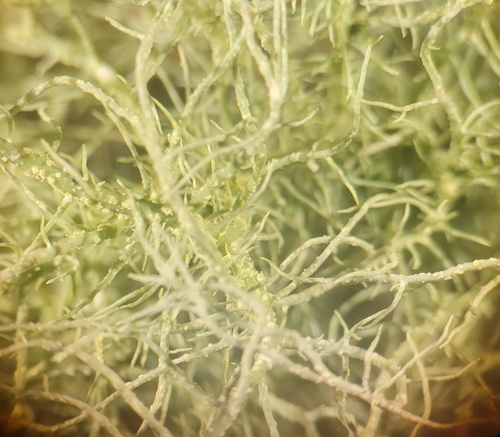
- Test the Elastic Cord: Gently pull a branch to reveal the stretchy pale inner cord characteristic of the genus.
- Assess Air Quality: Healthy, dense populations indicate low air pollution and clean atmospheric conditions.
Close Relative (c) wweellll, some rights reserved (CC BY), uploaded by wweellll · cc-by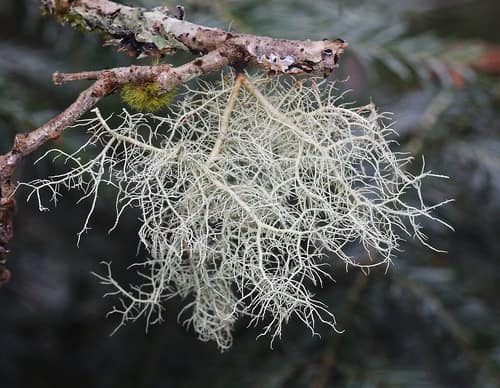
Close Relative Bernd Haynold / CC BY 2.5 · cc-by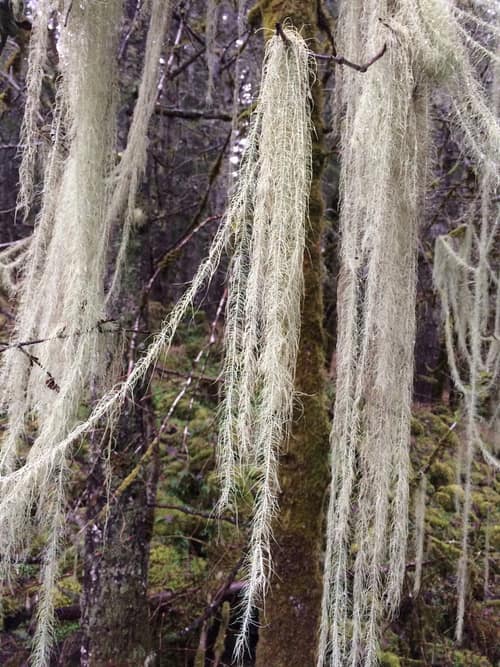
Close Relative (c) B. Phalan, some rights reserved (CC BY), uploaded by B. Phalan · cc-by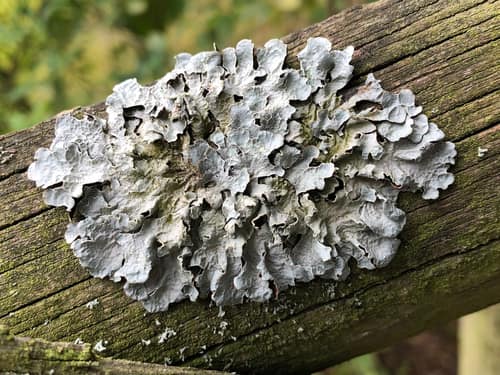
Family Member (c) mister_bumble, some rights reserved (CC BY), uploaded by mister_bumble · cc-by
Help improve the field guideSomething wrong?
Checking your Fauna account…Report a name, category, or profile issue for review.