
Fungus
Cookeina speciosa
Cookeina speciosaCookeina speciosa produces vibrant, goblet-shaped cups that brighten the shadowy understory of humid tropical rainforests. These saprobic fungi fruit directly from decaying logs and fallen hardwood branches, playing an essential role in forest nutrient recycling. Spores are forcefully discharged into passing air currents from microscopic asci when changes in air pressure or vibrations disturb the cup.
TropicalSaprobicCup Fungus
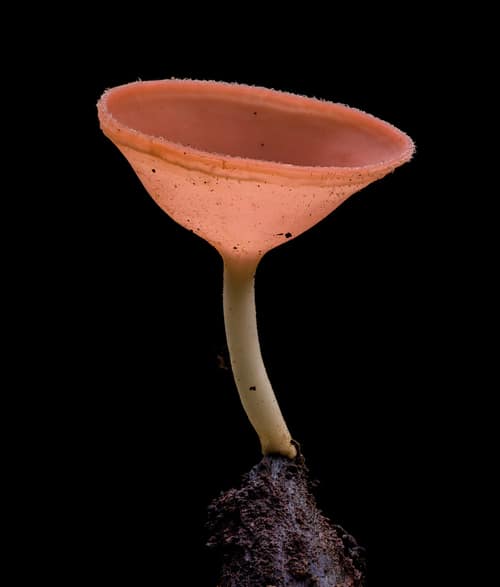
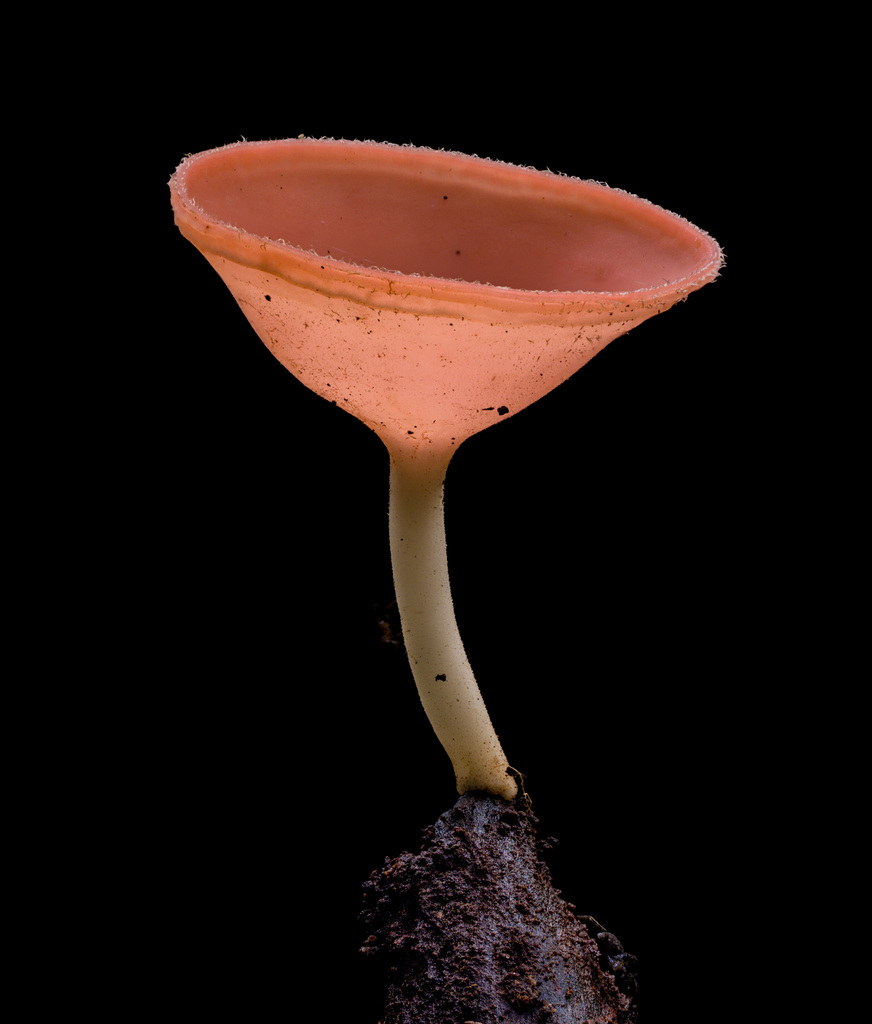
—observations
—countries
—peak records
Not EvaluatedConservation statusIUCN Red List categoriesLCNTVUENCREWEXNot Evaluated — not placed on the risk ladderRed List categories, explained →
Diet & preyDecaying hardwood, Lignin, Cellulose
Predators
- Fungivorous beetles
- Land snails
- Fly larvae
ThreatsDeforestation and loss of mature humid canopy cover
HabitatsLowland and montane tropical rainforests
Life spanFruiting body persists 2–6 weeks; underground mycelium lives years
Classification
- OrderPezizales
- FamilySarcoscyphaceae
- GenusCookeina
- SpeciesCookeina speciosa
Range data is not available yet.
Interaction riskLow
- Low
- Moderate
- High
- Very high
- Why interaction risk is low
- Many edible mushrooms have toxic look-alikes; never eat wild fungi based on app identification alone.
Responsible observation
- Observation: Look along mossy, decomposing tree limbs in dense shade.
- Photography: Use diffuse macro lighting to capture the fine rim fringe.
- Preservation: Leave fruiting bodies intact to allow ongoing spore release.
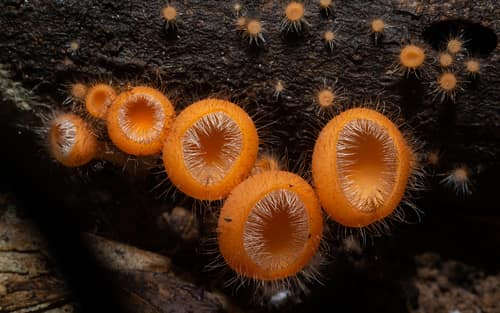
Close Relative (c) Denis Zabin, some rights reserved (CC BY), uploaded by Denis Zabin · cc-by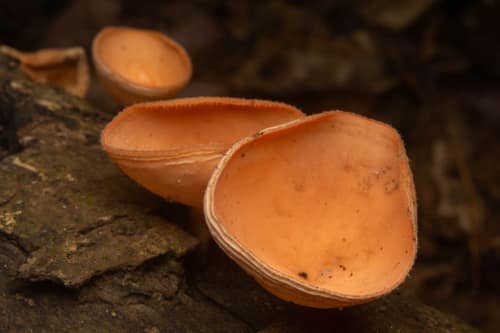
Close Relative (c) Jeremy Jones, some rights reserved (CC BY) · cc-by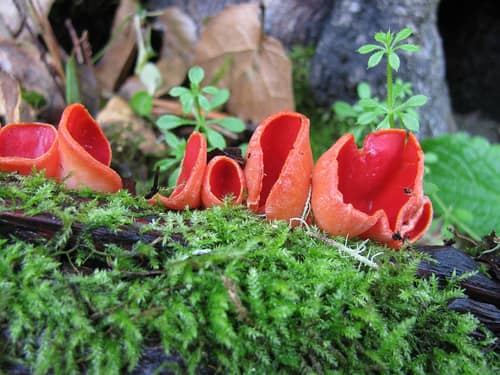
Same Family This image was created by user Ryane Snow (snowman) at Mushroom Observer, a source for mycological images.You can contact this user here. / CC BY-SA 3.0 · cc-by-sa
Help improve the field guideSomething wrong?
Checking your Fauna account…Report a name, category, or profile issue for review.