
Fungus · GBIF taxon 2552027
Berkeley's Polypore
Bondarzewia berkeleyiAlso known as Stump Blossoms
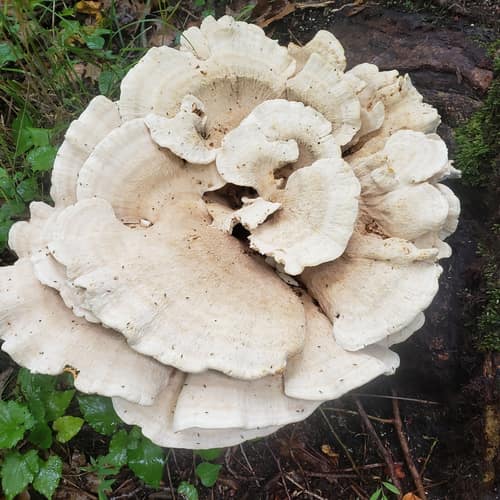
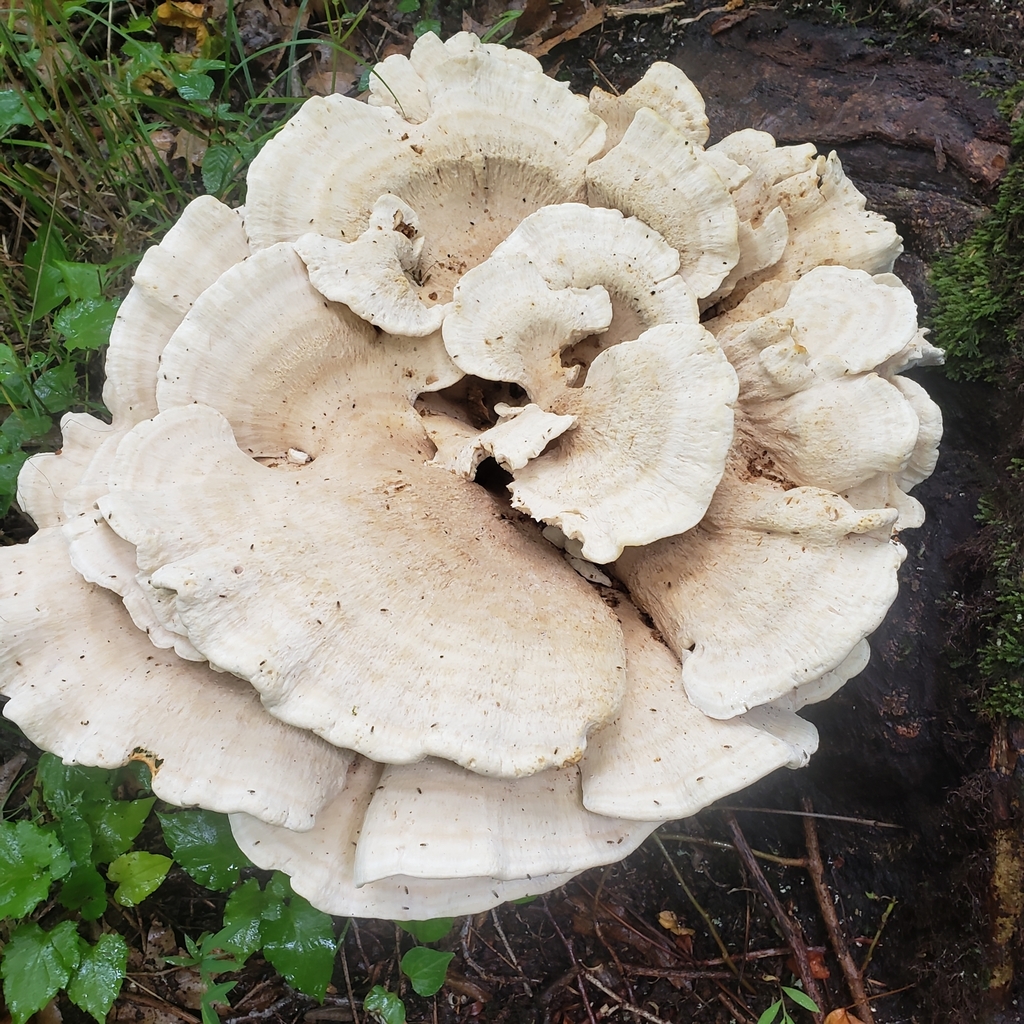
Berkeley's polypore forms massive, rosette-like clusters at the base of living hardwoods, particularly oaks, where it acts as a parasitic agent of butt rot. Individual rosettes can grow to immense proportions, featuring multiple fan-shaped caps that range in color from cream to yellowish-brown with faint concentric zones. As the fruiting body matures through late summer and autumn, it eventually decays, leaving behind a persistent structural trace at the tree's roots.
PolyporeShelf FungusParasitic
 1 / 7
1 / 7—observations
—countries
—peak records
Not EvaluatedConservation statusIUCN Red List categoriesLCNTVUENCREWEXNot Evaluated — not placed on the risk ladderRed List categories, explained →
Diet & prey
- Parasitic and saprobic (wood-decaying)
Predators
- Fungus beetles
- Fungus gnat larvae
- Slugs
ThreatsDeforestation and intensive forest management
HabitatsHardwood forests, particularly near oak roots and stumps
Life spanFruiting bodies last several weeks; mycelium lives for years
Size / weightNot available
Classification
- OrderRussulales
- FamilyBondarzewiaceae
- GenusBondarzewia
- SpeciesBondarzewia berkeleyi
Range data is not available yet.
Interaction riskLow
- Low
- Moderate
- High
- Very high
- Why interaction risk is low
- Many edible mushrooms have toxic look-alikes; never eat wild fungi based on app identification alone.
Responsible observation
- Inspect the pore surface: Look for white to cream pores that do not bruise black when scratched.
- Check host association: Observe whether it emerges from soil near oak roots or directly on stumps.
- Leave specimens intact: Allow large fruiting bodies to mature and release spores into the forest.
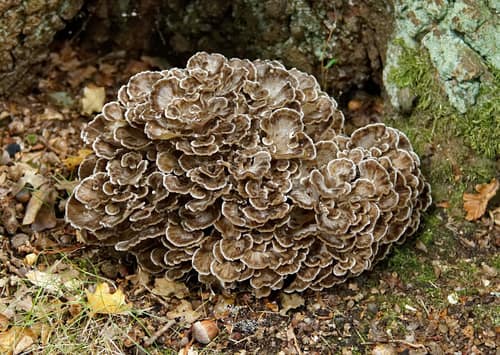
Look-Alike Lukas from London, England / CC BY-SA 2.0 · cc-by-sa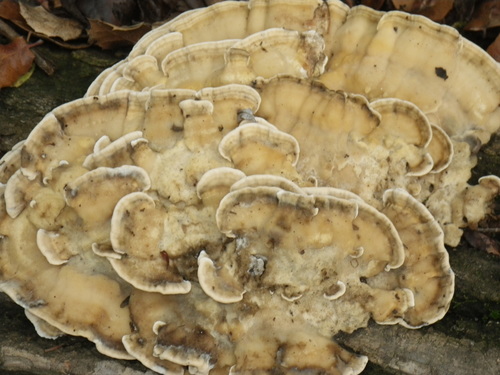
Look-Alike (c) Dominic, some rights reserved (CC BY), uploaded by Dominic · cc-by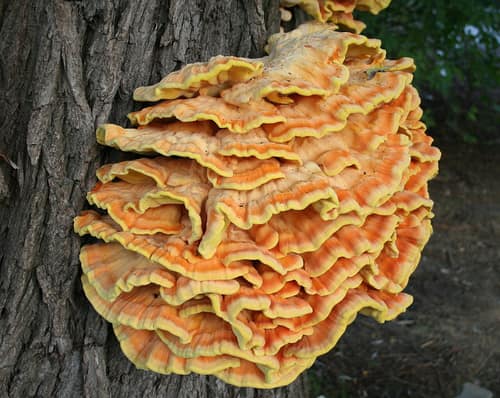
Frequent Companion voir ci-dessous / see below / CC BY 2.5 · cc-by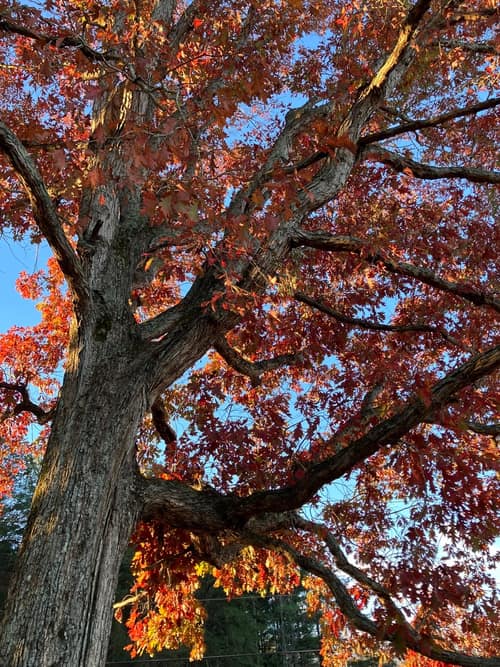
Host Plant (c) Alicia Ballard, some rights reserved (CC BY) · cc-by
Help improve the field guideSomething wrong?
Checking your Fauna account…Report a name, category, or profile issue for review.